




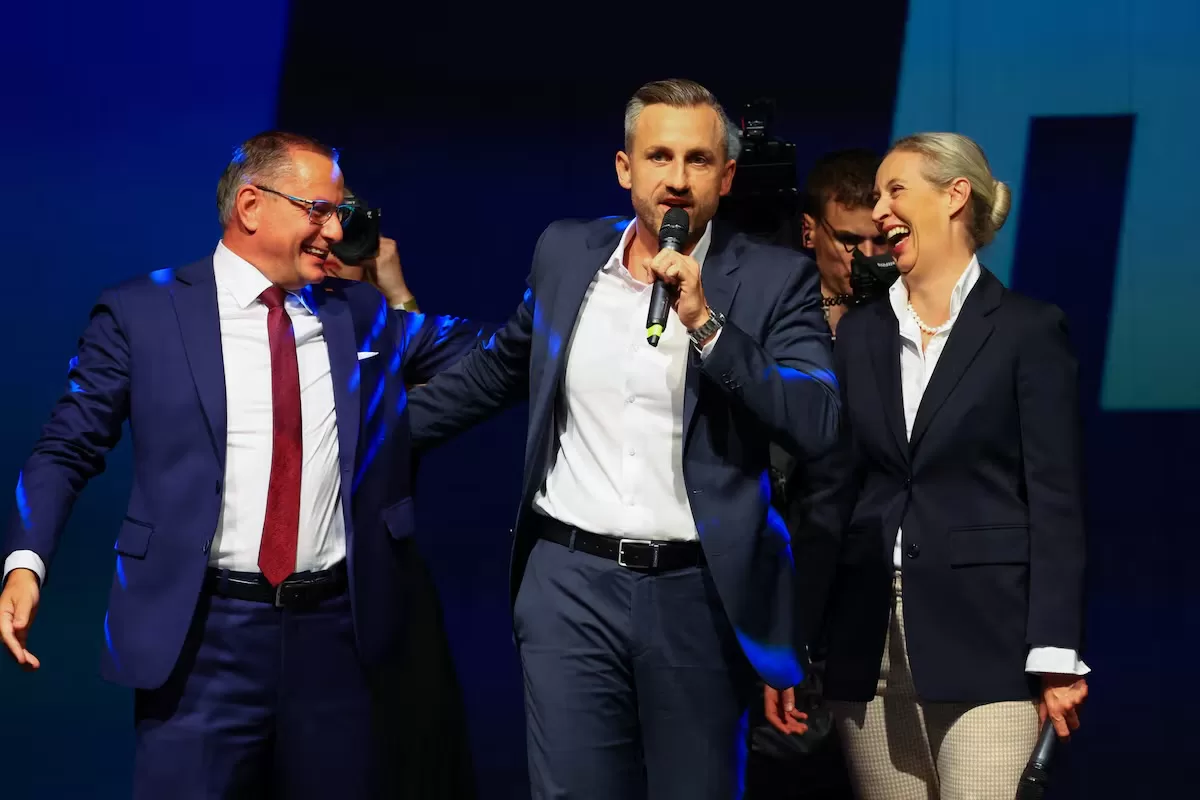
BERLIN (Reuters) – Chancellor Friedrich Merz ruled out working with the Alternative for Germany on Monday after the far-right party surged into first place in state elections in Saxony-Anhalt, but he conceded the result had shaken his party “to its very foundations”.
The AfD is appealing to lawmakers from Merz’s conservatives to support its bid to rule the eastern state, in what would be the first time a far-right party takes power at state level in postwar Germany.
The anti-immigrant, pro-Russia AfD won nearly 44 per cent of the vote, an outcome that underlined the deep unpopularity of Merz’s ruling coalition and also triggered alarm among Germany’s neighbours, France and Poland, and elsewhere.
However, the party — which wants to deport immigrants, halt support for Ukraine and restore ties with Moscow — fell short of an absolute majority in the state legislature, winning 39 of the 83 seats, and hopes to poach individual conservative lawmakers.
The election result could test the longstanding refusal of Germany’s mainstream parties, including Merz’s Christian Democrats (CDU), to work with the AfD, a policy known as the “firewall”. The AfD says this is undemocratic.
“This shakes our party to its very foundations,” Merz said, according to the Bild newspaper. “We are all deeply shocked,” he added later at a press conference, describing the result as his party’s worst election result in decades.
While sounding chastened, and vowing to try harder to connect with voters, Merz batted away suggestions that he might resign, saying he would broadly stick with his government’s reform agenda.
Merz, whose own approval ratings have sunk to record lows, faces more state elections in the coming weeks and into next year, though he hopes his mix of reforms and higher spending in some areas will revive growth in Europe’s largest economy.
Suggesting that the AfD win was cheered in Moscow, Merz characterised the current political moment as a fight for the survival of Western values. He also defended a decision, taken last year, to borrow hundreds of billions of euros to spend on defence, saying the unity of the NATO alliance was at stake.
“Giving up is not an option for me,” he said.
The AfD’s national co-leader Tino Chrupalla appealed to CDU lawmakers to make a “centre-right conservative majority” in Saxony-Anhalt possible.
“Partisan games really ought to be a thing of the past,” he told German radio, referring to the firewall policy.

