



Egypt and Türkiye are seeking to translate their improving political relationship into deeper economic cooperation, with trade, investment, transport, mining, and energy emerging as key pillars of the partnership.
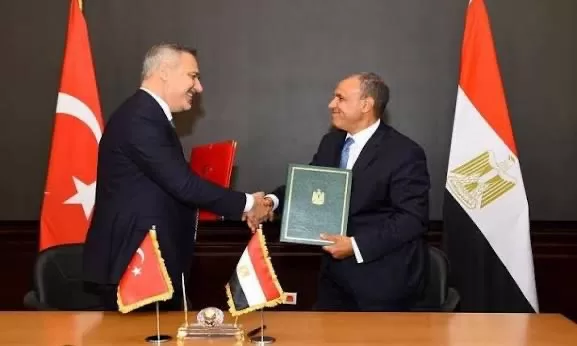
The second meeting of the Egypt–Türkiye Joint Planning Group, co-chaired by Egyptian Minister of Foreign Affairs, International Co-operation and Egyptian Expatriates Badr Abdel-Aati and Turkish Foreign Minister Hakan Fidan in New Alamein, brought together officials from the investment, trade, petroleum, and health sectors.
The talks followed a meeting of the High-Level Strategic Co-operation Council, chaired by Presidents Abdel Fattah El Sisi and Recep Tayyip Erdoğan in Cairo in February.
At the heart of the discussions was the two countries’ goal of increasing bilateral trade to $15 billion, a target agreed upon by their leaders in 2024.
For Ayman Samir, an international relations expert at the Egyptian Centre for Strategic Studies, the focus on investment reflects a broader shift in the relationship.
“The results announced at the meeting reflect an agreement to continue close coordination,” Samir said, pointing particularly to efforts to facilitate the work of Turkish investors and remove obstacles facing them.
He added that this reflects a growing effort to expand bilateral ties beyond political and security issues to include stronger economic and investment cooperation.
Egypt has introduced a “fast-track” mechanism to expedite licenses and approvals for Turkish investors, while a joint working group is monitoring Turkish investments and working to resolve challenges facing companies.
Cairo is also seeking a larger Turkish industrial presence, including through a proposed integrated Turkish industrial zone. Potential sectors include automobiles, aluminum, equipment, chemicals, textiles, and ready-made garments, with the Suez Canal Economic Zone offering a strategic location for such projects.
Energy and natural resources are another area in which the relationship could expand. The participation of petroleum officials in the talks highlights the importance of energy co-operation, while the two sides also discussed mining and Turkish investment in Egyptian mineral projects.
Co-operation could include technical and technological exchanges, exploration, and processing, helping Egypt develop higher-value mineral industries and increase exports.
Transport links could provide a further boost. Egypt and Türkiye are discussing the revival of the maritime roll-on/roll-off (Ro-Ro) shipping route, which would facilitate the movement of goods, particularly perishable products, while strengthening supply chains between Egyptian and Turkish ports.
Samir added that these practical economic measures could give the political rapprochement between Cairo and Ankara a more durable foundation. Easier investment procedures, industrial projects, and stronger transport links can create direct economic interests on both sides and deepen the relationship beyond diplomatic coordination.
The meeting concluded with the signing of three agreements, including the protocol of the Joint Planning Group, Egypt’s accession to a memorandum on logistics connectivity, and a decision concerning rules of origin under the two countries’ free trade agreement.
The developments in New Alamein point to a relationship increasingly defined not only by political coordination but also by efforts to expand trade, attract investment, and deepen cooperation across strategic economic and energy sectors.

