


• Latest
  • Trending
  • All
  • Egypt
  • Business
  • Local
  • World
How US manages its interests in ME (3 – 3)

Is football an accursed game? (2-4) 

August 16, 2026
Suspects at large after 5 shot at Virginia State University

Suspects at large after 5 shot at Virginia State University

August 16, 2026
Absent voices in sports commentary

To have or not to have your genome sequenced

August 16, 2026
Pearls and Coral: Treasures from the Qur’an (17)

The Manifest Truth: Hasan al-Banna under the microscope (2)

August 16, 2026
What kind of translator will be needed in the age of AI?

What kind of translator will be needed in the age of AI?

August 16, 2026
CAC enhances insurance benefits for fund members

CAC enhances insurance benefits for fund members

August 15, 2026
Airport staff honoured for saving child

Cairo Airport records notable growth in July

August 15, 2026
Russia expands direct flights to Alexandria, Alamein

Russia expands direct flights to Alexandria, Alamein

August 15, 2026
EgyptAir launches route from Jeddah, Medina to Alamein

EgyptAir launches route from Jeddah, Medina to Alamein

August 15, 2026
UNESCO chief reaffirms solidarity with Ukraine during first official visit

UNESCO chief reaffirms solidarity with Ukraine during first official visit

August 15, 2026
Egypt seeks to boost air transport ties with Iraq, Venezuela, Kazakhstan

Egypt seeks to boost air transport ties with Iraq, Venezuela, Kazakhstan

August 15, 2026
  • Advertise
  • Privacy & Policy
  • Contact
Sunday, August 16, 2026
  • Login

Editor-in-Chief

Mohamed Fahmy

Board Chairman

Tarek Lotfy

Egyptian Gazette
No Result
View All Result
  • HOME
  • EGYPT
    • Local
    • Features
  • World
    • National Day
  • Technology
  • BUSINESS
    • Real Estate
    • Automotive
  • SPORTS
  • ENTERTAINMENT
    • Arts
    • Health
    • Lifestyle
    • Travel
  • Skyward
    • Snippets from EgyptAir history
  • MORE
    • Multimedia
      • Video
      • Podcast
      • Gallery
    • OP-ED
  • HOME
  • EGYPT
    • Local
    • Features
  • World
    • National Day
  • Technology
  • BUSINESS
    • Real Estate
    • Automotive
  • SPORTS
  • ENTERTAINMENT
    • Arts
    • Health
    • Lifestyle
    • Travel
  • Skyward
    • Snippets from EgyptAir history
  • MORE
    • Multimedia
      • Video
      • Podcast
      • Gallery
    • OP-ED
No Result
View All Result
Egyptian Gazette
No Result
View All Result
Home OP-ED

Is football an accursed game? (2-4) 

by Gazette Staff
August 16, 2026
in OP-ED
Is football an accursed game? (2-4)  12 - Egyptian Gazette
Share on FacebookWhatsapp

How the game turned into political capital to build legitimacy, create identity and improve states’ images

Dr Ashraf Abul Saud

Football has long been more than a game. Long before World War II, it had already become a powerful vehicle for building legitimacy, forging national identity and polishing states’ images on the world stage.

By the 1930s, this sport had spread so widely that it cut across class, race, ethnicity and religion. Even armed conflict and colonial rule could not stop football’s expansion.

Leaders quickly recognised its potential. Benito Mussolini took personal charge of organising the 1934 World Cup in Italy. Matches were staged in eight cities, 16 teams took part, and Italy beat Czechoslovakia 2-1 after extra time.

Mussolini, who had shown little personal interest in sport, seized on the victory as proof of fascist superiority for a global audience.

In Germany, Adolf Hitler ordered that no player who failed to share Aryan ideology could represent the national team.

After the annexation of Austria, he side-lined Austrian national figures, even as he used the talent of Austrian football stars to strengthen the German side.

Propaganda minister Joseph Goebbels devoted considerable effort to turning the game into a tool of the Nazi regime.

European leaders absorbed the lesson. During Spain’s civil war from 1936 to 1939, General Francisco Franco gave Real Madrid open financial and political backing in a deliberate effort to promote a unified Spanish identity against Catalan and Basque nationalism.

He continued that support through the 1950s and 1960s, treating the club’s European successes as a diplomatic asset that helped ease Spain’s international isolation.

Club officials of the era often carried more public weight than cabinet ministers because of their ability to mobilise large crowds.

The same pattern appeared in newly independent Africa. Ahmed Sékou Touré, who ruled Guinea for 26 years, made a point of attending sporting events and delivering political speeches to the crowds.

In the 1970s, he adopted Hafia Conakry as his personal project, pouring money into the club. The investment paid off with African Cup of Champions wins in 1972, 1975 and 1977.

After each triumph, Touré delivered fiery public addresses and regularly invited the players to his private residence, boosting his popularity to new heights.

Defeat brought the opposite reaction: when Hafia lost the 1976 final to Algeria’s MC Alger, he branded the players traitors to the revolution and declared the country in mourning.

Marshal Mobutu Sese Seko went further still. After seizing power in what was then the Democratic Republic of Congo in 1965 and renaming the country Zaire in 1971, he cultivated a public image of sporting enthusiasm.

In 1989, his photograph appeared on the national team’s shirts for eight official matches, including African Cup of Nations and World Cup qualifiers, an unprecedented act of personal propaganda.

When Zaire won the 1974 African Cup of Nations in Egypt, Mobutu sent his private jet to fly the players and the trophy home to Kinshasa.

Ugandan president Idi Amin Dada followed a similar path, pouring unlimited funds into the national team. His backing for Uganda’s campaign at the 1978 African Cup of Nations in Ghana was intended to project an image of stability and success to the outside world.

This shows that football repeatedly proved itself a ready-made instrument for leaders seeking legitimacy, identity and favourable headlines across continents and decades.

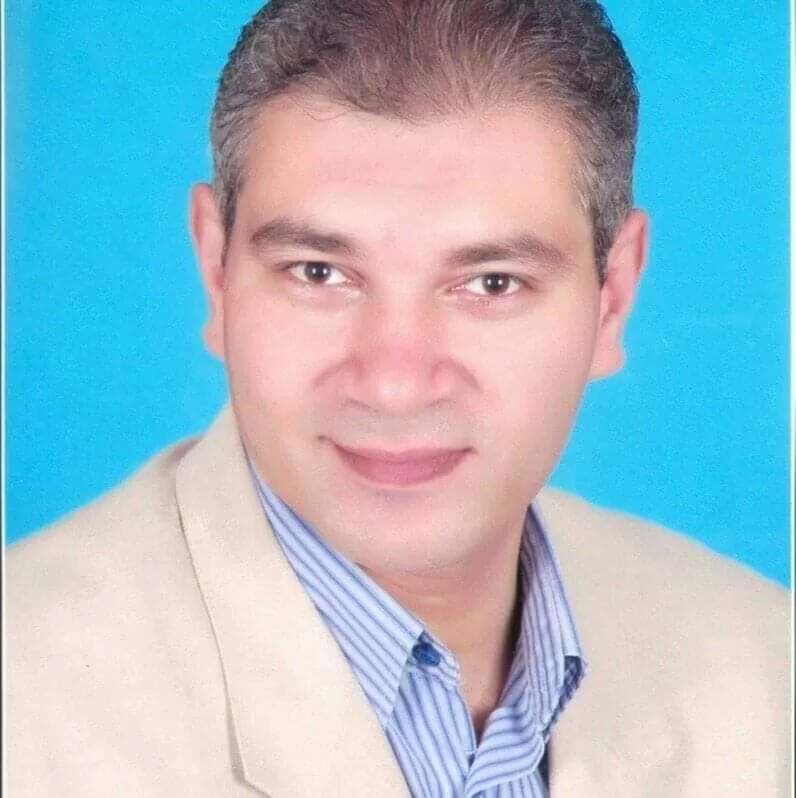
By Dr Ashraf Abul Saud

Writer and an international  relations scholar

[email protected]

Tags: FootballgameWorld Cup
ADVERTISEMENT
egyptian-gazette-logo

The Egyptian Gazette is the oldest English-language daily newspaper in the Middle East.
It was first published on January 26, 1880 and it is part of El Tahrir Printing and Publishing House.

Follow Us

Gazette Notifications

Would you like to receive notifications on our latest news ?

  • Advertise
  • Privacy & Policy
  • Contact

Copyrights for © Egyptian Gazette - Administered by Digital Transformation Management.

Welcome Back!

Login to your account below

Forgotten Password?

Retrieve your password

Please enter your username or email address to reset your password.

Log In
No Result
View All Result
  • HOME
  • EGYPT
    • Local
    • Features
  • World
    • National Day
  • Technology
  • BUSINESS
    • Real Estate
    • Automotive
  • SPORTS
  • ENTERTAINMENT
    • Arts
    • Health
    • Lifestyle
    • Travel
  • Skyward
    • Snippets from EgyptAir history
  • MORE
    • Multimedia
      • Video
      • Podcast
      • Gallery
    • OP-ED

Copyrights for © Egyptian Gazette - Administered by Digital Transformation Management.

This website uses cookies. By continuing to use this website you are giving consent to cookies being used. Visit our Privacy and Cookie Policy.
