



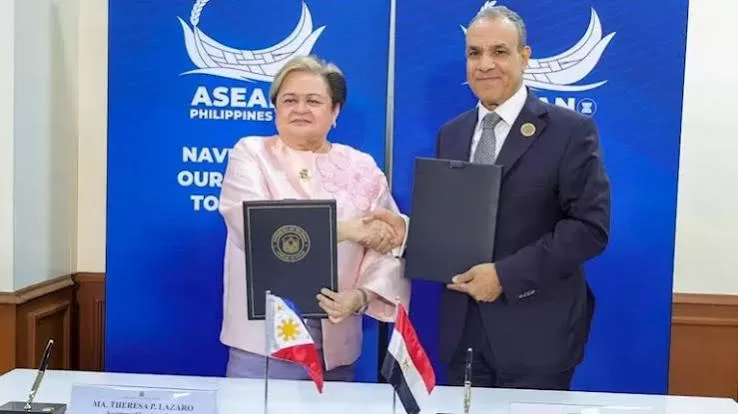
Egypt and the Philippines have taken an important step towards strengthening their relationship after holding the tenth round of political consultations in Manila, marking the first time the talks have been held at ministerial level. The visit by Egypt’s Minister of Foreign Affairs, Emigration and Egyptian Expatriates, Badr Abdel-Aati, is also historic, as it is the first visit by an Egyptian foreign minister to the Philippines since diplomatic relations were established 80 years ago.
The meetings came at a symbolic moment as both countries celebrated eight decades of diplomatic ties, which began in 1946. During the consultations, Abdel-Aati stressed that Egypt was among the first countries to recognise the independence of the Philippines, describing the anniversary as an opportunity to build a stronger and more forward-looking partnership.
He conveyed the greetings of President Abdel Fattah El Sisi to Philippine President Ferdinand Marcos Jr., while highlighting Egypt’s commitment to holding regular political consultations as a key mechanism for coordinating positions on regional and international issues and expanding bilateral co-operation. He also underlined the importance of increasing high-level visits and maintaining the positive momentum that has characterised relations between the two countries in recent years.
One of the most significant outcomes of the visit was the signing of an agreement granting immediate access for five Egyptian agricultural products to the Philippine market. Egyptian grapes, onions, garlic, tomatoes and carrots can now be exported directly, opening new opportunities for Egyptian farmers and exporters in one of Southeast Asia’s growing markets.
The agreement is expected to strengthen food security cooperation while boosting trade between the two countries. Egyptian officials also announced that discussions are continuing to complete technical procedures that would allow Egyptian potatoes to enter the Philippine market in the near future. At the same time, both sides are working to increase exports of Egyptian fertilisers, facilitate the registration of Egyptian medicines and food supplements, and expand exports of cotton textiles.
During his visit, Abdel-Aati also met President Marcos, delivering President El Sisi’s greetings and reaffirming Egypt’s interest in expanding economic and commercial co-operation. He encouraged businesses in both countries to take advantage of new investment opportunities and deepen partnerships across different sectors.
President Marcos welcomed the continued growth in bilateral relations and asked Abdelatty to convey his greetings to President El Sisi. He praised Egypt’s role in promoting peace and stability in the Middle East and expressed his country’s commitment to strengthening cooperation with Cairo in the years ahead.
The visit also reflected Egypt’s broader strategy of strengthening ties with Asia, particularly with the Association of Southeast Asian Nations (ASEAN). Egypt has steadily expanded its institutional relationship with ASEAN since joining the Treaty of Amity and Cooperation in 2016 and continues to seek closer cooperation with member states in trade, investment and regional affairs.
Political analyst Ahmed Sayed Ahmed believes the growing relationship with the Philippines is part of Egypt’s wider effort to increase its economic presence in Asian markets. He says the strategy goes beyond trade and investment to include tourism, transport and logistics, helping Egypt diversify its international partnerships instead of relying mainly on traditional markets.
According to Ahmed, Southeast Asia represents one of the fastest-growing regions in the world, offering significant opportunities for Egyptian exports, investment and tourism. He argues that stronger cooperation with the Philippines could create new opportunities for business, encourage more travel between the two countries and support Egypt’s ambition to become a regional hub for trade and logistics.

