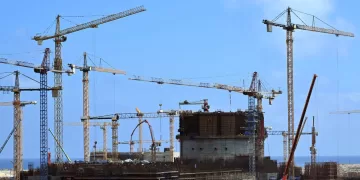





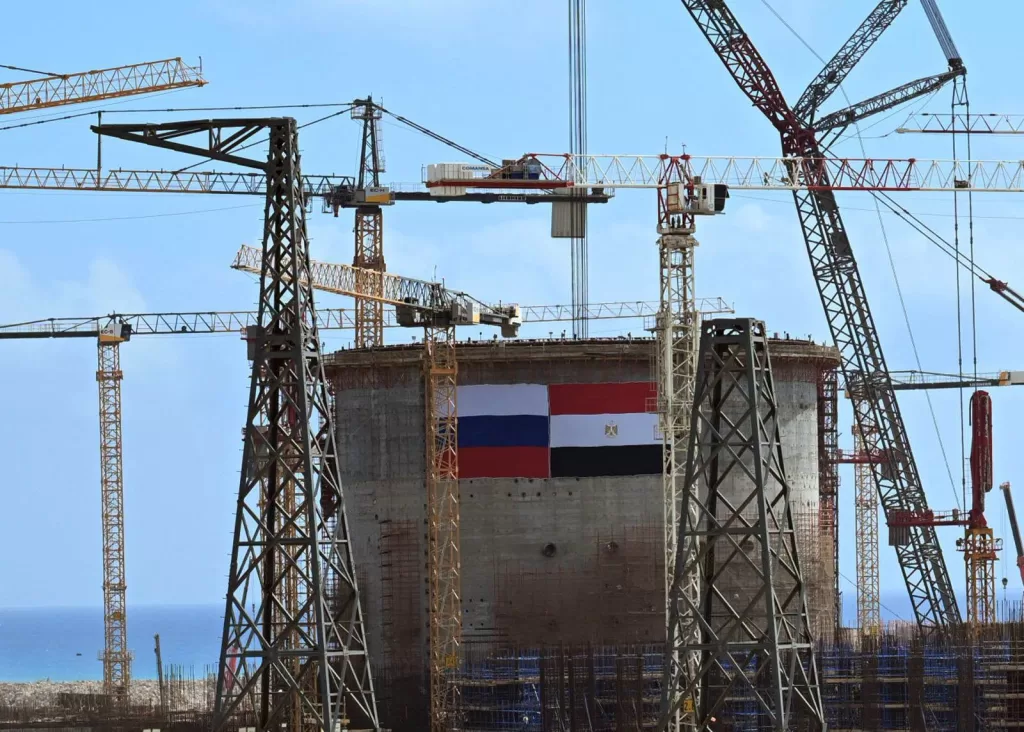
Prime Minister Moustafa Madbouli attended on Thursday the installation of the pressure vessel of the second unit of El Dabaa Nuclear Power Plant.
This constitutes a major technical milestone in the construction of Egypt’s first nuclear facility. It is also a significant step in the Arab country’s efforts to diversify its energy sources, strengthen long-term energy security, and reduce reliance on fossil fuels.
The installation of the pressure vessel for Unit 2 comes just eight months after the pressure vessel for Unit 1 was installed, an event witnessed remotely by President Abdel Fattah El Sisi and Russian President Vladimir Putin in November 2025 during Egypt’s fifth Nuclear Energy Day.
Speaking at the ceremony, Madbouli noted that this milestone coincided with the 13th anniversary of the June 30 Revolution.
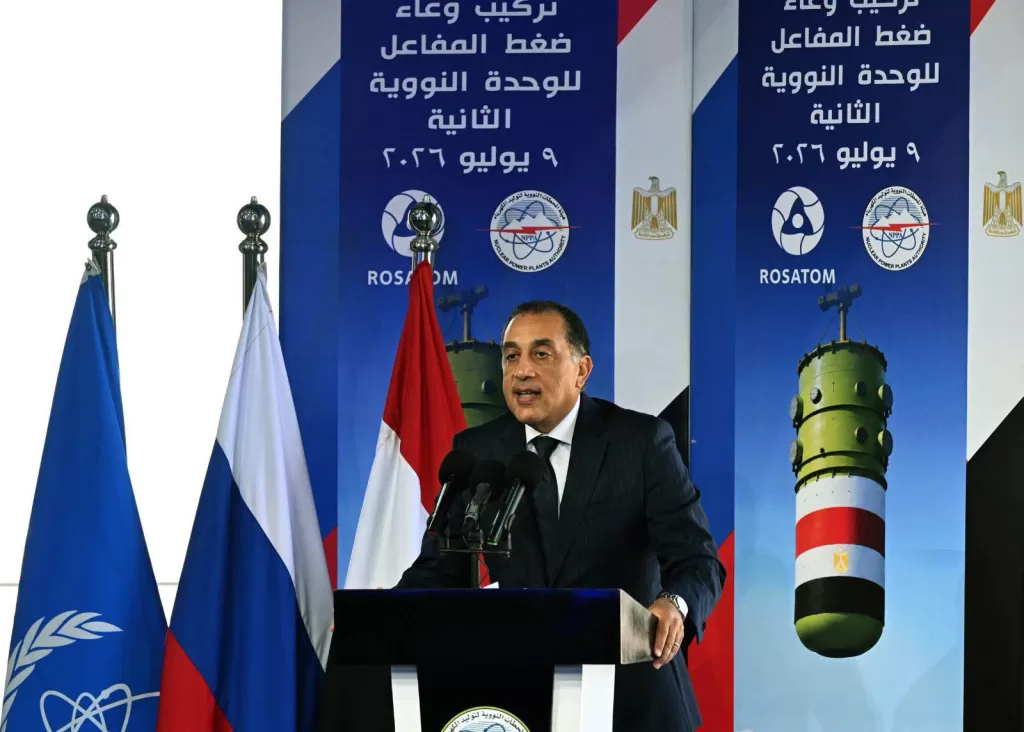
He described the El Dabaa plant as one of the most important national projects of the New Republic.
The prime minister emphasised that adopting peaceful nuclear energy is a strategic decision that offers a safe, reliable power source, helps cut carbon emissions, and supports Egypt’s sustainable development goals.
He highlighted the strong strategic partnership between Egypt and Russia, and praised the engineers and workers for delivering steady progress on the country’s first nuclear power station.
The prime minister added that Egypt Vision 2030 puts sustainable development at the centre of national policy, with energy as a key driver of economic growth and security.
Alexey Likhachev, Director General of Russia’s State Atomic Energy Corporation Rosatom, commended Egypt’s progress in the nuclear field.
He confirmed that construction is proceeding on schedule, with the first unit expected to connect to the national grid in 2028 and the remaining three units by 2030.
Likhachev reaffirmed Rosatom’s commitment to working closely with Egypt’s Ministry of Electricity and Renewable Energy on peaceful nuclear technology.
Meanwhile, Electricity and Renewable Energy Minister Mahmoud Esmat described the reactor pressure vessel as one of the most critical components in a nuclear plant, as it houses the reactor core and is essential for safe operation.
He said Egypt aims to increase the share of renewable and clean energy in its mix to 45 per cent by 2028.
Once fully operational, the El Dabaa plant is expected to save the country between $2.5 billion and $3 billion annually in fuel imports for power generation.
President Sisi once described the plant’s construction as a “dream that finally became a reality”.
In recent remarks, the president reiterated its role in supporting Egypt’s economic development and cutting energy costs for citizens, describing the project as the first chapter in Egypt’s modern nuclear history. “The project is a transformative step that will bolster the country’s position in the global energy landscape,” he said.
Located on the Mediterranean coast, about 130 kilometres west of Alexandria, El Dabaa will be Egypt’s first commercial nuclear power station.
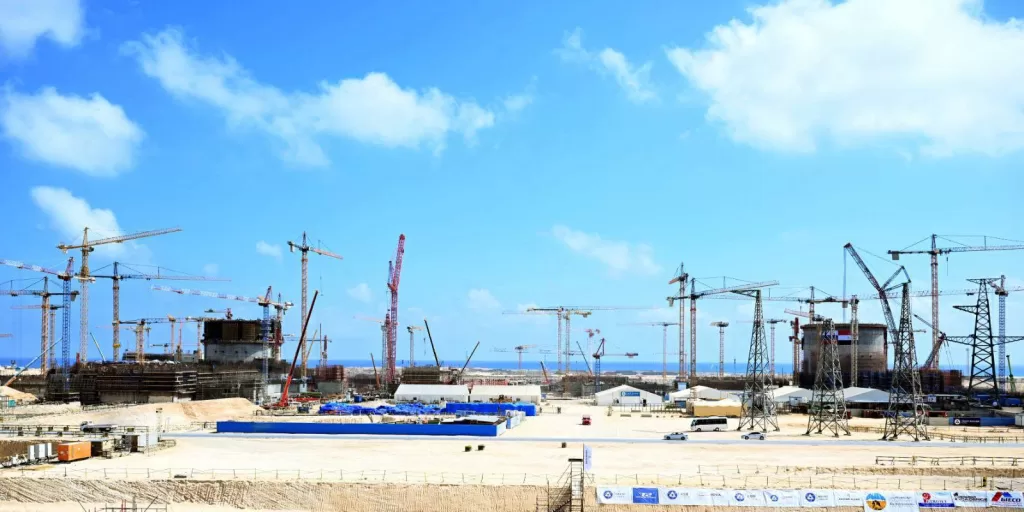
The facility will feature four Generation III+ VVER-1200 reactors with a total capacity of 4,800 megawatts.
Developed by Rosatom under a 2015 agreement, the project is estimated to cost nearly $30 billion, with Russia providing 85% through a state loan repayable over 22 years.
When complete, the plant is expected to generate around 10% per cent of Egypt’s electricity at a time when demand is projected to nearly double due to population growth, urban expansion, and industrial development.
It will also help the country avoid substantial carbon emissions, complementing its solar and wind initiatives, according to experts and specialists in the field.
“The El Dabaa project realises a strategic national dream that Egypt has pursued for more than five decades,” leading economist Hanan Ramsis told The Egyptian Gazette.
She pointed to the El Dabaa Nuclear Energy Vocational School, established in 2017, which trains a new generation of Egyptian engineers and technicians to operate and maintain the plant.
Professor Gamal El-Qalyoubi, who specialises in energy engineering, noted that combining natural gas, renewables, and nuclear power would reduce dependence on a single energy source.
It would also, he said, make the Egyptian power sector more resilient.
Professor El-Qalyoubi added that nuclear plants are designed to run efficiently for 60 or more years, providing reliable base-load electricity at relatively low long-term costs.
Beyond power generation, he said, El Dabaa would support Egypt’s broader urban, industrial, and economic development plans through 2050.

