




Islam Made Simple
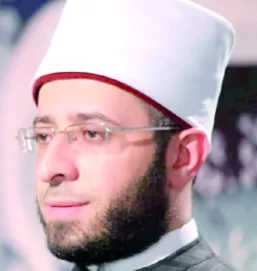
Dr Osama Al-Azhari
Minister of Awqaf
(Charitable Endowments)
Distinguished ladies and gentlemen, the noble people of Egypt, and our Arab and Muslim nation: welcome to a new episode of your programme, Pearls and Coral. In this blessed meeting, we journey together through the insights of the twenty-eighth Part of the Ever-Glories Qur’an, drawing out its gems of pearls and coral.
In this Part, we reflect on several passages from which we derive values, meanings, and etiquettes, extracting the pearls and coral within; for everything in the Ever-Glories Qur’an is magnificent.
Our first Reflection will be with the noble verse in which Allah Almighty says: “O you who have believed, when it is said to you, “Make room for yourselves in the assemblies,” then make room, (and Allah will make room for you. And when it is said, “Move up,” then move up Allah will raise in degrees the ones of you who have believed and the ones to whom knowledge has been brought; and Allah is Ever-Cognizant of whatever you do.” [Qur’an: 58: 11]
This noble verse speaks about the etiquette of assemblies – the manners of sitting in places. We constantly need this etiquette, especially when in a hall, a room, or any venue that might be narrow or crowded, and a person enters not knowing where to sit, asking us to make room.
Unfortunately, we often handle such situations with annoyance and grumbling. None of us wants to make room or even slightly inconvenience ourselves for someone else. Allah Almighty has warned us against this behaviour and called us to embody patience, forbearance, and generosity, and to be welcoming in receiving others. It is not permissible for us to feel annoyed; rather, we must demonstrate tact and generosity.
Let us contemplate the Divine recompense for this great character; Allah Almighty says: “Allah will make room for you.” If you make room for others with generosity, Allah will grant you expansion in all aspects of your life – your provision, your character, your place, and your livelihood.
The people of Allah almighty in the past used to say regarding this meaning:
The finest life is that which the soul desires…
Yet even the eye of a needle is a wide field when shared with loved ones.
Do you know what ‘the eye of a needle’ (summ al-khiyat) means? It is the tiny hole in a needle, yet it becomes spacious if you are in it with those you love.
Thus, spaciousness is not about the physical place, but about character. The Prophet (PBUH) said: “You cannot accommodate people with your wealth, but let them be accommodated by your cheerful face and good character.”
Our second Reflection is with the words of Allah Almighty “And (the ones) who took their location in the Residence (Al-Madînah) and in belief before them.” [Qur’an 59: 9]
This verse is like a practical application of the previous one. Allah Almighty speaks about our masters, the Ansar, in al-Madina al-Munawwara (may Allah be pleased with them) and describes them with a very wondrous description, saying: “And (the ones) who took their location (tabawwa’u).” What does ‘tabawwa’u’ mean? It means they descended and inhabited.
But how did they ‘inhabit the faith?’ It means they were deeply and firmly settled in faith. Observe how Allah described them; they did not just experience faith like a one lives in a house, but they were so immersed in the religion as if they were dwelling within it!
And what did they do with the guests who came to them? They did exactly as Allah says “when it is said to you ‘Make room for yourselves in the assemblies,’ then make room.” [Qur’an: 58: 11]
They applied this command practically. Therefore, Allah says about them: “And (the ones) who took their location in the Residence Al-Madînah) and in belief before them, love whomever has migrated to them, (i.e., to the ’Ansar, the Muslims of Al-Madinah)” [Qur’an 59: 9]
If one loves those who migrate to them, what will they do? They will make a room for them in their home, host them, and grant them a place to stay until they manage their affairs. They will treat them with kindness, broaden their conduct towards others, and honour them without causing distress or annoyance. Thus, this verse is a practical application of what preceded it. Then Allah says about them “And do not find in their breasts any need for what has been brought them, (The Muhajirun, those who emigrated from Makkah) and prefer (the Muhajirn) above themselves, even though penury be (their portion).” [Qur’an 59: 9] This means they feel no envy or distress regarding what is given to the Migrants. Instead, they prioritise others over themselves even if they are in need! Just as Allah Almighty says: “when it is said to you: ‘Make room for yourselves in the assemblies,’ then make room.” [Qur’an: 58: 11]
Our third Reflection is with the words of Allah Almighty “If We had sent down this Qur’an upon a mountain, indeed you would have seen it submissive, sundered apart out of apprehension of Allah.” [Qur’an 59: 21]
Let us contemplate this wondrous matter! Allah did not say if We sent it down upon liquid water or something soft; rather He says: “If We had sent down this Qur’an upon a mountain.”
A mountain is solid, hard, rocky, and rugged. Yet, had the Ever-Glories Qur’an been sent down upon it, it would have been affected and humbled out of fear of Allah. What then of our hearts?
If the mountain with all its solidity would humble itself and crack from the fear of Allah, what about human hearts? Why do we read the Ever-Glories Qur’an and not be affected? What is the veil between us and the Ever-Glories Qur’an that prevents us from understanding it, interacting with it, softening for it, or fearing when hearing it?
Allah says: “If We had sent down this Qur’an upon a mountain, indeed you would have seen it submissive, sundered apart out of apprehension of Allah.” [Qur’an 59: 21]
This is a grand and sublime meaning. Have you noticed the saying of the Prophet (PBUH): “Uhud is a mountain that loves us and we love it?” Scholars have wondered: why did the Prophet say, “Uhud is a mountain that loves us,” and not simply, “Mount Uhud loves us?” It was expected to be “Mount Uhud loves us,” but it came in two phrases: “Uhud is a mountain,” followed by “it loves us and we love it.” Why?
It is as if the Prophet wants to draw our attention to something amazing: that ‘Uhud’ despite being a rocky, hard, inanimate mountain had love sprout within it! How then can love not sprout within the hearts of the children of Adam?
Our fourth Reflection is with the words of Allah: “Allah does not forbid you (as regards) the ones who have not fought you on account of the religion and have not driven you out of your residences that you should be benign to them and be equitable towards them; surely Allah loves the equitable.” [Qur’an 60: 8]
This means that Allah Almighty does not forbid us from dealing kindly and justly with non-Muslims who have not fought us on account of our religion nor driven us from our homes.
So, my Christian brother in Egypt, and my brother in humanity whether he is Buddhist, Hindu, atheist, or of any other religion as long as he has not fought me for my religion or expelled me from my home, Allah commands me to be righteous to him, to be kind, and to be just. “Surely Allah loves the equitable.”
This noble verse, which we wish to reflect upon, concerns the dealings of Muslims with followers of other religions and the People of the Book. It contains the same previous principle: hearts that have learned the meaning of love, hearts that have “settled in faith,” hearts that when told to make space they make space and accommodate others.
Treat the followers of other religions with righteousness and equity. This is your brother; between you and him is a common human bond. Treat him with kindness, and he will treat you with what is better. Let the covenant of dealing between you and all followers of other religions be this principle: “That you should show kindness to them and be equitable towards them.” Because these are hearts that have softened to the Ever-Glorious Qur’an, purified them from hatred, and learned fairness.
Our fifth Reflection is in Surah al-Talaq, at a wondrous point where our Lord detailed a beautiful explanation. Allah Almighty says “(And) by that then is admonished whoever believes in Allah and the Last Day. And whoever is conscious of Allah,” [Qur’an 65: 2]
What is the reward? What is the recompense? What is the gift in return?
Piety (taqwa) means being deeply conscious of Allah: fearing the Almighty, acting upon His revelation, and preparing for the Day of Departure. This is how scholars used to define it, and we heard our teachers instruct us in these very terms.
Piety is somewhat difficult because it means a person masters themselves and resists their whims. The soul may command one to be stingy, to be angry, to defame, or to mock, but one resists the soul. This is a bit hard and requires patience, strength, certainty, and faith. But in return, it has a magnificent effect.
Our Lord promised five rewards, five grants in return. Let us count them together:
He (The Almighty) says: “And whoever is conscious of Allah, He will make for him (a way) of going out.” [Qur’an 65: 2] The first reward of piety is that Allah provides a way out for you from every distress. Whenever circumstances tighten and hardship strikes, Allah makes a way out for you.
Does this Divine intervention not deserve that you be patient for a while, resist your soul, possess good character, and abstain from prohibitions?! Does it not deserve that?! Every time you fall into distress, Allah Almighty makes a way out for you.
How many hardships do you go through? When you feel intense pain and say, “O Lord, make for me a way out!”? Allah says to you: You do something in return, and I will make for you a way out of every distress. As the prophet (PBUH) said: “Whoever frequently seeks forgiveness, Allah Almighty will grant him a way out of every distress.”
The second reward: “And He will provide for him from where he does not (expectedly) reckon.” [Qur’an 65: 3] Meaning that if you fear Allah, He will provide for you from sources you never anticipated.
The third reward: “and whoever is conscious of Allah, He will make for him, of His Command, easiness.” [Qur’an 65: 4] He makes all your affairs easy.
The fourth reward: “And whoever is conscious of Allah, He will expiate for him misdeeds.” [Qur’an 65: 5]
The fifth reward: “and will magnify the reward for him.” [Qur’an 65: 5]
Let us put them together: “And whoever is conscious of Allah, He will make for him (a way) of going out, And He will provide for him from where he does not (expectedly) reckon… He will make for him, of His Command, easiness… He will expiate for him misdeeds, and will magnify the reward for him.”
What more could you want? What action has a greater impact and a larger reward than piety?! Allah gives you all these advantages and incentives so that you can resist your soul and be conscious of Allah.
We ask Allah Almighty to make us and all of you among the pious.
Until we meet again, stay noble, stay safe.

