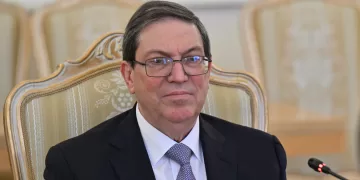





HAVANA (Reuters) – Cuba’s foreign minister said on Tuesday that talks initiated earlier this year with long-time foe the United States had stalled, leaving little hope for an end to U.S. sanctions that have laid seige to the island`s ailing economy.
Top diplomat Bruno Rodriguez told reporters that U.S. sanctions were “causing deaths” in Cuba as the island`s economy collapses and severe shortages of food, fuel, medicine and electricity make life nearly unbearable for the island`s approximately 9 million residents.
“Talks between Cuba and the US show no progress,” Rodriguez said at a press conference in Havana. “The conduct of US government delegations — generally respectful — has been accompanied by constant threats against Cuba, the application of coercive measures, and offensive statements regarding our country’s independence.”
“Despite this, Cuba remains open to dialogue and the peaceful resolution of differences, based on mutual respect and non-interference in Cuba’s internal affairs.”
The U.S. State Department did not immediately respond to a request for comment on the foreign minister`s statement.
The U.S. has called Cuba`s government a national security threat and says sanctions are necessary to force a change in the island`s government, a long-time aim of U.S. policy towards Cuba.
Cuba, 90 miles off the shores of the Florida Keys, has long maintained it is not a threat to the United States.
United Nations experts have previously called the U.S. fuel blockade, implemented in January, “illegal” and a violation of the human rights of all Cubans.
Rodriguez also said the U.S. State Department was also “pressuring and intimidating” United Nations member states to put off an upcoming floor debate over the U.S. blockade of the communist-run island.
The debate, slated for July 7, typically precedes a largely symbolic, non-binding U.N. vote of member states later in the year to call on the U.S. to end its sanctions against Cuba.

