



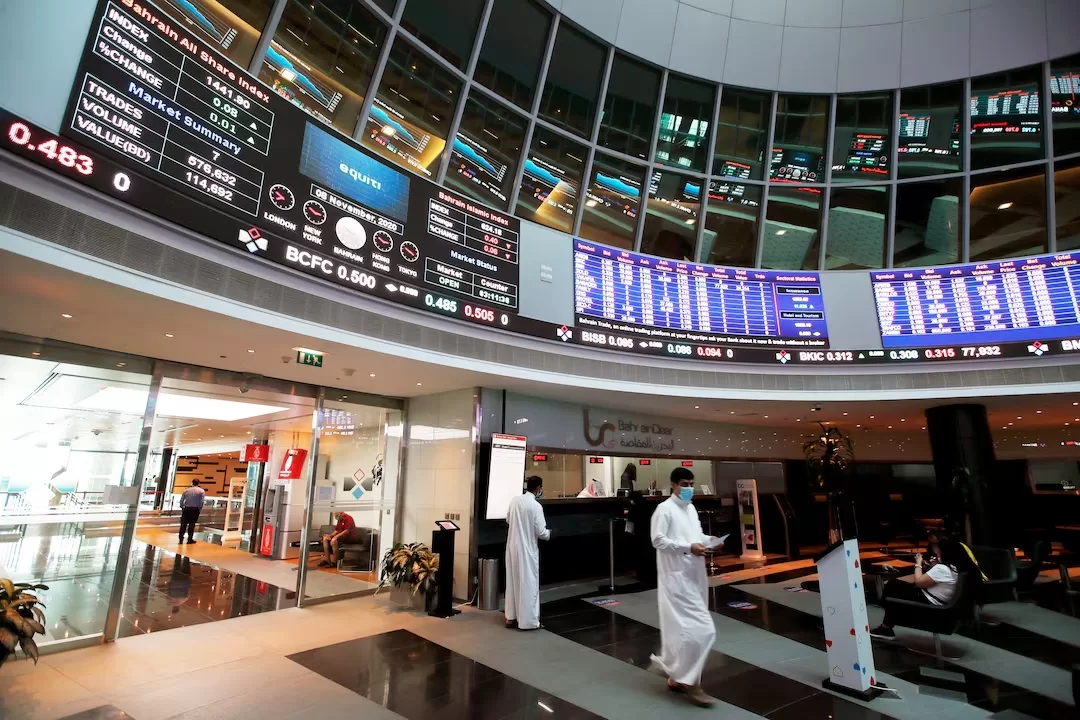
For most of the past decade, the story of finance in the Arab world was told from the top down sovereign funds, mega-IPOs, the listing of state energy giants on regional exchanges. Lately, a quieter story has been unfolding from the bottom up. Ordinary people across the Gulf, and increasingly across Egypt and the wider Arab region, are opening trading accounts on their phones. They are buying shares, trading currencies, and experimenting with instruments that were once the preserve of institutions and the wealthy.
Nowhere is the shift more visible than in Saudi Arabia. The Kingdom’s Vision 2030 program set out, among many goals, to deepen and broaden the capital market and to pull more citizens into formal investing. The results are tangible. The Saudi Exchange, Tadawul, has grown into one of the largest bourses in the region, and its blockbuster listings have introduced millions of first-time investors to the mechanics of buying and holding equity. Behind the headline floats, a generation of younger Saudis has grown comfortable with the idea that a brokerage account is a normal household tool rather than an exotic luxury.
That comfort has not stopped at domestic stocks. A large and growing share of retail activity in the Gulf now flows toward foreign exchange, commodities, indices and contracts for difference offered by international online brokers. The appeal is obvious: low entry costs, around-the-clock markets, and slick mobile platforms that promise access to the whole world from a single app. The risk is just as obvious, and it is where the picture turns complicated.
A crowded, confusing marketplace
Anyone in Riyadh, Jeddah or Cairo who decides to start trading online quickly discovers the same thing: there are far too many brokers, and they all claim to be the best. Some are regulated by serious authorities. Others operate from offshore jurisdictions with little oversight. Spreads, commissions, withdrawal terms and leverage limits vary enormously, and the marketing rarely makes the differences clear. For an Arabic-speaking newcomer, the problem is compounded by language. The most detailed broker reviews and comparison tools have historically been written in English, leaving Gulf traders to navigate fine print and regulatory disclosures in a second language.
This is the gap that a handful of Arabic-language comparison platforms have stepped in to fill. Sites such as brokerarab attempt to do for online brokers what price-comparison sites long ago did for insurance and flights: lay out the options side by side, translate the jargon, and let users judge for themselves. The value of such tools is less about steering people toward any single firm and more about restoring a measure of balance to a market where the seller usually holds all the information.
Regulation is the part that matters most
If there is one message that financial educators in the Gulf repeat, it is that regulation is not a technicality it is the difference between a recoverable dispute and a total loss. In Saudi Arabia, the Capital Market Authority (CMA) supervises securities activity, while the Saudi Central Bank (SAMA) oversees the broader financial system. Both have grown more assertive in warning the public about unlicensed platforms and fraudulent “investment” schemes that circulate on social media, often dressed up with fake testimonials and promises of guaranteed returns.
The practical advice that flows from this is unglamorous but sound. Before funding any account, a trader should confirm which authority licenses the broker, whether that license covers the products being offered, and how client money is held. A platform regulated by a respected body in Europe, the United Kingdom or the Gulf is not automatically safe, but it is operating under rules that give a wronged customer somewhere to turn. An unregulated offshore entity, by contrast, may simply vanish. Comparison resources earn their keep precisely when they surface this kind of detail the licensing status, the protections, the costs that are easy to overlook rather than burying it beneath star ratings.
Education before enthusiasm
The other lesson from the Gulf’s retail boom is that access has outpaced literacy. It is now trivially easy to open an account and place a leveraged trade; it is considerably harder to understand what leverage actually does to a position when a market moves against it. Regulators across the region, including in Saudi Arabia, have leaned into investor-education campaigns for exactly this reason. The most useful comparison platforms reflect that spirit, pairing their broker listings with plain-language explainers on spreads, margin, risk management and the warning signs of a scam.
None of this guarantees that a beginner will trade profitably most retail traders, the global data consistently shows, do not. But informed losses are different from preventable ones. A trader who chooses a properly licensed broker, understands the fees, and knows the risks has at least entered the market on fair terms.
The bigger picture
The democratization of trading in Saudi Arabia and across the Arab world is, on balance, a healthy development. It reflects rising financial confidence, deeper markets and a young population eager to participate in the economy rather than watch from the sidelines. The Kingdom’s reform agenda has done a great deal to make that participation possible.
What the moment now demands is infrastructure of a less visible kind not more exchanges or listings, but better information, in Arabic, aimed at the individual sitting at a kitchen table deciding where to put a first deposit. Independent comparison tools, honest reviews and clear regulatory guidance are unglamorous, but they may end up doing as much for the region’s financial health as any headline reform. The traders are already here. The task is making sure they know who they are trading with.

