



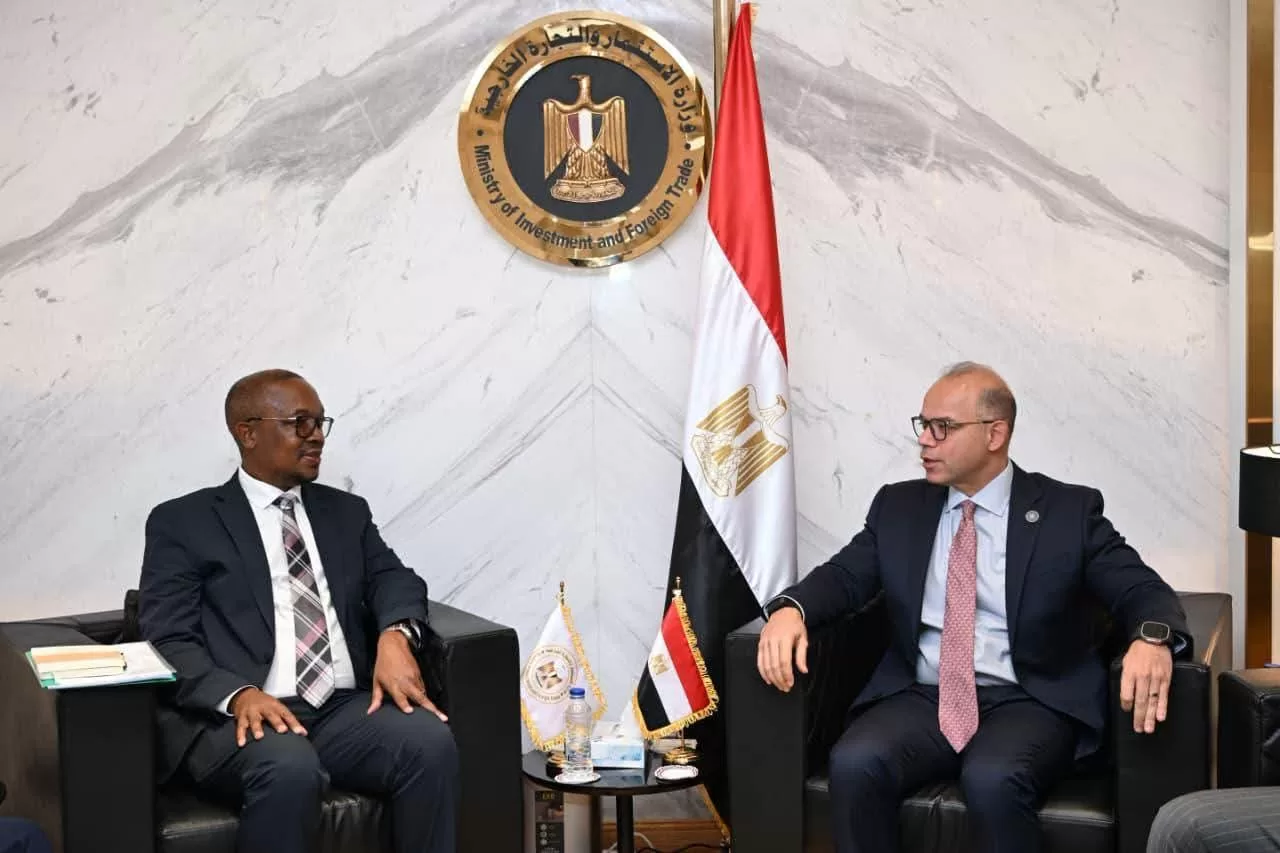
Minister of Investment and Foreign Trade, Mohamed Farid, affirmed on Sunday that co-operation between Egypt and South Africa represents a cornerstone for strengthening African economic integration, stressing the need to transition from traditional trade exchange to joint industrial co-operation and the integration of value chains.
He noted that the next phase requires genuine intra-African cooperation across industry, mining, energy, and trade, with the aim of creating sustainable growth across the continent.
Minister Farid held extensive talks with Minister of Trade, Industry and Competition of the Republic of South Africa, Mbao Parks-Taw, in the presence of Minister of Industry and Ambassador of the Republic of South Africa to Egypt, Ntseki Mashimbe, to discuss strengthening economic, trade, and investment relations and expanding co-operation in industrial, logistical, and commercial sectors.
He emphasised the importance of moving beyond increasing trade volumes to establishing an integrated investment and trade model that can serve as a benchmark for African integration.
He also highlighted the need to expedite product approval and registration procedures between the two sides, particularly in pharmaceuticals, through the establishment of fast-track mechanisms to enhance market access and reduce regulatory timelines.
The minister further noted that Egypt is working to modernise its legislative and customs frameworks governing trade, including facilitating transit and logistics centres, as part of efforts to strengthen its position as a regional hub for trade and distribution.
For his part, Minister Mbao Parks-Taw affirmed that co-operation with Egypt represents a strategic opportunity to advance African economic integration.
He added that technical preparations have been completed for several proposed areas of co-operation, particularly industrial collaboration, including the automotive sector, and expressed readiness to proceed with the necessary procedural steps in the coming phase.
Both sides emphasised the importance of utilising ports and special economic zones in both countries to enhance supply chain efficiency and reduce transportation costs, while noting that the sustainability of shipping routes depends on trade volume growth.
They also agreed on activating cumulative rules of origin within the African continent to enable multi-country production and facilitate access to regional markets as African-origin products, including in engineering, automotive, and manufacturing sectors.
The two sides further discussed potential cooperation in the automotive sector between Egypt and the Southern African Customs Union, alongside strengthening pharmaceutical industry co-operation through streamlined registration and certification procedures.

