



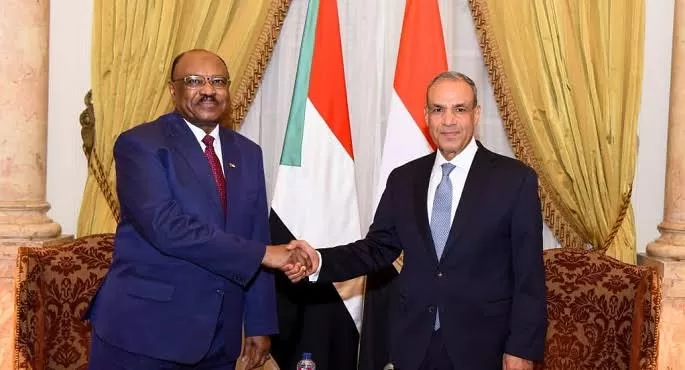
As Sudan’s war enters its third year, diplomatic efforts are gaining new attention. The recent meeting in Cairo between Egyptian Foreign Minister Badr Abdelatty and Sudanese Foreign Minister Mohi El-Din Salem was more than a routine visit. It reflected the close ties between the two neighboring countries and highlighted Egypt’s continued efforts to support stability in Sudan during one of the most difficult periods in its modern history.
According to Egypt’s Foreign Ministry, the talks underscored the deep historical and brotherly relations between Egypt and Sudan. Both ministers stressed the importance of strengthening bilateral relations and expanding cooperation in different fields in a way that serves the interests of both countries and their peoples.
The Sudan crisis was at the center of the discussions. Abdelatty reiterated Egypt’s firm support for Sudan’s unity, sovereignty, territorial integrity, and national institutions. He also reaffirmed Cairo’s rejection of any attempts to establish parallel political entities that could further divide the country.
Egypt’s top diplomat called for a humanitarian truce that could pave the way for a lasting ceasefire and the revival of a political process led by Sudanese parties themselves. He stressed the importance of ensuring humanitarian access to areas affected by the conflict and emphasized respect for the principle of Sudanese ownership of any political settlement. Abdelatty also highlighted the importance of international and regional efforts, including the role of the international quartet, in supporting stability and ending the conflict.
For Egypt, the conflict in Sudan is not simply a foreign policy issue. Sudan’s stability is closely linked to Egypt’s own national security. The two countries share strong historical ties, economic interests, and a long border, making developments inside Sudan a matter of direct concern for Cairo.
Dr. Amin Ismail Magzoub, a Sudanese expert in crisis management and negotiations at the Center for Strategic Research and Studies, said Egypt remains one of the most important players in the Sudan file because it sees Sudan’s stability as part of its own strategic security. He noted that Cairo continues to support the preservation of Sudan’s state institutions, particularly the military establishment, as a safeguard against further instability.
Magzoub also pointed to ongoing diplomatic contacts involving Egypt, Turkey, Sudan, and U.S. Africa adviser Massad Boulos. He believes these discussions could help create a broader negotiating framework that brings together different peace initiatives, including the Jeddah talks, African Union efforts, and other international mediation tracks.
The renewed diplomatic activity comes as hopes for a military solution continue to fade. According to Magzoub, the lack of a clear path to victory for either side may encourage the parties to focus on practical measures such as temporary ceasefires and safe humanitarian corridors to ease civilian suffering.
For its part, Sudan welcomed Egypt’s continued support. During the meeting, Salem expressed appreciation for Cairo’s backing on various levels and praised Egypt’s position in support of Sudan’s unity and stability. He also reviewed the efforts being made by the Sudanese government to address current challenges and affirmed his country’s commitment to maintaining close consultation and coordination with Egypt in the period ahead.

