










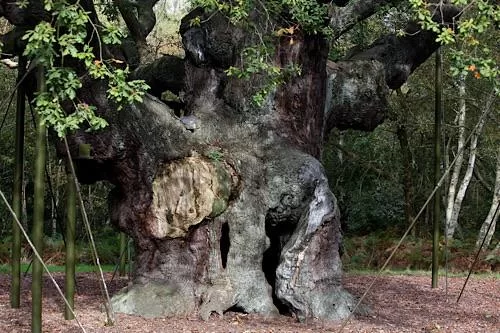
The iconic Major Oak of Sherwood Forest, a 1,200-year-old tree deeply intertwined with the legend of Robin Hood, has died after failing to sprout leaves this spring. While rumors of its demise have circulated for years, the Royal Society for the Protection of Birds confirmed on Thursday that this time the loss is final, calling the situation heartbreaking for everyone.
Experts believe the ancient giant may have ultimately been loved to death. For over two centuries, millions of tourists have flocked to Nottingham to view its gnarled limbs, and this relentless foot traffic severely compressed the surrounding soil, making it incredibly difficult for rainwater to reach the roots.
While it is impossible to pinpoint a single definitive cause of death, conservationists say the footprints of millions contributed heavily to its downfall, alongside structural interventions like heavy cables and poles used to shore up its limbs, and the accelerating stress of climate-driven heatwaves and droughts.
According to English folklore, the tree famously sheltered Robin Hood and his Merry Men as they evaded the Sheriff of Nottingham in the 13th century. It earned its modern name in 1790 after being featured in a popular book by Major Hayman Rooke, which sparked the first historic wave of fans to the forest.
Beyond mythology, Sherwood’s woodlands hold a vital place in British history, having provided the timber for Vice Admiral Horatio Nelson’s Royal Navy fleet and the roof of London’s St. Paul’s Cathedral.
The Woodland Trust is now using the high-profile loss to sound the alarm on the plight of other ancient woodlands across the United Kingdom.
Conservationists note that these historic trees are essentially the white rhinos of British conservation, yet their decline is far less visible, warning that most of them disappear quietly without ever receiving the recognition or care that was given to the Major Oak.

