



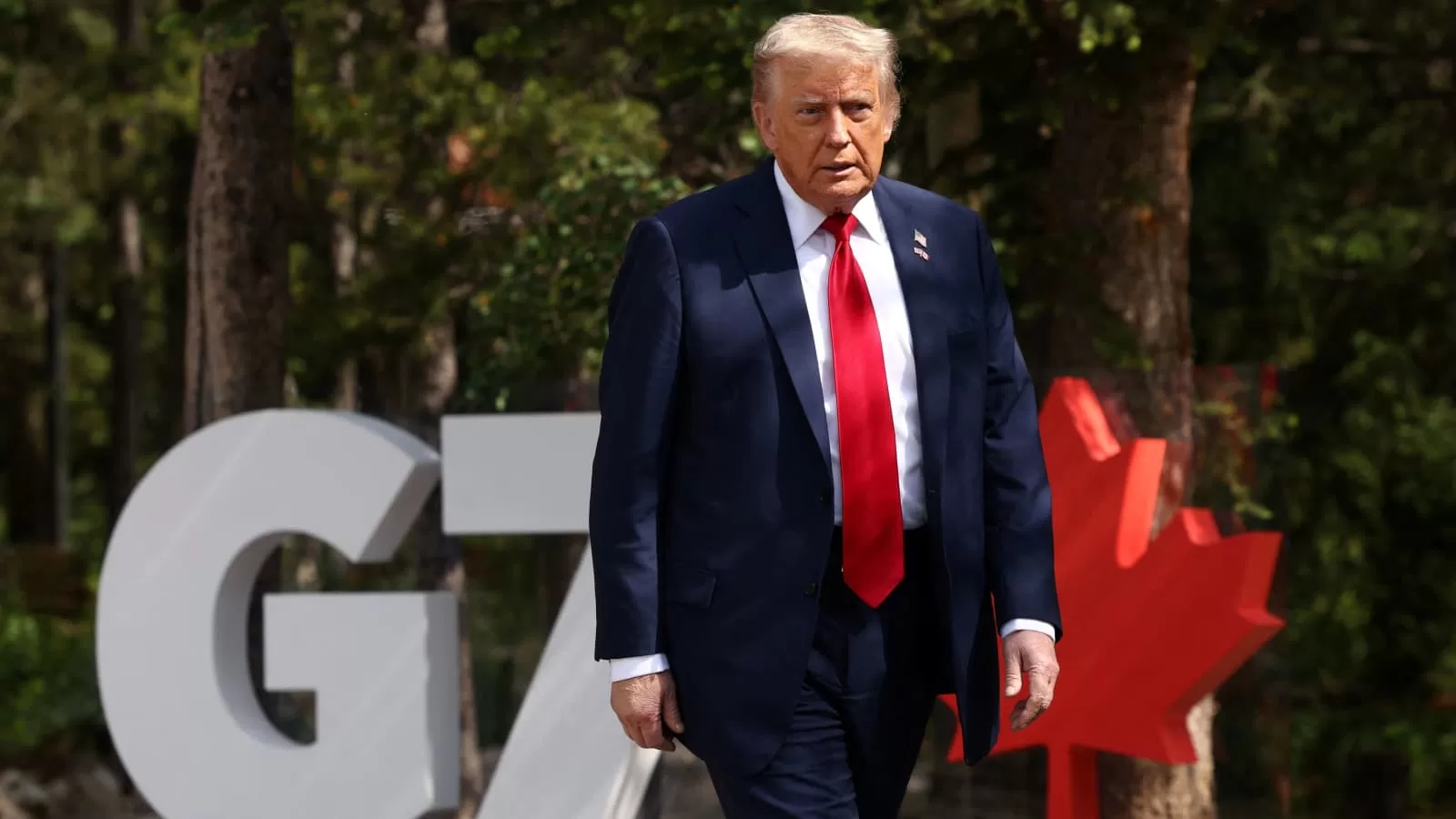
Wars in the Middle East and Ukraine are set to dominate next week’s Group of Seven summit, as host France crafts an agenda aimed at projecting unity and avoiding confrontation with US President Donald Trump.
The June 15–17 gathering in Evian-les-Bains, on the shore of Lake Geneva, brings together the leaders of France, Britain, Canada, Germany, Italy, Japan and the United States, alongside the European Union.
With Trump struggling to end a war that has disrupted the global economy, and frustrated with European allies he deems to have failed him in the Gulf and grown over-reliant on the US for their security needs, diplomats say crisis management will be the focus.
No breakthrough decisions are thus expected on key issues, which also include tackling global economic imbalances and sourcing critical minerals outside China.
The grouping, founded half a century ago, has traditionally addressed economic and geopolitical challenges with broad consensus. But that cohesion has frayed since Trump returned to the White House in 2025.
Having already shifted the dates to accommodate Trump’s birthday plans for cage fighting on the White House lawn, French officials, like other recent summit hosts, have set the bar low, suggesting it will be a success if Trump just stays for the whole event, having left the 2025 version early.
“Macron has gone out of his way to have an agenda that is designed to appeal to the sort of things President Trump wants,” said Josh Lipsky, chair of international economics at the Atlantic Council.
The tempo may be dictated by events in the Middle East. A fragile ceasefire between the US and Iran is under strain, and securing even an interim accord that delays tackling harder issues such as Iran’s nuclear programme is proving arduous.
Trump wants Iran to reopen the Strait of Hormuz, a choke point for global oil and gas shipments. Tehran is demanding that the US end its blockade on Iranian ports and release frozen Iranian assets, and that Israel cease its attack on the Iranian-backed Hezbollah militia in Lebanon.
Diplomats say Trump’s mood may hinge on whether he can get an accord done before the summit. In recent months, he has lashed out at some of the US’s closest allies in NATO for their unwillingness to support his Gulf campaign.
One senior diplomat from a G7 member said an accord might allow the group to put months of tension with the US behind them.
France has invited Saudi Arabia, the United Arab Emirates and Qatar, all directly harmed by the war, to the summit along with Egypt, a key player in mediation efforts.

