



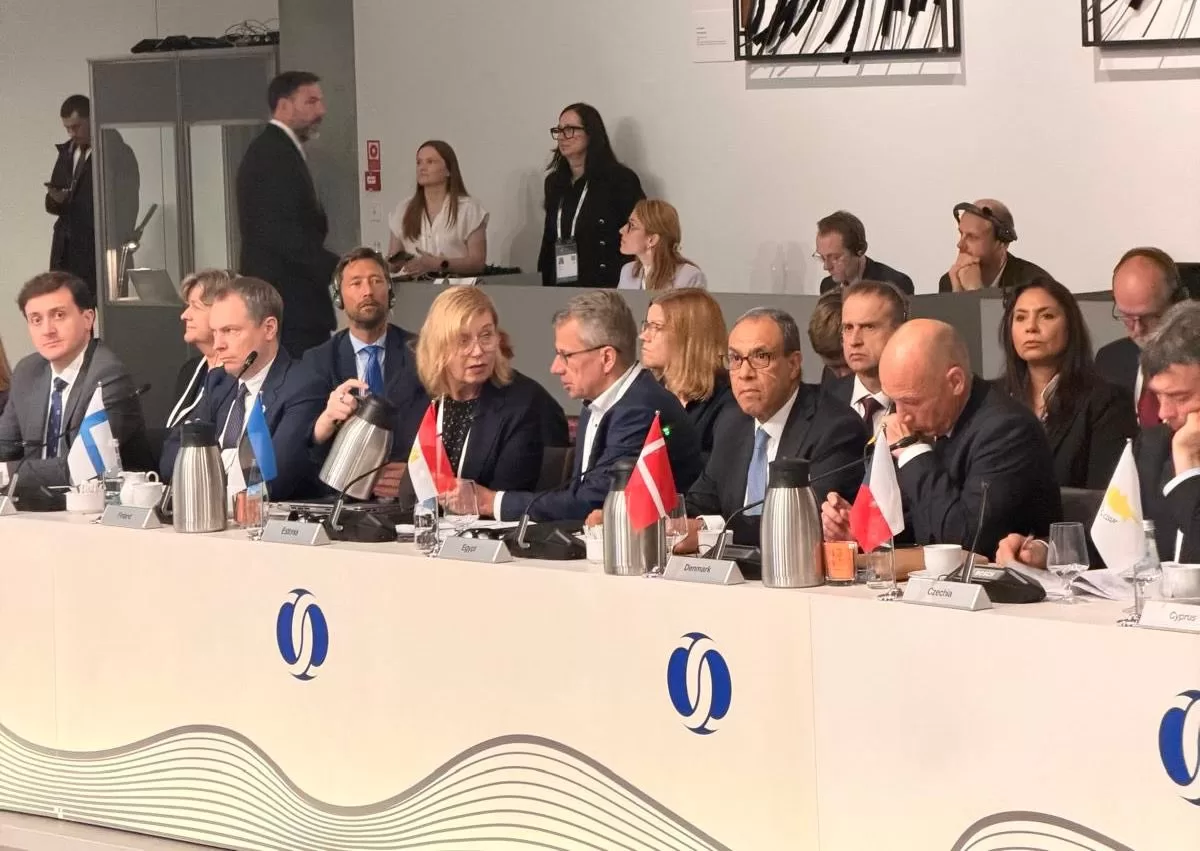
Egypt’s high-level participation in the 35th Annual Meeting and Business Forum of the European Bank for Reconstruction and Development (EBRD) reflects more than routine engagement with a multilateral lender. The gathering, held in Riga from June 5 to 7, offered Cairo an opportunity to present its evolving economic vision at a time when global investment flows, supply chains, and energy markets are undergoing significant transformation.
Leading the Egyptian delegation were Foreign Minister Badr Abdel-Aati, Egypt’s Governor at the EBRD, and Minister of Industry Eng. Khaled Hashem. Their presence underscored the country’s effort to align industrial expansion, foreign investment attraction, and sustainable development within a broader strategy aimed at strengthening economic resilience.
A central theme of Egypt’s participation was the government’s updated industrial strategy, which seeks to raise industrial exports to $100 billion by 2030. Rather than focusing solely on import substitution, the strategy emphasizes integration into global value chains and attracting investments that bring technology transfer, technical expertise, and advanced manufacturing capabilities.
During the forum, Hashem outlined seven priority sectors that the government considers key drivers of future growth, including textiles and garments, food processing, pharmaceuticals, automotive manufacturing, engineering industries, electrical equipment, and electronics assembly. The approach reflects an effort to capitalize on Egypt’s geographic location, trade agreements, and expanding infrastructure network.
Energy security emerged as another major component of the discussions. Against a backdrop of global energy volatility, Egypt highlighted plans to ensure reliable energy supplies for industry while simultaneously reducing carbon emissions. The proposed “Sun of Industry” initiative, which aims to establish solar power facilities with a combined capacity of 1,000 megawatts over the next two years, signals a growing emphasis on renewable energy as a pillar of industrial competitiveness.
The government also presented plans to improve energy efficiency within factories, localize machinery manufacturing, and expand vocational training programs. Such measures are designed to address longstanding challenges related to productivity, workforce readiness, and industrial modernization.
Equally significant were discussions between Foreign Minister Abdelatty and European Commissioner for Economy and Productivity Valdis Dombrovskis. Their meeting highlighted the growing momentum behind the Egypt-European Union Strategic and Comprehensive Partnership. Both sides reviewed opportunities to expand cooperation in renewable energy, green transition projects, digital transformation, food security, and infrastructure development.
The talks also touched on the implementation of the European Union’s financial support package for Egypt covering the 2024–2027 period, reinforcing the importance of sustained international backing for ongoing economic reforms.
For Egypt, participation in the EBRD annual meeting served not only as a venue for dialogue but also as a platform to communicate a broader message: that industrial development, private-sector empowerment, green growth, and international partnerships remain at the center of the country’s economic agenda in an increasingly complex global environment.

