



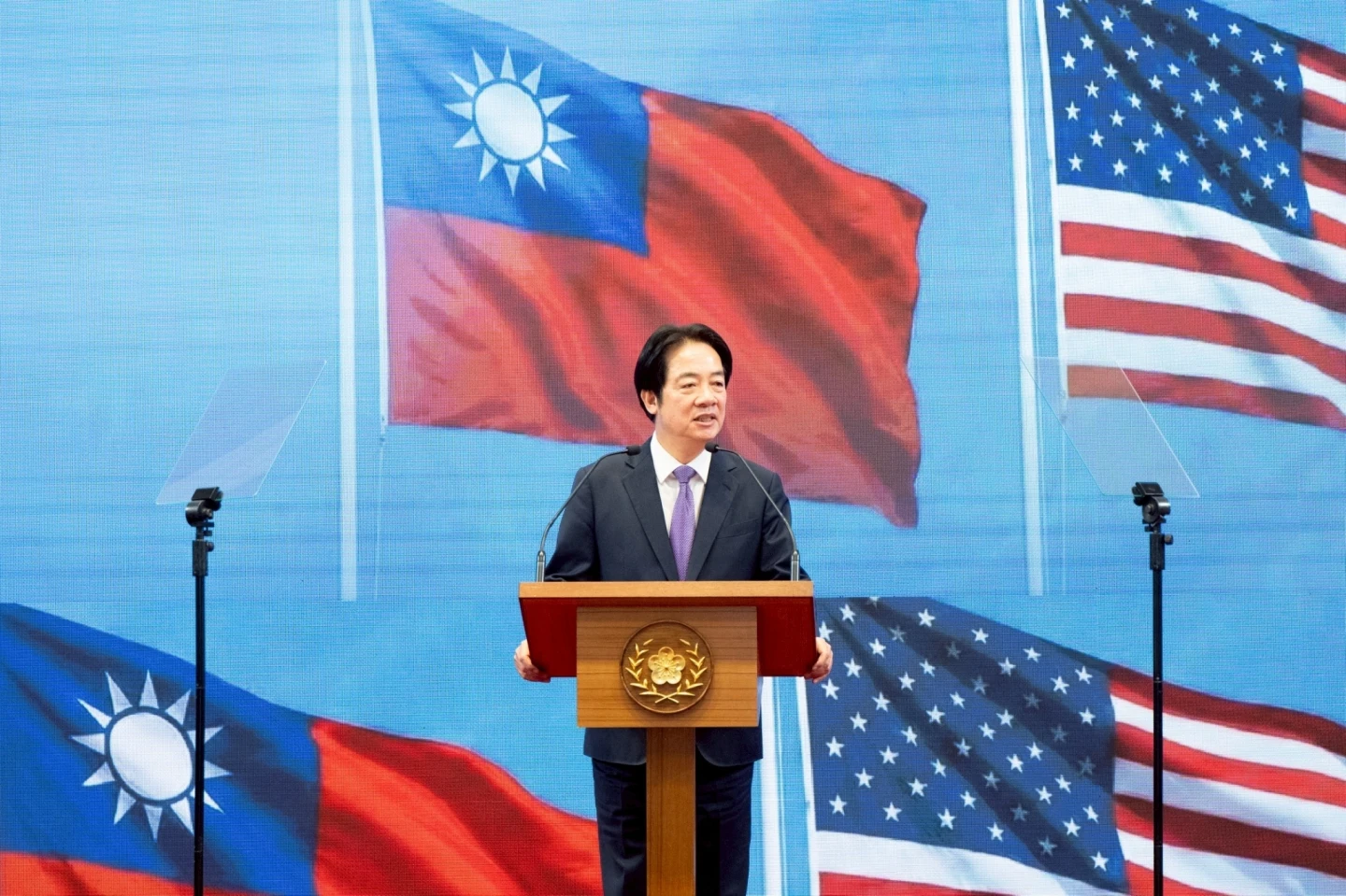
President Donald Trump indicated that he may still speak with Taiwan’s President Lai Ching-te — even after China has publicly urged him not to directly engage with the leader of the self-ruled island that Beijing claims as its own.
Trump first raised the idea last month on his way back from meeting President Xi Jinping in Beijing, saying that he intended to speak directly with Lai as he weighs whether to go ahead with a $14 billion arms sale for Taipei that Congress approved earlier this year.
The US president suggested that a call with the Taiwanese leader is still in play. “I’ll always talk to him,” Trump told reporters when asked if he still intended on calling Lai.
Such a call would mark the first direct dialogue between sitting American and Taiwanese presidents in many decades, and Beijing has discouraged Trump against such an engagement.
The Chinese embassy in Washington in a statement to the Associated Press this week said that kind of phone call could undermine progress in the delicate US-China relationship and urged the Republican administration to “handle the Taiwan question with utmost prudence” and “avoid sending wrong signals” to officials in the democratically run island that China views as a breakaway province.
Trump raised China’s ire when he took a congratulatory call from Taiwan’s then-President Tsai Ing-wen after winning the 2016 presidential election but before taking office.
Trump has raised the idea of a direct engagement with Lai even as he’s been more circumspect about whether he’ll move forward with a major arms package for Taiwan after hearing concerns about it from Xi in Beijing. Congress greenlit the arms deal in January but it still needs Trump’s approval,
The president said last month he sees arms sales with Taiwan as a “negotiating chip” in the administration’s approach to Pacific policy.
At last month’s Beijing summit, Xi warned Trump that the “Taiwan question” is the most important issue in ties between China and the US, and that the two nations will “have clashes and even conflicts” without proper handling of the matter, according to Chinese officials.
Trump’s discussion with Xi about the arms sales to Taiwan seemed out of step with the US policy principles known as the Six Assurances. The nonbinding principles, formulated in 1982 under President Ronald Reagan, have helped guide the US relationship with Taipei, according to analysts.
The second of the Six Assurances states that the US “did not agree to consult with the People’s Republic of China on arms sales to Taiwan.”
Secretary of State Marco Rubio during a series of congressional hearings earlier this week said that the United States’ Taiwan policy has not changed.
But Trump’s rhetoric has added a more foggy dynamic to the US-Taiwan relationship, said Craig Singleton, a China expert at the Foundation for Defense of Democracies.
“Trump’s comments about Taiwan arms sales as a negotiating chip, combined with uncertainty around a possible Lai call, have created more ambiguity than Taipei would like,” Singleton said. “The real test is not the rhetoric. It is whether the pending arms package moves, and on what timeline.”

