



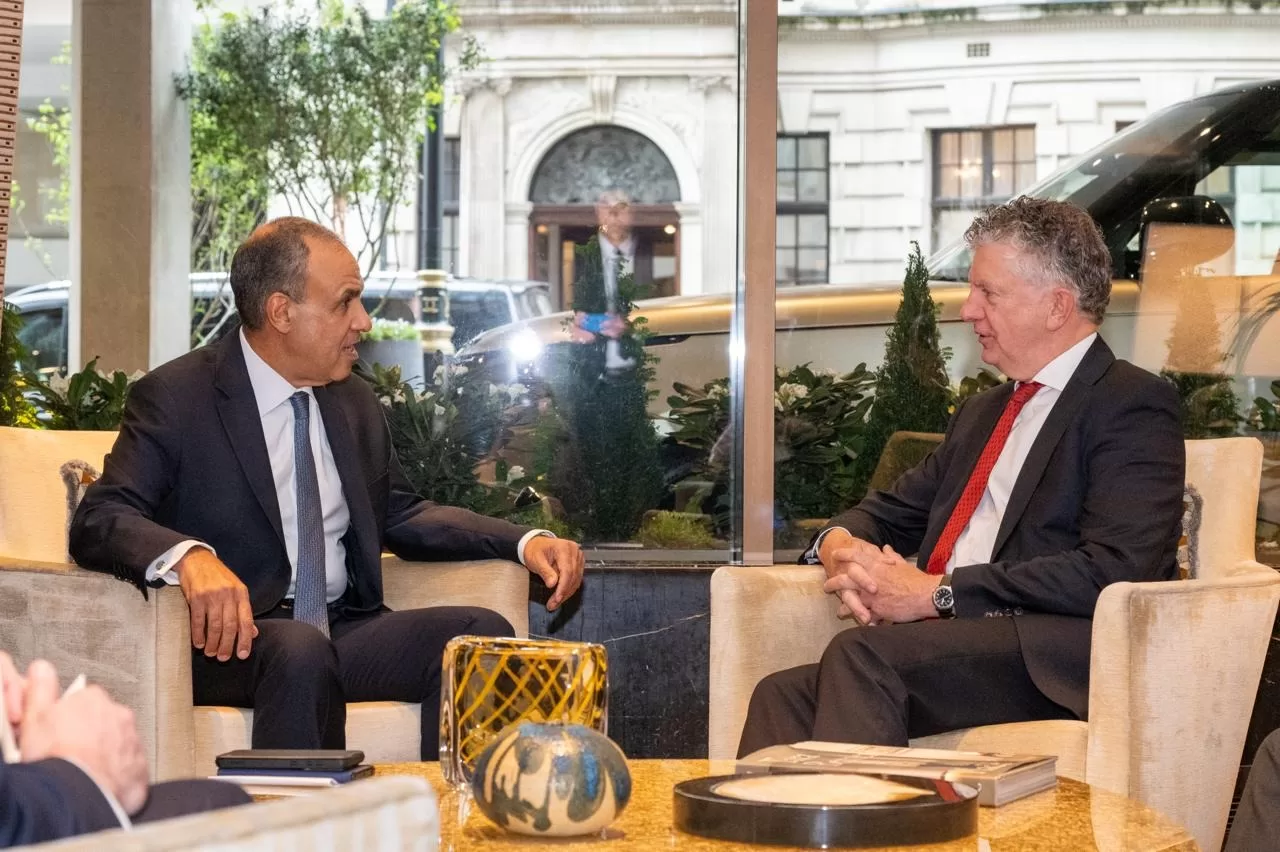
At the start of his visit to London, Egypt’s Foreign Minister Badr Abdel-Aati and the UK National Security Adviser, Jonathan Powell, discussed on Tuesday ways to boost bilateral relations. They also exchanged views and assessments on regional and international developments.
Egypt attaches prime importance to enhancing its relations with the UK across various political, economic and investment fields, praising the notable progress witnessed in bilateral ties in recent months, Abdel-Aati said during the meeting, according to Foreign Ministry Spokesman Tamim Khallaf.
He also underlined the importance of boosting economic co-operation and increasing British investments in Egypt in a manner that serves the mutual interests of the two friendly countries and supports economic development efforts.
The Egyptian top diplomat also underlined the need to elevate bilateral ties to broader horizons of co-operation and coordination and to open new avenues for collaboration in various sectors.
The two sides exchanged views and assessments on a number of regional issues of mutual concern, as Abdel-Aati briefed the British official on the latest Egyptian efforts aimed at de-escalating tensions in the region, reaffirming Cairo’s support for the negotiation track between the United States and Iran as a means to reduce tensions and promote political and diplomatic solutions, away from military escalation.
He also stressed the importance of preserving freedom of international navigation in accordance with international law.
The foreign minister warned of the serious economic repercussions of ongoing regional conflicts on the global economy, including rising energy prices, increasing inflation rates, higher food costs, as well as disruptions to supply chains, international trade and global tourism.
On the Palestinian cause, Abdel-Aati welcomed the British position concerning recognition of the State of Palestine and the opening of a Palestinian embassy in London. He also stressed the importance of concerted regional and international efforts to ensure implementation of the commitments of the first phase of the US president’s plan and to begin implementation of the second phase, contributing to de-escalation and the restoration of stability.
In this context, the foreign minister highlighted the importance of the National Committee for the Administration of the Gaza Strip beginning its work from within the enclave, the swift deployment of the international stabilization force, and ensuring the unrestricted flow of humanitarian, relief and medical aid to help alleviate the humanitarian crisis facing the Palestinian people.
He also reaffirmed Egypt’s total rejection and full condemnation of the continued Israeli violations in the West Bank, warning of their dangerous repercussions for the security and stability of the region.
Meanwhile, the meeting addressed developments in Lebanon, Syria, Sudan and the Horn of Africa region, with the foreign minister reiterating the core principles of Egypt’s position supporting the unity, territorial integrity and stability of states, as well as backing their national institutions in a way that achieves security and stability for their peoples.
The two both sides emphasised the importance of carrying on with coordination and consultations in the coming period regarding regional and international issues, reflecting the depth of relations between the two countries.

