



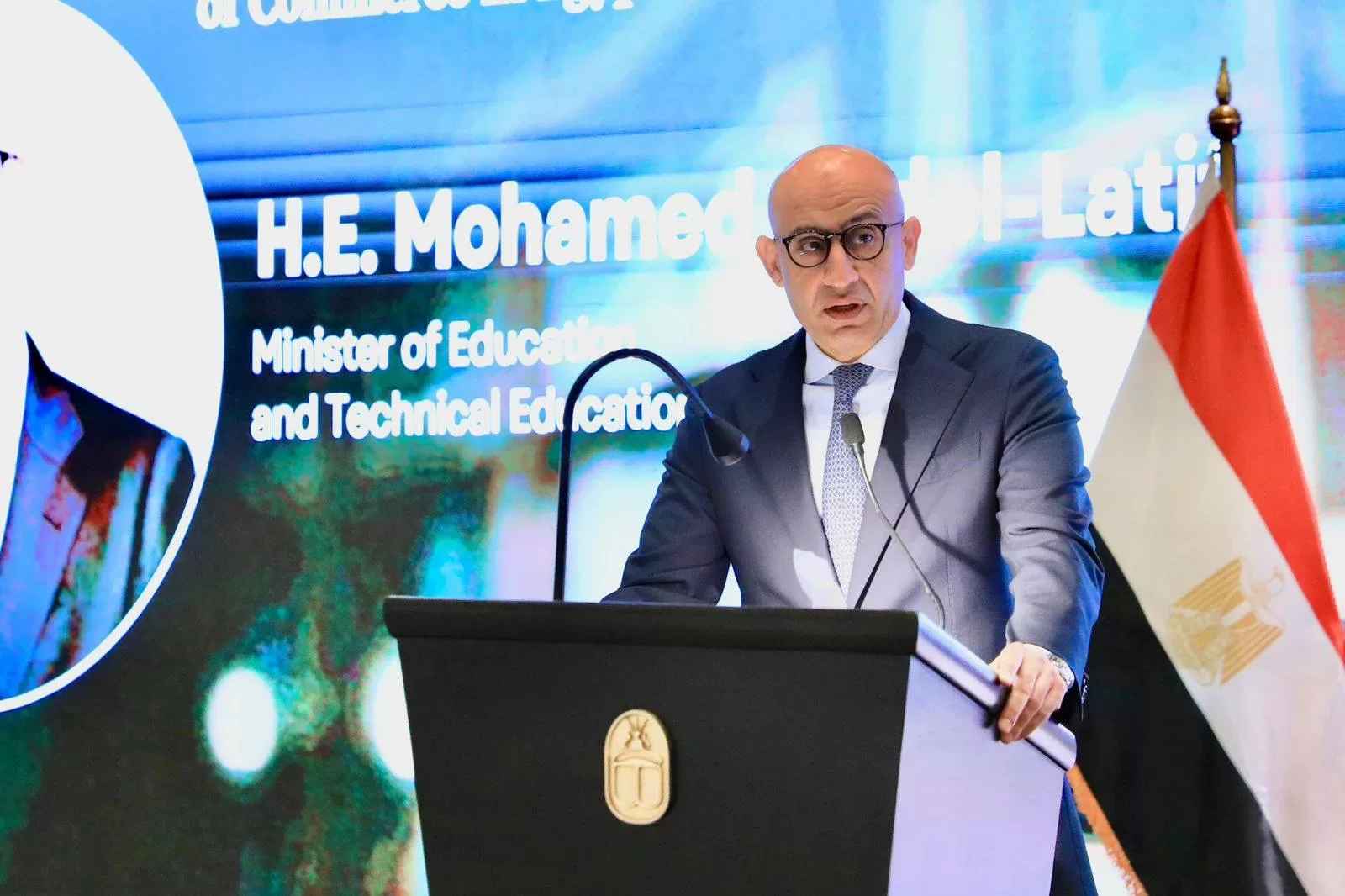
Minister of Education and Technical Education Mohamed Abdel Latif has affirmed that human capital represents Egypt’s most important and strategic infrastructure.
Abdel Latif made the remark on Sunday during his participation in a function organised by the American Chamber of Commerce in Egypt themed, “The Future of Investment in Education in Egypt”.
The event brought together senior education officials, representatives of investment and development institutions, and experts in education, entrepreneurship, and human development.
Addressing the event, Abdel Latif outlined the Egyptian state’s vision for developing pre-university and technical education, highlighting the ministry’s efforts to enhance the quality of the educational process, align education outcomes with labour market demands, and expand partnerships with the private sector and international institutions to support sustainable development pathways.
Abdel Latif noted that investment in education is no longer merely a social obligation, but has become a comprehensive economic strategy. He explained that Egypt has worked in recent years to redefine the relationship between education and the economy by shifting from a system measured by certificates to one measured by capabilities and skills.
He added that the ongoing development of the education system constitutes a genuine structural reform rather than a superficial overhaul, including aligning curricula with industrial needs, integrating work-based learning into technical education pathways, and expanding applied technology schools in partnership with major industrial institutions.
Abdel Latif underlined that technical and vocational education is being redefined as a central driver of productivity and competitiveness rather than an alternative educational track.
On digital transformation, the minister said the ministry is integrating digital literacy, artificial intelligence principles, and entrepreneurial thinking into learning pathways.
Addressing the human dimension of education, Abdel Latif said that behind every enrolment statistic stands an Egyptian young person aspiring to a genuine opportunity. He stressed that skills-based education helps foster confidence and hope, adding that human capital development policies are also policies for social stability, inclusion, and the preservation of human dignity.
He stressed that the future of the Egyptian economy is being built today inside classrooms, calling on all stakeholders to participate in shaping that future.

