



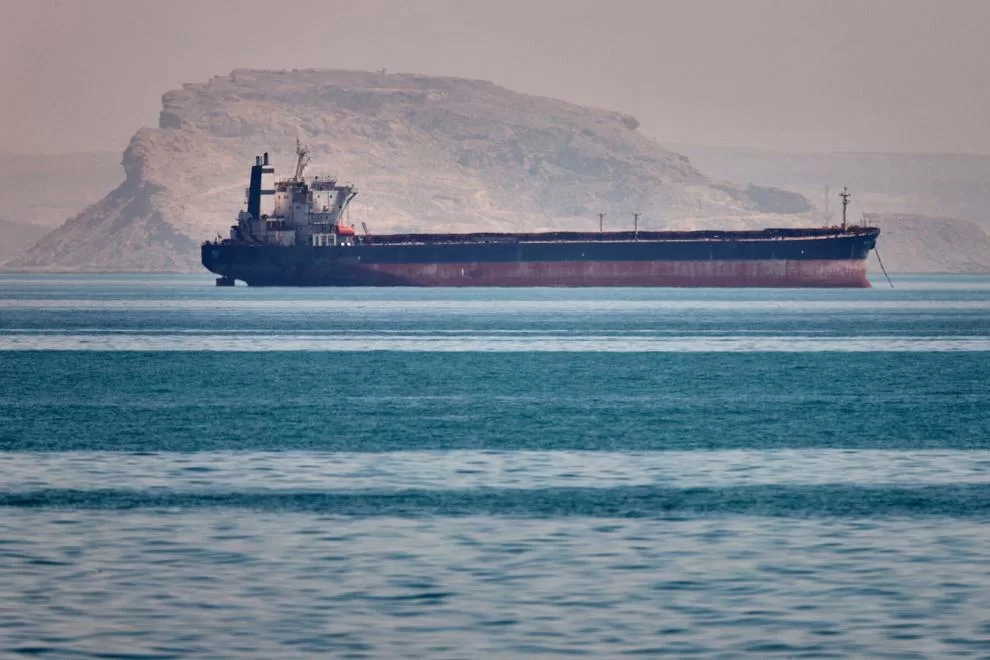
US President Donald Trump said Tuesday evening he was pausing the US effort to guide stranded vessels out of the Strait of Hormuz to allow time for a deal to end the Iran war, but that the American forces’ blockade of Iranian ports would remain in place.
Meanwhile, Iran’s Foreign Minister Abbas Araghchi met with his Chinese counterpart, Wang Yi, in Beijing on Wednesday morning, the official Xinhua news agency reported, without providing further details.
It was the first time since the start of the war that Araghchi has travelled to China, whose close economic and political ties to Tehran give it a unique position of influence.
Earlier in Washington, US Secretary of State Marco Rubio had expressed hope that Beijing would reiterate to Tehran the need to release its chokehold on the strait, which is a vital waterway for global energy.
Iran’s effective closure of the strait, through which major oil and gas supplies passed before the war, along with fertiliser and other petroleum products, has sent fuel prices skyrocketing and rattled the global economy.
Breaking Iran’s grip would deny its main source of leverage as Trump demands a major rollback of Tehran’s disputed nuclear programme.
Trump announced the decision in a social media post, saying the latest effort — which started Monday — would pause for a short period to see whether an agreement with Tehran on ending the war in the Middle East could be finalised.
Trump said the move was based “on the request of Pakistan and other Countries, the tremendous Military Success that we have had during the Campaign against the Country of Iran and, additionally, the fact that Great Progress has been made toward a Complete and Final Agreement with Representatives of Iran.”
The White House did not respond to a request for comment or further detail on the progress in negotiations that Trump mentioned.
They had appeared to have largely stalled in the conflict that started Feb. 28 when the United States and Israel launched strikes against Iran.
The United Arab Emirates, a key US ally in the Persian Gulf, said it came under attack from Iranian drones and missiles for a second day Tuesday.
But US military leaders and Rubio insisted the nearly month-old ceasefire was still holding and that — while the conflict is not resolved — the initial major US military operation against Iran has concluded.
Before the Trump announcement, Rubio told a White House press briefing that for peace to be achieved, Iran must agree to Trump’s demands on its nuclear programme and also agree to reopen the Strait of Hormuz.
“We would prefer the path of peace,” Rubio said.
Rubio also described the day-old US push to reopen the strait to maritime traffic as a defensive operation, aimed at helping thousands of civilian sailors stranded there by the war.
“They’re sitting ducks, they’re isolated, they’re starving, they’re vulnerable,” Rubio said. “At least 10 sailors have already died as a result.”
On Monday, the US said it had opened a lane and sunk six small Iranian boats that had threatened commercial ships.
So far, only two merchant ships are known to have passed through the new US-guarded route, with hundreds more bottled up in the Persian Gulf.

