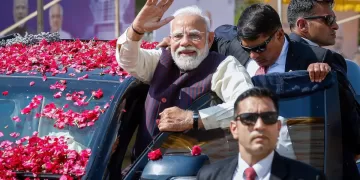










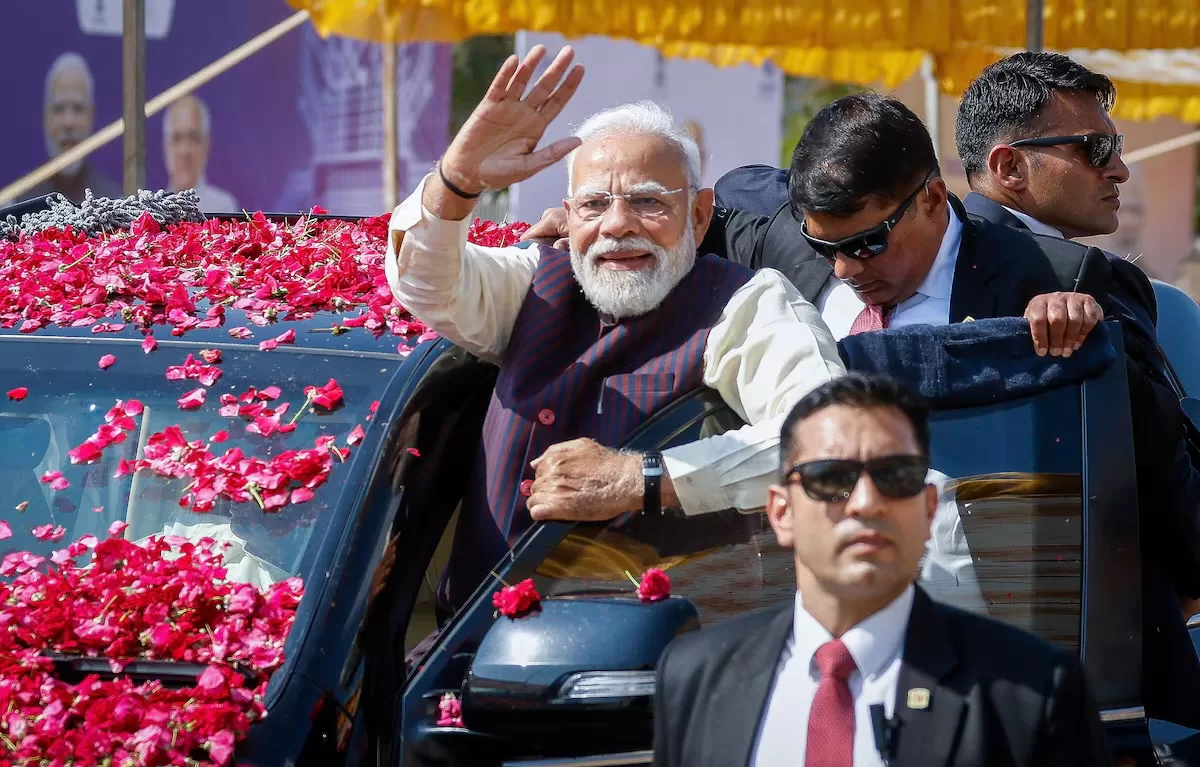
NEW DELHI – Indian Prime Minister Narendra Modi’s party was set on Monday to record substantial victories in state elections, an outcome that could accelerate its landmark policies like uniform civil laws and infrastructure building, political leaders and analysts said.
The gains also underline that Modi’s strategy of pushing economic development, giving generous handouts and appealing to the country’s Hindu majority has become a sure-fire winner, including in regions long seen as opposition strongholds. That is also backed by a war chest that dwarfs the opposition’s.
Modi’s Hindu nationalist Bharatiya Janata Party (BJP) has long pushed for a Uniform Civil Code to govern civil laws, instead of the current practice that allows Indians from different religions to follow laws specific to their faiths or opt for a secular code.
The BJP is unable to push through the policy at the federal level since it lacks the two-thirds majority in parliament needed to change the constitution; but it can do so in the states it governs. Its other signature policy of rolling out infrastructure will be easier to implement with less resistance from opposition-ruled states.
Rahul Verma, a fellow at the Centre for Policy Research in Delhi, noted that some BJP states have already tried to come up with their own versions of the civil code. He said the party could also push ahead with other proposals such as redrawing constituencies nationwide and holding simultaneous state and national polls, both of which could favour the ruling party.
“It is not like they will act on this immediately, in the next six months to a year,” Verma said. “But you may hear these conversations again. It is definite that the party will get stronger and more confident to push these ideas again.”
As the Election Commission announced voting trends from last month’s state elections, the BJP was on course to win the key eastern state of West Bengal and retain power in the neighbouring state of Assam. The BJP had poured resources into the Bengal election and Modi and his chief lieutenant, Home Minister Amit Shah, together addressed more than 80 rallies and roadshows in the state during the campaign.
The wins would give the party and its allies 20 of India’s 28 states and two of its three federally run territories with legislatures, a dominance unmatched since the 1960s. The main gain for the BJP from the April elections will be West Bengal, one of India’s larger states which dominates the country’s east, where it has long sought to take power.
Besides the almost certain win in Assam, an alliance that includes the BJP has made substantial advances in the key southern state of Tamil Nadu, although the pole position in the election there was being held by a new party headed by a film star.
These victories follow the 2024 general election, in which the BJP lost its majority in parliament and formed the government in New Delhi with the help of coalition allies.
- Latest
- Trending

