



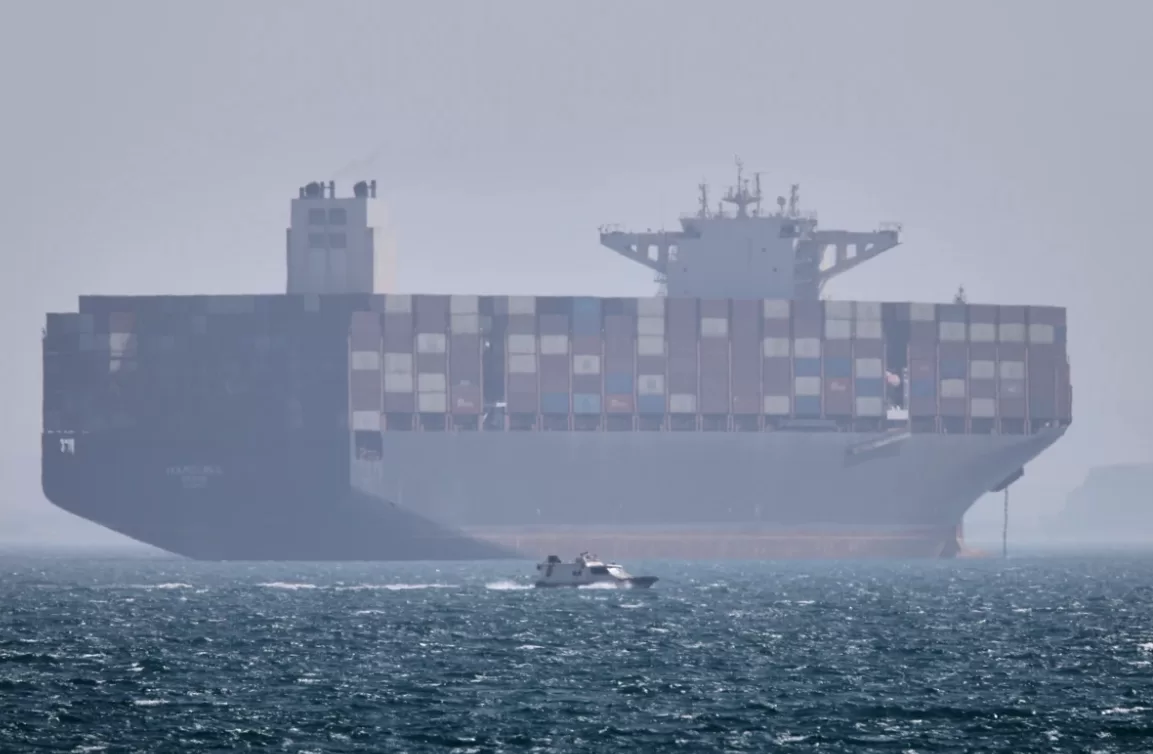
DUBAI, United Arab Emirates – The U.S. military on Monday denied claims that Iran struck a Navy vessel as U.S. forces now offer to guide commercial ships through the Strait of Hormuz, where hundreds have been stuck since the Iran war began. Tehran over the past two months has attacked some vessels and blocked others that don’t receive its authorization.
Iranian news agencies, including the semiofficial Fars and the Iranian Labour News Agency, claimed that Iran struck a U.S. vessel near an Iranian port southeast of the strait, accusing it of “violating maritime security and navigation norms.” The reports said the vessel was forced to turn back.
The U.S. Central Command said on social media that “no U.S. Navy ships have been struck.”
The U.S. military has said the new initiative, announced by President Donald Trump on Sunday, might involve guided-missile destroyers, more than 100 aircraft and 15,000 service members but has not specified what kind of assistance it would provide. The U.S.-led Joint Maritime Information Center has advised ships to cross the strait in Oman’s waters, saying it set up an “enhanced security area.”
It was unclear whether any vessels were attempting to cross the strait, or whether shipping companies, and their insurers, will feel comfortable taking the risk given that Iran has fired on ships in the waterway and vowed to keep doing so.
Iran has responded to the new U.S. effort by calling it a violation of the fragile ceasefire that has held for more than three weeks.
Iran’s control of traffic through the crucial artery for a significant amount of the world’s oil and gas supplies has proved a strategic advantage in its war with the U.S. and Israel, allowing Tehran to inflict tremendous pain on the global economy despite being outgunned on the battlefield.
Trump’s announcement that the U.S. would “guide” ships out of the strait warned that Iranian efforts to block them “will, unfortunately, have to be dealt with forcefully.”
He described “Project Freedom” in humanitarian terms, designed to aid stranded seafarers, many on oil tankers or cargo ships, who have been stuck in the Persian Gulf since the war began. Crews have described to The Associated Press seeing drones and missiles explode over the waters as their vessels run low on drinking water, food and other supplies.

