



Islam Made Simple
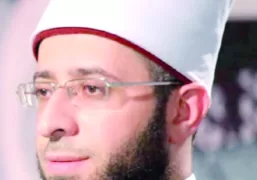
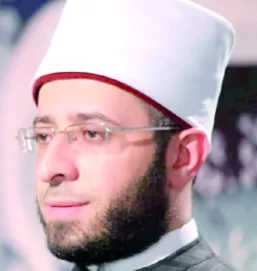
Dr Osama Al-Azhari
Minister of Awqaf
(Charitable Endowments)
Distinguished ladies and gentlemen, noble people of Egypt, and our Arab and Muslim nation, we are pleased to welcome you to a new and blessed journey with the Book of Allah. Let us delve together into the depths of the twentieth part of the Ever-Glorious Qur’an, to extract pearls from its treasures, guidance from its lights, and the great values and principles that Allah has placed within it. This noble part is rich with great passages that give life to hearts, illuminate minds, and instill wisdom and balance in souls. So let us sip from its pure spring and seek refuge in its blessed shade.
The First Reflection: We first reflect on this exquisite and perfectly precise verse – like the rest of the Qur’an – in which Allah Almighty says: “And you see the mountains, that you think are stationary, and (really) they pass by like clouds- the handiwork of Allah, Who has consummated everything; surely He is Ever-Cognizant of whatever you perform”. [Qur’an 27: 88].
This verse reveals the greatness of Allah’s creation, especially in His words: “And you see the mountains, that you think are stationary, and (really) they pass by like clouds.” Whoever looks at the mountains thinks they are stationary and unmoving, but in fact they move with the earth in its orbits. Allah Almighty says: “Each is swimming in an orbit”. [Qur’an 36: 40].
Then reflect on His words: “the handiwork of Allah, Who has consummated everything.” Here, Allah Almighty points out that His creation is perfected to the highest degree. He flawlessly fashioned the sun, the moon, and the entire universe with precision, without any flaw or discrepancy. When a person contemplates this divine perfection, their consciousness is shaped and their character is built, so they learn to pursue excellence in everything they do. If the divine law by which Allah has created and sustained the universe is perfection, then it is incumbent upon the human being to adorn himself with this quality in all aspects of his life, following the example of Allah almighty in His creation.
The Ever-Glorious Qur’an points to this great meaning in three major verses:
1- “The handiwork of Allah, Who has consummated everything.” [Qur’an 27: 88].
2- “Who perfected in the fairest (shape) everything He created.” [Qur’an 32: 7].
3- “My mercy has embraced everything.” [Qur’an 7: 156].
If Allah almighty manifests Himself through perfection, excellence, and mercy in all things, then it is incumbent upon His servants to emulate these attributes, adopt them, and make them a guide for their behavior, relationships, and work.
The Second Reflection: Allah Almighty said: “Surely Pharaoh had exalted himself in the land and made its population into sects, deeming a section of them weak, constantly slaying their sons and (sparing) alive their women. Surely, he was one of the corruptors.” [Qur’an 28: 4].
The Ever-Glorious Qur’an summarised Pharaoh’s problem in two words: “had exalted himself in the land” meaning “arrogance and pride,” and His saying “he was one of the corruptors” meaning “corruption and injustice.”
It is remarkable that these two characteristics are also mentioned in the description of the Children of Israel at the beginning of Surah al-Isra’, Allah Almighty says: “And we decreed for the children of Israel in the Book: ‘Indeed you will definitely corrupt in the earth twice, and indeed you will definitely (become) exalted a great exaltation.” [Qur’an 17:4].
At the end of Surah al-Qasas, Allah says: “That is the Last Home. We make it for the ones who would not like exaltation in the earth nor corruption, and the (fortunate) End is for the pious.” [Qur’an 28: 83].
Arrogance and corruption are two blameworthy traits, whether in Pharaoh, the Children of Israel, or Qarun (Koran). As for the righteous and pious, they are those who do not seek arrogance or corruption, but rather follow the path of perfection, benevolence, and mercy. What a sublime divine directive this is. It transports us from the realm of tyranny to the horizon of piety, showing that arrogance and corruption lead to loss, while excellence and humility are the path to salvation.
The Third Reflection: At the very peak of a human crisis, Allah Almighty says: “And We revealed to Musa’s mother, (saying), “Suckle him; so, when you fear for him, then cast him into the river; and do not fear, nor grieve. Surely, we will turn him back to you and will make him one of the Emissaries.” [Qur’an 28: 7].
This is an amazing verse that combines two commands: breastfeed him and cast him into the river; two prohibitions: Do not fear, and do not grieve; two declarative statements: We will certainly return him to you, and make him one of the messengers; and two glad tidings: Moses’ return to his mother, and his being sent as a messenger.
All of this comes in a single verse, at a moment of intense motherhood, when Allah’s kindness and protection are poured out, and His true promise is extended.
The Fourth Reflection: Allah Almighty says: “So as soon as Moses accomplished the term and was traveling with his family, he perceived a fire on the side of the mount (Tur). He said to his family, “Stay (here). Surely, I perceive a fire. Possibly I (will) come up to you with news of it, or a firebrand from the fire, that possibly you would warm yourselves.” [Qur’an 28: 29].
One night in the deserts of Sinai, Moses (PBUH) saw a fire in the distance, so he went towards it, seeking some warmth or some news, not knowing that he was about to receive revelation, witness the divine manifestation, and be transformed into a prophet and messenger.
Thus, the divine revelation can come suddenly, in a moment no one expects, but it is all by Allah’s decree, His kindness, and His guidance.
Glory be to Allah Almighty, who sent down this Ever-Glorious Qur’an as light, guidance, and mercy for all the worlds.
Until we meet again, stay noble; stay safe.

