







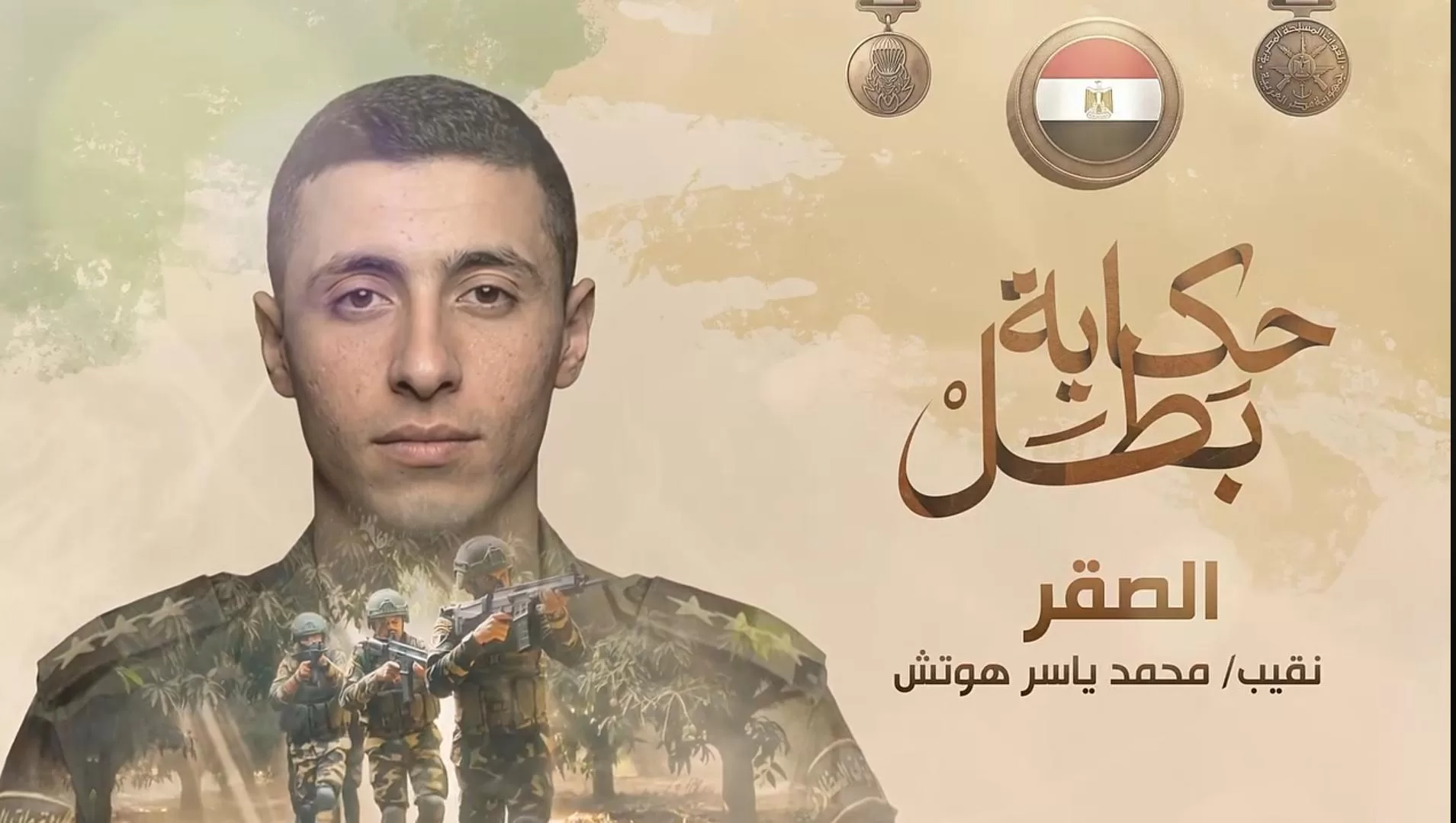
In the rugged terrain of the Sinai Peninsula, where the line between duty and sacrifice is often written in the sand, the story of Captain Mohamed Yaser Houtshو, known to his comrades as “The Falcon” has emerged as a poignant symbol of Egypt’s ongoing struggle against terrorism.
A new documentary titled The Falcon, released on the official social media channels of the Egyptian Military Spokesman, Brigadier General of Staff Gharib Abdel Hafez, as part of the “Hero’s Tale” series, provides a rare, intimate look at the life and final hours of the paratrooper officer. It portrays a man who was as much a guardian to his soldiers as he was a formidable warrior.
A leader who served his men
Captain Houtsh was not a commander who led from the rear. His peers describe a leader who prioritised the welfare of his subordinates above his own.
Final operation
The events of 30 September 2022 define the essence of Houtsh’s character. During a tactical movement, his vehicle became trapped in heavy sand. While orders were given for him to return to base, “The Falcon” refused to abandon the mission.
After freeing the vehicle, he requested permission to join the primary assault group. During the storming of a terrorist hideout located within a rural farm, Houtsh successfully killed two terrorists. However, he was struck by a fatal shot from a concealed position, a hidden trench masked by thick foliage. His unit successfully completed the mission, ensuring the ground Houtsh fought for remained secure.
An emotional homecoming
The documentary captures a haunting irony common to those in high-risk service. Hours before his death, Houtsh told his family he would be home after Friday prayers. He kept that promise, though not in the way they had hoped. He returned to his village carried on the shoulders of thousands, in a funeral described by witnesses as a “million-man march” of grief and pride.
“He was strong without being cruel, and gentle without being weak,” noted Captain Mahmoud Naguib, a close colleague.
Ultimate promotion
At the time of his death, Houtsh was preparing for exams to be promoted to the rank of Captain. While the military eventually formalised his rank posthumously, his fellow officers maintain that he received a higher calling.
For the Egyptian public, the story of “The Falcon” serves as a bridge between the clinical reality of military operations and the deeply human cost of peace. It is the narrative of a man who protected the trees and lands of Sinai’s civilians as fiercely as he fought those who threatened them.

