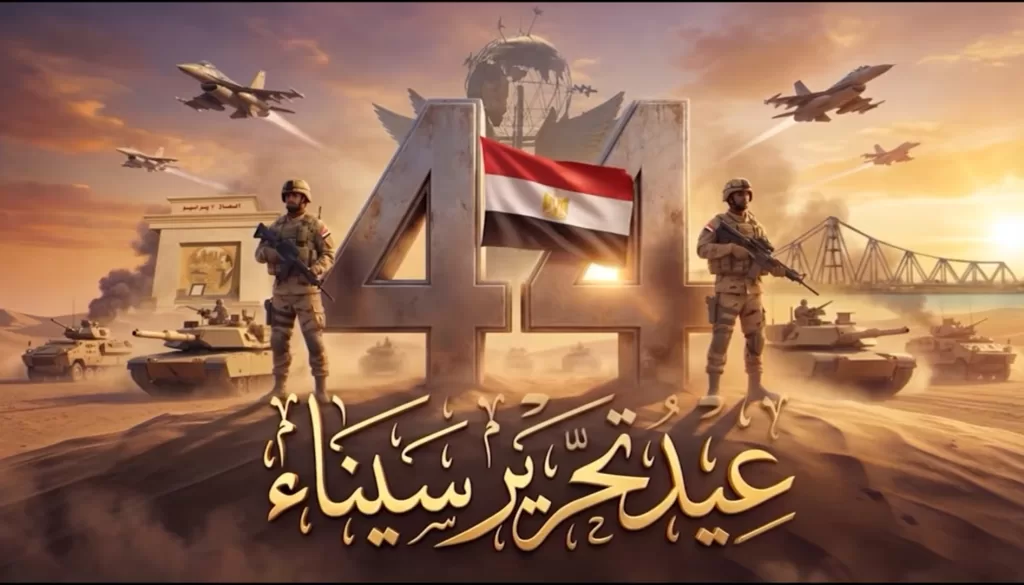





IN a region where maps are shifting fast, national security is no longer a theory. It is survival. On the anniversary of Sinai Liberation Day, Egypt sends a clear message: diplomacy and strength must go hand in hand. The aim is prevention rather than war.
Over the past decade, Egypt has been at the centre of a volatile region. States have collapsed. Armed groups have spread. Energy disputes have intensified. Strategic waterways have become hotspots for international competition.
Faced with this reality, Cairo made a calculated choice. It invested in a modern military force while maintaining active and balanced diplomacy. The goals are to deter threats before they turn into conflict.
The regional picture since 2011 reveals overlapping risks. To the west, the long border with Libya remains a source of concern. Efforts are being made to stop the flow of weapons and the infiltration militants, particularly in the southwest.
To the east, the situation in the occupied Palestinian territories remains volatile. Its humanitarian and security impact extends beyond its borders. Egypt continues relentless efforts to restore Palestinian rights while working to prevent escalation.
In the south, the Grand Ethiopian Dam poses a serious challenge to Egypt’s water security. At the same time, instability in Sudan adds further pressure to the southern front.
At sea, competition in the Eastern Mediterranean has intensified following major gas discoveries, most notably the Zohr field. These developments have reshaped regional energy dynamics and maritime influence.
Globally, the region has become a theatre for major power rivalry. Traditional threats are now mixed with new ones. These include transnational terrorism, information warfare, economic pressure linked to energy and shipping routes, and psychological warfare.
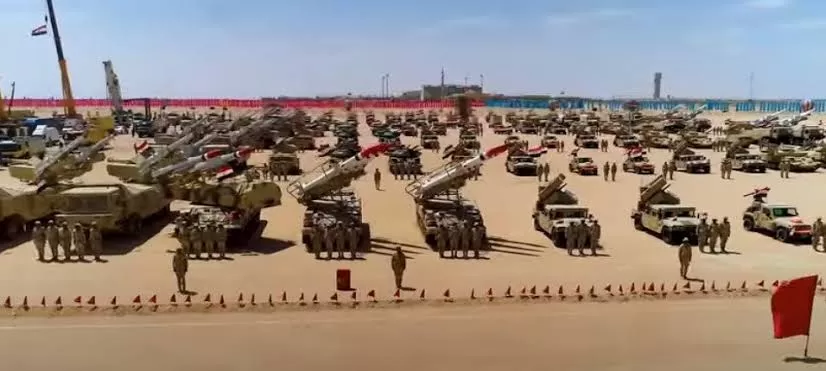
According to the 2025 Global Firepower Index, Egypt ranks 19th among the world’s military powers. It is the strongest in the Arab world and Africa, based on manpower, equipment diversity, and operational capability across land, air and sea.
The Egyptian Air Force is a central pillar of this capability. It operates a large fleet of fighter aircraft, led by US-made F-16 jets. These aircraft carry out both air-to-air and air-to-ground missions.
The fleet also includes advanced French Rafale jets, which provide enhanced combat capabilities through modern electronic systems and long-range precision strike capacity.
Egypt has also strengthened its helicopter fleet. The US-made Apache helicopters and Russian Ka-52 aircraft offer high combat efficiency and advanced targeting systems.
In unmanned systems, Egypt operates Chinese Wing Loong and CH-series drones for reconnaissance and long-range strikes. At the same time, locally developed models such as Nu, October, Pyramid 36 and Qaed 36 reflect a growing focus on domestic defence production.
On the ground, Egypt maintains a large and diverse tank fleet. It includes American M1A1 Abrams and Russian T-90MS. Both are equipped with advanced weapons and targeting systems. Additional assets include K2 main battle tanks and South Korean K-9 artillery systems.
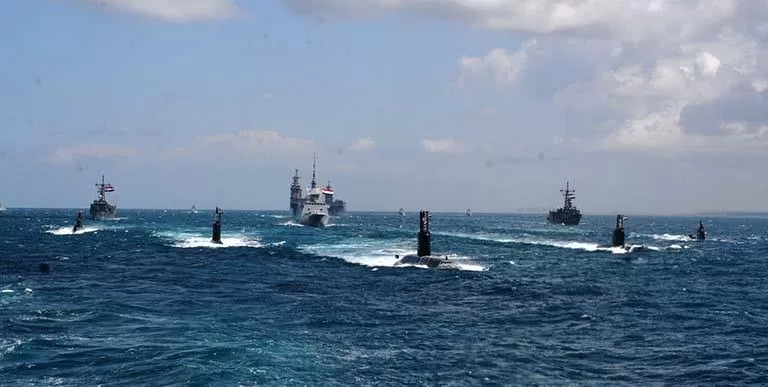
At sea, the Egyptian Navy is among the strongest in the region. It operates two Mistral-class helicopter carriers, Gamal Abdel Nasser and Anwar El Sadat. These vessels support amphibious operations and integrated air-sea missions.
Egypt also deploys German Type 209 submarines armed with Harpoon missiles, alongside upgraded Chinese Romeo-class submarines.
The Egyptian surface fleet includes advanced frigates such as the German MEKO A-200 and Italian FREMM-class vessels, including El Galaa and Bernice. These ships are equipped for long-range and multi-role operations.
The navy also maintains specialised units for mine countermeasures, helping secure vital maritime routes and protect international navigation.
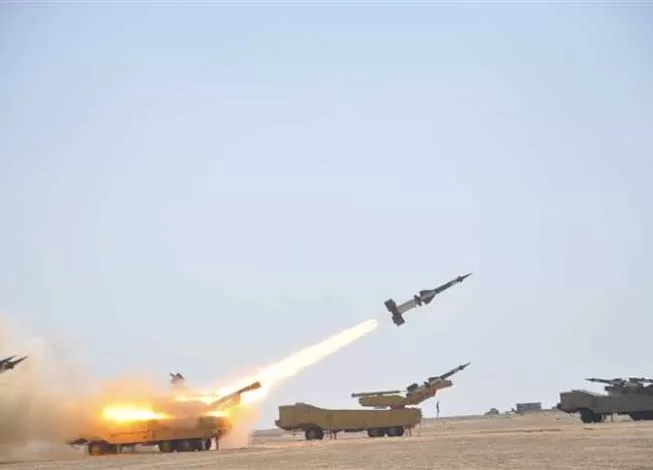
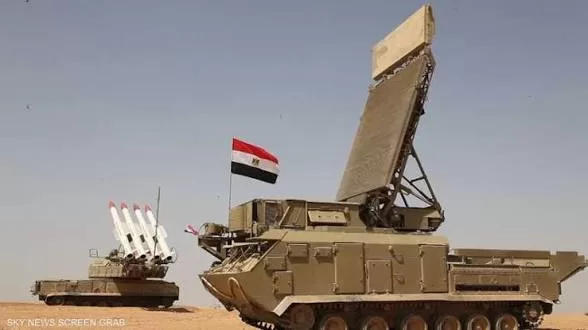
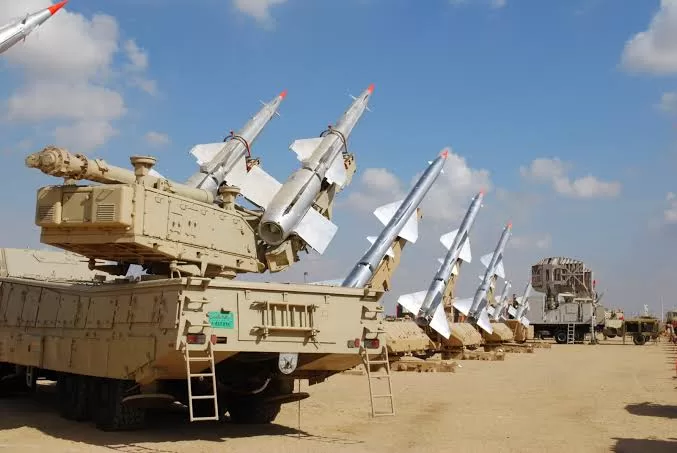
In air defence, Egypt has built a multi-layered system, which includes long-range missile platforms such as the Russian S-300. These systems are supported by integrated radar and command networks designed to protect airspace and critical infrastructure. However, military strength is only part of the equation.
Diplomacy remains central to Egypt’s strategy. Maritime border agreements with Greece and Cyprus have been signed in line with international law. The East Mediterranean Gas Forum has been established, reinforcing Egypt’s role as a regional energy hub.
Egypt has combined deterrence with diplomacy In Libya. The declaration of the Sirte-Jufra “red line” aims to protect national security while supporting political solutions.
Egypt has also played a key role in maintaining calm in the Gaza Strip. Its balanced relations have helped prevent wider escalation.
At the same time, Cairo has diversified its international partnerships. It maintains ties with the United States, France, Germany, Russia, Spain and China, while strengthening relations across the Arab world and Africa. This approach has increased its strategic flexibility.
Despite ongoing challenges, the difference today is clear. Egypt is no longer reacting. It is preparing.
What has taken place over the past decade is not simply military expansion. It is a broader redefinition of national security. One that combines force with diplomacy, and deterrence with development.
In a volatile region, peace cannot rely on intention alone. It requires capability. Egypt’s message: Preparedness is not a path to war. It is the strongest guarantee against it.