




By Youssra el-Shrakawy
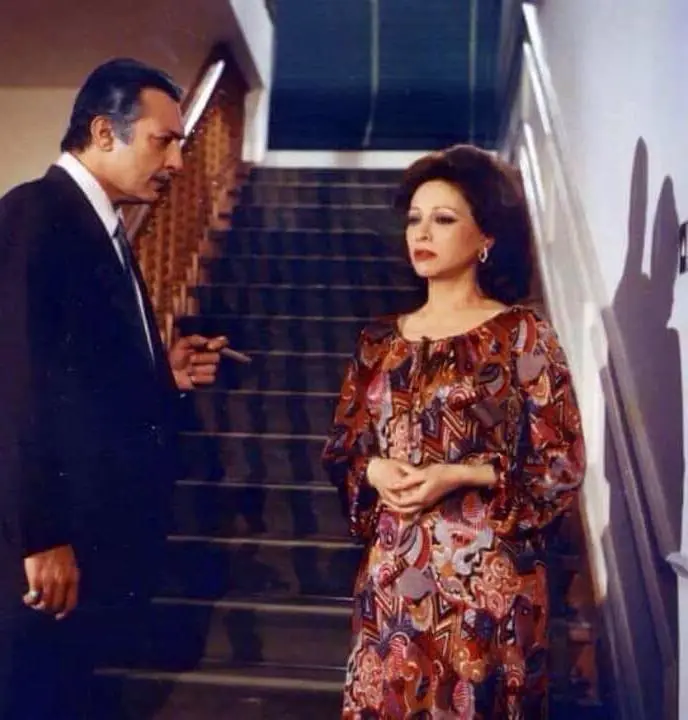
When the movie Oreed Halan (I Want a Solution), starring Faten Hamama, premiered in 1975, it had a major impact on the public opinion in Egypt, having addressed what was viewed at the time as deep and sensitive issues.
Written by Hosn Shah and directed by Saeed Marzouk, the movie follows Doria, a woman married to a selfish and abusive man who refuses to divorce her peacefully and forces her to resort to the court to untie the knot.
At the time, the Egyptian Personal Status Law, which regulates marriage and divorce issues, made it possible for women to end marriages only under narrowly defined conditions.
The movie is provocative, not only because it tells a good story, but also because it throws light on the bureaucratic nightmare female divorce-seekers have to face in the courts, which includes endless delays under a system that gives men privileges and is blind to women’s suffering.
Oreed Halan was instrumental in bringing debates about the Personal Status Law to the table in 1978 when late President Anwar Sadat watched it and expressed his desire to amend the law.
Sadat’s wife, Jihan, also admired the film and called for amending the law, which actually happened in 1978 by granting women the right to divorce.
Called khul, this type of divorce gave women the right to initiative the process, for the first time.
However, the same amendment was later repealed after Sadat’s assassination in 1981.
The law was later reintroduced, but this time it was called the “Law Regulating Certain Conditions and Procedures of Litigation in Personal Status Mattersno. 1/2000″. It aimed to end women’s suffering and oppression.
Over all those years, the cinema was a basic partner in women’s struggle for their rights, proving an engine of the required change. Later films built on this foundation.
After the success of Oreed Halan and the issuance of the law, writer Hosn Shah wrote her second movie,Imraa Motalaka (A Divorced Woman) in 1986.
She created the film to throw light on the goofs of the Personal Status Law which gave wives the right to the marriage home only if they had children in their custody. As an issue, this continues to be unresolved until the present.
Starring Samira Ahmed and directed by Ashraf Fahmy, the film explores the stigma surrounding divorce and how society often punishes divorced women.
The story stems from a specific legal tragedy: some men using the law as a domination tool, exploiting its loopholes which help them delay the divorce to pressure and humiliate their spouses.
Oreed Khulaan (I Want Khul) is another 2005 movie that tackles women’s right to file for divorce.
The name of the movie is a parody of Oreed Halan(I Want a Solution), suggesting that the ‘solution’ has now been found and it is nothing but Khul.Nonetheless, this solution is still far from easy.
The movie, starring Ashraf Abdel Baqi and HalaShiha and directed by Ahmed Awaad, is about a wife who seeks divorce after marital problems escalate due to her husband’s constant work commitments and absence from home. It is based on the first divorce case filed by an Egyptian woman in 2000.
The movie highlights the social pressures women face when they file for khul, even in a comic way.
Another movie, Asfa Arfod el-Talaq (Sorry, I Refuse Divorce) (1980), calls out the law for giving husbands the write to divorce their wives, even if they do not know.
Written by Nadia Rashad, a writer who devoted her work to the defence of women’s rights, and directed by Eman Mohamed Ali, the film tells the story of Mona (Mervat Amin), a dedicated wife who is shocked by the desire of her husband (Hussein Fahmy) to break from the marriage, a desire she vehemently rejects.
Today, as calls to amend the personal status law grow louder again, these films feel strikingly current. Their influence lies in their ability to translate private pain and show it audiences who in turn feel strong affinity.
The same films highlight filmmakers’ ability to make abstract legal inequalities visible and emotional by embedding legal debates within compelling narratives.
Audiences did not need to read legislation, but only watched the consequences of this legislation unfold on screen.

