



They did not just celebrate a new beginning—they stepped onto the stage to tell their own stories.
In a theatrical performance titled “You Can Do It,” a group of recovering addicts delivered a powerful message about the dangers of drug abuse and the importance of treatment. Through their performance, they shared deeply personal experiences, tracing their journey from addiction to recovery and renewed hope.
The event was part of graduation activities for a new group of recovered addicts at a center affiliated with the Fund for Combating and Treating Addiction and Abuse (FDCTA) in Port Said. It reflects a broader rehabilitation approach that goes beyond medical treatment to include psychological support and social reintegration.
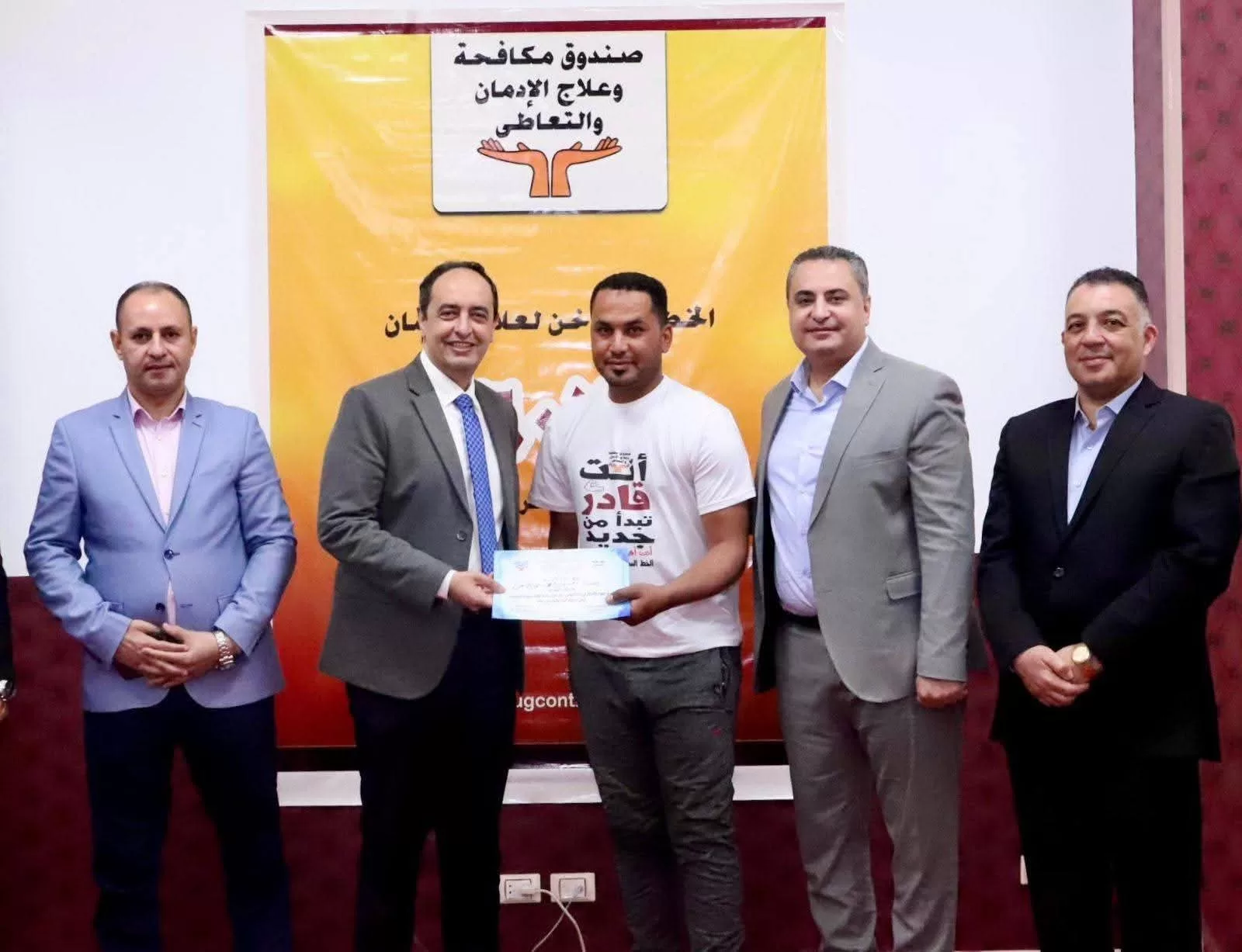
Amr Othman, Director of the FDCTA, attended the ceremony honoring 100 newly recovered individuals under the slogan “You Are Stronger Than Drugs.” The event comes within ongoing field visits across governorates to monitor the implementation of the Fund’s programs, launched under the auspices of President Abdel Fattah El Sisi.
The Fund’s rehabilitation model emphasizes that recovery is not the end of treatment, but the beginning of rebuilding lives—psychologically and socially—enhancing individuals’ ability to reintegrate into society.
“I’m very happy now after completing my treatment,” Ibrahim Ahmed, one of the graduates, said. “I never imagined I could regain my life. Drugs were slowly killing me.”
The FDCTA provides treatment and rehabilitation services free of charge, along with vocational training programmes tailored to labour market needs. These include skills such as air conditioning and refrigeration maintenance, mobile phone repair, electrical work, carpentry, and sewing.
“I’m now working and able to reintegrate into society, thanks to the Fund,” Ahmed added. “I feel free and can live my life normally.”
Ahmed Amin, a psychiatrist at an addiction treatment hospital, stressed the importance of post-recovery support. “It is crucial for recovering individuals to feel they are treated normally, as this reduces the risk of relapse,” he said. “Recovery itself—not just treatment—is the most important phase.”
As part of national efforts, the Fund has expanded post-treatment support through initiatives such as “Craftsman,” which provides vocational training. Around 8,000 recovering individuals were trained in 2025 alone. Another initiative, “With Our Hands,” supports them through furniture production and carpentry projects.
The stage performance itself portrayed the harsh realities of addiction, following a character who falls into substance abuse before being guided by a friend to seek help through the Fund’s hotline (16023)—marking the beginning of recovery.
Today, the Fund and its partner entities operate 35 centers across 20 governorates.
“Every new day away from addiction is a victory,” Othman said.

