







At a moment of acute global turbulence, a question has resurfaced with an intensity not seen since the end of the Cold War: is the United States moving toward withdrawing from NATO, or merely applying maximum pressure to reshape the alliance in its own image?
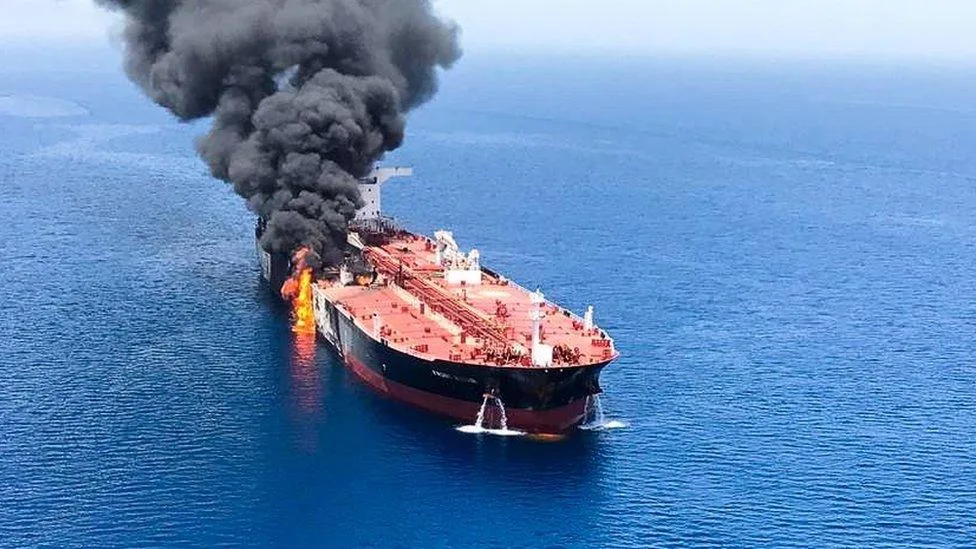
The current tensions did not emerge in a vacuum. They were catalysed by the US–Israeli war on Iran and the resulting disruption to shipping in the Strait of Hormuz, one of the world’s most critical energy arteries, through which roughly 20 percent of global oil supplies transit. As risks escalated, Washington called on its allies to help secure maritime navigation. The European response, however, was cautious, and in many cases, overtly reluctant.
Several European countries, including Germany, Spain, and Italy, openly refused to participate in military operations or deploy forces to the Strait, arguing that the conflict was “not their war.” This stance was widely interpreted not as a tactical divergence, but as evidence of a deeper strategic rift across the Atlantic.
Tensions peaked as US President Donald Trump escalated his rhetoric, floating the possibility of withdrawing from NATO, questioning its relevance, and even describing it as a “paper tiger.” American officials signaled a broader reassessment of ties with the alliance, citing what they viewed as European inaction. In a further escalation, some European states declined to provide logistical support, including access to bases and airspace, compounding the crisis.
The confrontation with Iran has thus evolved beyond a regional conflict into a real test of NATO’s cohesion. While Washington frames global energy security as a shared strategic responsibility, European capitals argue that military intervention absent clear international consensus risks triggering uncontrollable escalation.
European assessments tend to favour diplomatic solutions, particularly given the geographic and operational complexities of securing the Strait of Hormuz militarily, as well as Iran’s asymmetric capabilities. By contrast, the US administration has adopted a more hardline posture, issuing direct warnings to Tehran to reopen the strait under threat of further escalation.
This divergence reflects fundamentally opposing approaches to crisis management: Washington leans toward decisive military action, while Europe prioritises political containment and de-escalation.
Despite the heated rhetoric, a central question remains: can the United States actually leave NATO? Legally and politically, such a move would be highly complex. NATO is not merely a military alliance; it is a cornerstone of the Western international order, sustained over more than seven decades. A full withdrawal would require intricate domestic procedures and would likely encounter significant institutional resistance within the United States.
More concerning than a formal exit, however, is the prospect of gradual, de facto disengagement, a steady erosion of US commitment to collective defence. Even without formally leaving the alliance, Washington could scale back its role or redirect its strategic priorities. Many analysts consider this scenario more destabilising than outright withdrawal.
The current crisis has also revived a long-standing debate within Europe: whether it is time to build an independent defence capability less reliant on the United States.
There are early indications of movement in this direction, particularly amid growing doubts about Washington’s reliability as a security partner in all contingencies. Should this trajectory continue, Europe may edge toward a de facto “European NATO” or parallel defence structures, a vision cautiously supported by France and, more hesitantly, the United Kingdom.
Yet such a transformation would face formidable obstacles, not least the significant military capability gap between the United States and its European allies.
In sum, the United States does not appear to be abandoning NATO, at least not for now. But it is undeniably rocking the vessel.
Trump’s escalation may function as a pressure tactic aimed at compelling allies to shoulder a greater share of the burden. At the same time, it signals a deeper shift in US foreign policy: away from collective Western leadership and toward a more unilateral, interest-driven approach.
As geopolitical storms buffet the alliance, one question looms large:
will NATO restore its cohesion, or does this crisis signals a gradual erosion of a partnership long central to global security?

