



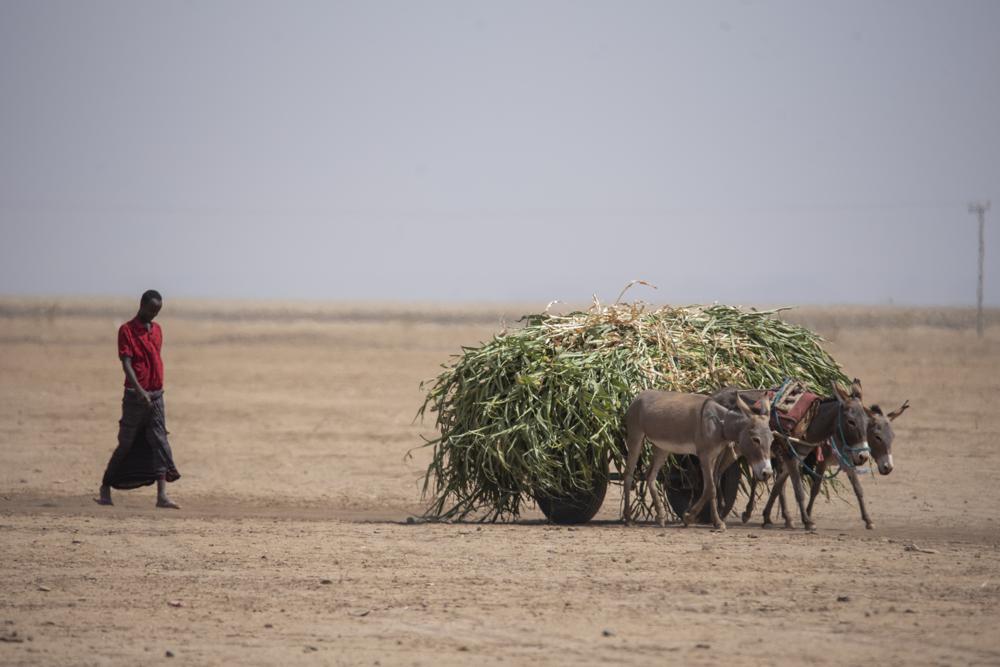
UNITED NATIONS — Drought in the Horn of Africa has killed more than 1.5 million livestock and drastically cut cereal production, “and we are most definitely now sitting on the brink of catastrophe,” a senior official for the UN Food and Agriculture Organisation (FAO) said.
Rein Paulsen, FAO’s director of emergencies and resilience who returned from the region Friday, said a “very small window” exists for taking urgent action, and a key is whether the region’s long rains between March and May are good — and whether the agency gets the $130 million it needs until June, according to AP.
The short rains in the region, which includes parts of Somalia, Ethiopia and Kenya, were supposed to come between October and December but “were extremely poor,” he said. “And this represents the third consecutive failed rainy season with lower average rans, all of which has a severe impact on vulnerable households.”
The result of the drought meant that overall cereal production for the last rainy season in southern Somalia was estimated to be 58 per cent lower than the long-term average, Paulsen said. In agricultural areas in marginal coastal zones in southeastern parts of Kenya, “we’re looking at crop production estimated to be 70 per cent below average,” he said.
In addition, most places for water that have usually been resilient to climate variability have dried up in Kenya, he said during a virtual news conference from Rome.
Paulsen said $130 million in funding is essential now to provide cash for people to buy food until production resumes, to keep livestock alive and to provide drought-resistant seeds for farmers to reap a harvest.
“We have a window to the middle of this year — to June, which is a very time sensitive, narrow window for urgent actions to scale up to prevent a worst-case scenario,” Paulsen said. “Agriculture needs a lot more attention. It’s central to the survival of drought affected communities.”
During his visit to the region, Paulsen said: “We saw both livestock and wildlife carcasses by the side of the road as we were driving. We saw animals dying together with their farmers, and the numbers I think are quite shocking.”
In Kenya alone, 1.4 million livestock died in the final part of last year as a result of drought, and in southern Ethiopia, about 240,000 livestock died as a result of drought, he said.
Paulsen said that “it was quite traumatic driving through communities and seeing farmers tending livestock as they were dying by the side of the roads.”
Livestock are not only crucial to people’s livelihoods, he said, but they provide milk for children, and FAO is focused on providing urgent fodder and water to keep them alive.
The UN World Food Programme said Feb. 8 that drought has left an estimated 13 million people in the Horn of Africa facing severe hunger amid the driest conditions since 1981. It is seeking $327 million to look after the urgent needs of 4.5 million people over the next six months.


Discussion about this post