






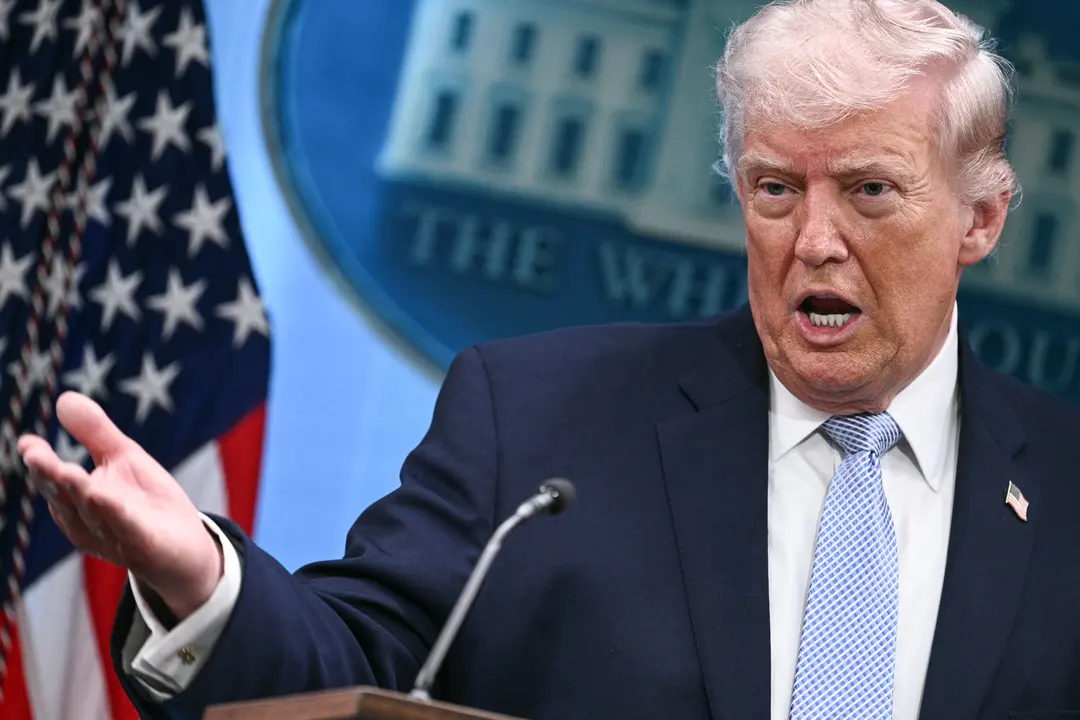
DUBAI/WASHINGTON – Iran showed no sign of accepting Donald Trump’s ultimatum to open the Strait of Hormuz by the end of Tuesday, while the U.S. president threatened that “a whole civilization will die tonight” unless Tehran reached a last-minute deal.
Trump has given Iran until 8 p.m. in Washington – 3:30 a.m. in Tehran – to end its blockade of Gulf oil, or he will destroy every bridge and power plant in Iran. Iran says it would retaliate against U.S. allies in the Gulf, whose desert cities would be uninhabitable without power or water.
As the clock ticked down on Trump’s deadline, strikes on Iran intensified throughout the day, hitting railway and road bridges, an airport and a petrochemical plant. U.S. forces attacked targets on Kharg Island, home to Iran’s main oil export terminal, which Trump has openly mused about seizing.
Iran responded by declaring it would no longer hold back from hitting its Gulf neighbours’ infrastructure, and claimed to have carried out fresh strikes on a ship in the Gulf and a huge Saudi petrochemical complex.
“A whole civilization will die tonight, never to be brought back again. I don’t want that to happen, but it probably will,” Trump wrote on his Truth Social website.
“However, now that we have Complete and Total Regime Change, where different, smarter, and less radicalized minds prevail, maybe something revolutionarily wonderful can happen, WHO KNOWS? We will find out tonight, one of the most important moments in the long and complex history of the World.”
Brian Finucane, a former U.S. State Department legal advisor now with the International Crisis Group, said Trump’s remarks “could plausibly be interpreted as a threat to commit genocide” under U.S. and international law.
With only hours left before the deadline, a senior Iranian source said Tehran was maintaining its refusal to reopen the strait without U.S. concessions that so far were not forthcoming.
Pakistan, which has been the main go-between, was still relaying messages, but Washington had not changed its tone, the source said. If the U.S. carried out Trump’s threat to hit Iran’s power grid, Tehran would plunge Gulf states including Saudi Arabia into darkness, the source added, a threat that had been conveyed to Washington via Qatar.
Earlier, another senior Iranian source told Reuters that Tehran had rejected a proposal conveyed by intermediaries for a temporary ceasefire.
Talks on a lasting peace could begin only after the U.S. and Israel stop bombing, guarantee not to start again and offer compensation for damage, the Iranian source said, adding that any settlement must leave Iran in control of the strait, imposing fees for transit.
Despite the intensification of strikes and rhetoric from both sides, global markets were largely paralysed, hesitant to bet on whether Trump would follow through on his threats or call them off as he has in the past.
Among the reports of strikes inside Iran were attacks on railway bridges, a highway bridge, a petrochemical plant and an airport. Power was knocked out in parts of Karaj west of Tehran by a strike on transmission lines and a substation. Israel warned Iranians in a Persian-language social media post that anyone near railways would be in danger.

