




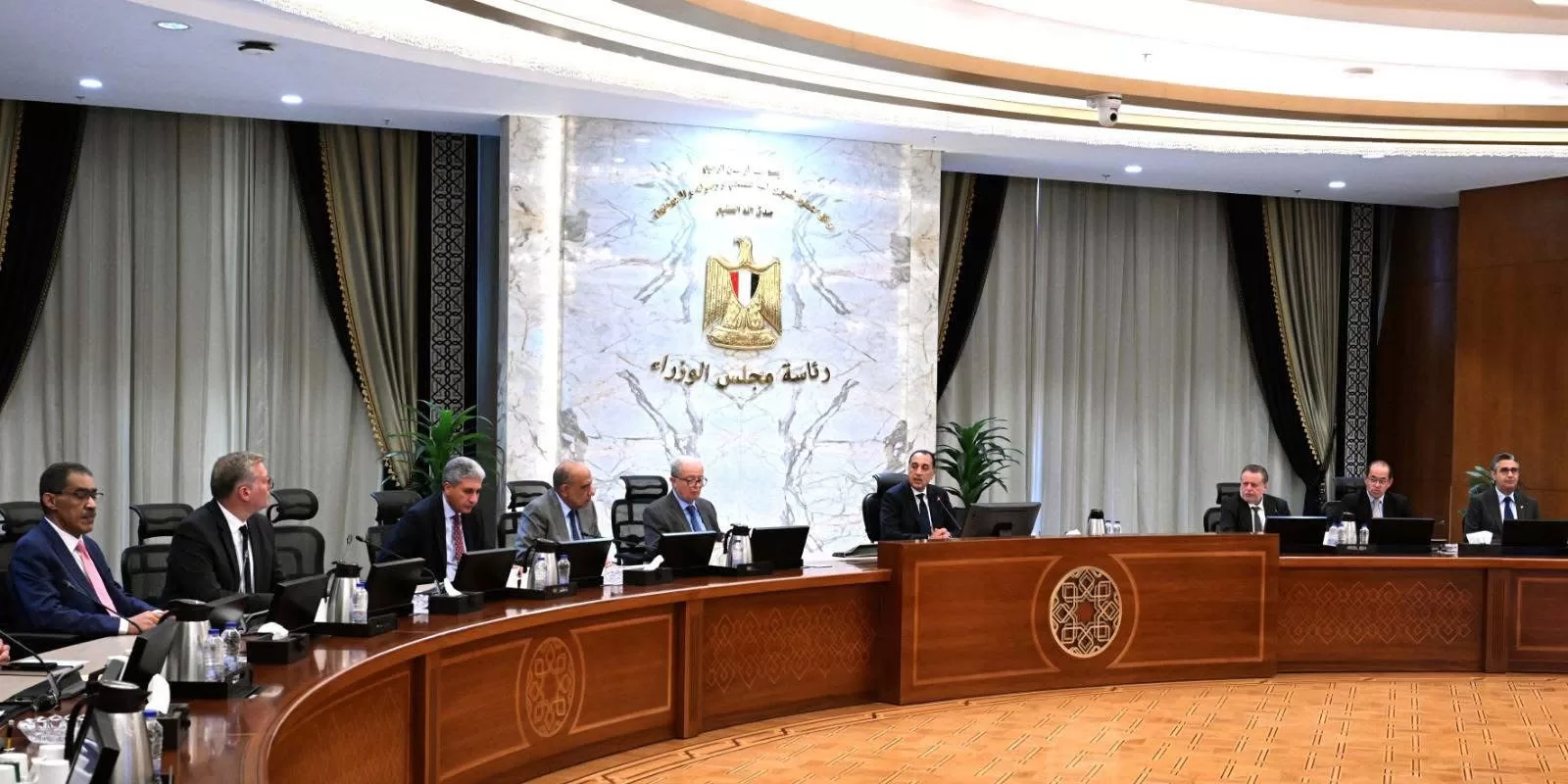
Prime Minister Mostafa Madbouli on Monday chaired a meeting of the Central Crisis Management Committee to follow up on the repercussions of the current regional crisis. The session was attended by Deputy Prime Minister for Economic Affairs Hussein Issa, Central Bank Governor Hassan Abdalla, and a number of cabinet ministers and senior officials.
Cabinet Spokesman Mohamed El-Homsany said the meeting reviewed the latest developments stemming from the ongoing “U.S.–Israeli–Iranian” military operations, with a focus on economic impacts at the local, regional, and global levels. Scenarios for the duration and expansion of the conflict were discussed, alongside efforts aimed at reaching a de-escalation agreement.
The committee assessed the outcomes of government measures to mitigate the crisis, including energy rationalization, reduced consumption of gas and petroleum products, and accelerated plans for renewable energy expansion. Steps to secure supplies of fuel, essential goods, medicines, and medical equipment were also examined, as well as market stabilization and price control efforts.
The Minister of Electricity presented progress on operational adjustments to cut fuel use and maximize renewable output, ensuring uninterrupted power supply. The Minister of Public Enterprises outlined the impact of government rationalization measures, including closing shops, restaurants, malls, and clubs at 9 p.m., and introducing remote work every Sunday starting April 5.
Petroleum Minister Karim Badawy reported on performance indicators in the energy sector, noting reduced crude allocations and stabilized diesel consumption. He highlighted savings achieved by postponing several national projects for three months, redirecting resources to urgent priorities. He also confirmed that crude import contracts are proceeding on schedule to guarantee steady supply.
Planning and Economic Development Minister Ahmed Rostom reviewed global economic fallout, including disrupted supply chains, slower trade growth, rising energy and food prices, higher import costs, and mounting trade deficits. He pointed to international experiences emphasizing energy security, consumption rationalization, and the need to sustain development efforts despite accelerating geopolitical and economic shifts.

