


Some of Egypt’s ancient landmarks are well known to tourists the world over. Other landmarks are not, however, as equally famous, even as they are of a great value.
Madinat Habu is one of these less known ancient sites.
The temple, which is located on the west bank of the River Nile in Egypt’s ancient city of Luxor, is probably the most reflective of the art, history and faith of ancient Egypt though it is less famous than Luxor and Karnak on the opposite bank of the Nile.
There are many accounts on the history of the temple and the reasons behind its construction.
It is believed to date to the early 18th Dynasty and, according to legends, it was the first place where Amun, known as the king of gods in ancient Egypt, was sighted.
It is believed to be more than just a temple, but an important monument that shows the artistry of the ancient Egyptians.
Madinat Habu was an important religious site and a mortuary. Hatshepsut and Thutmose III, the fifth and sixth pharaohs, respectively, of the 18th Dynasty, are said to have ordered the construction of the temple for Amun.
Years later, Rameses III, the second pharaoh of the 20th Dynasty, expanded the temple and turned it into a memorial site. He used it as an administrative centre for western Thebes, whose ruins continue to bear witness to those times in Luxor.
Rameses III was a great warrior and is credited with defending his country against invading armies in three major wars. His military mindset inspired the construction of a great wall around Madinat Habu.
In constructing this massive fortified enclosure wall around the temple, Rameses III was inspired by fortresses he saw in Syria, which he visited on his military adventures.
The architectural norms Rameses III saw in Syria were a great source of inspiration for him. He was especially influenced by the way Syrian fortresses were built.
There is a belief that Rameses III lived near the temple because of the presence of a royal palace adjacent to the building. Close to the sides of the temple, there are rooms that probably housed priests and administrative workers.
Madinat Habu, the largest memorial temple in Egypt, 320 metres long and 200 metres wide, was connected to the River Nile through a canal that is no longer there.
When the civil war between the high priest of Amun and the viceroy of Kush erupted at Karnak, people fleeing the war found refuge inside the great enclosure wall around the temple.
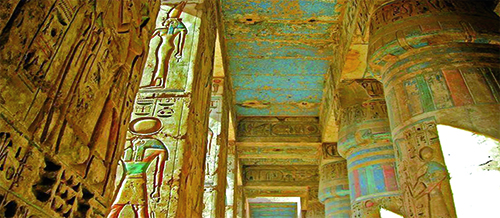
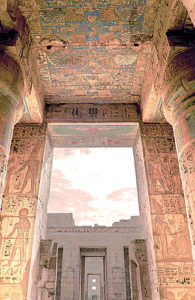
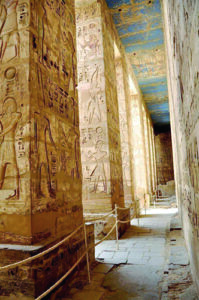
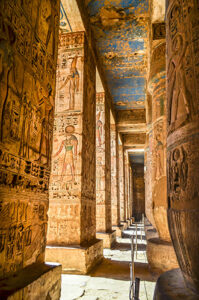
A special feature of Madinat Habu is that some of the original decorations on the walls retain their first paints.
The outer walls of the temple are covered with religious inscriptions, drawings and portrayals of scenes from the battles of Rameses III, especially against the Libyans, a great source of danger for Egypt in ancient times and the Sea Peoples.
Apart from its enormous wealth as an ancient city, Luxor’s moderate climate makes it an ideal winter destination.
The city’s residents, however, are its real wealth, being known among Egyptians as kind, generous and very hospitable. The large number of tourist facilities suiting all budgets makes Luxor a location of choice for tourists seeking memorable times.
Visitors have the opportunity to stay at the homes of area residents, enjoy local cuisine and be part of the authentic life at little cost.
There is an entrance fee of $10 for foreigners, but access is much less for Egyptians and Arab nationals.
Those who want to travel to this site from Cairo have multiple transport options, including booking a domestic flight or taking a train.


Discussion about this post