




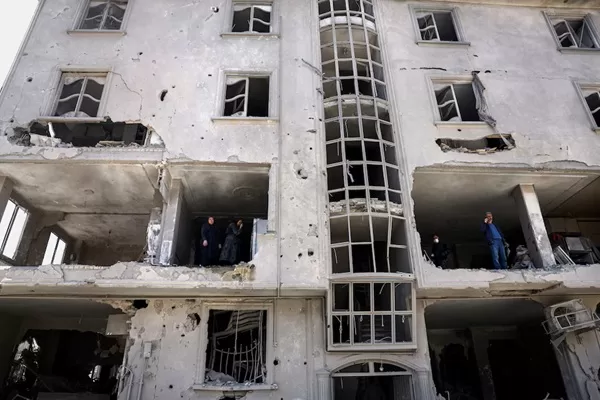
WASHINGTON – The war in the Middle East has caused serious disruption to the economies of frontline countries, and is dimming the outlook for many economies that had just started to recover from previous crises, the International Monetary Fund warned on Monday.
In a blog published by the global lender’s top economists, the IMF said the war launched by U.S. and Israeli strikes against Iran on February 28 was causing a global, but asymmetric shock and leading to tighter financial conditions.
Iran’s closure of the Strait of Hormuz and damage to regional infrastructure had caused the largest disruption to the global oil market in history, given that 25%-30% of global oil and 20% of liquefied natural gas normally passed through the narrow waterway, according to the International Energy Agency.
Oil prices on Monday were set for a record monthly rise.
The war’s impact would depend on how long it lasts, how far it spreads and how much damage it inflicts on infrastructure and supply chains, the IMF said, urging countries to carefully calibrate any measures to manage the shock.
The IMF was also supporting member countries with policy advice and financial assistance, where needed and in coordination with the international community, the fund said.
The IMF statement came as finance leaders from the Group of Seven economic powers said they were ready to take “all necessary measures” to safeguard energy market stability and limit broader economic spillovers from recent volatility.
The International Energy Agency’s 32 members agreed earlier this month to release a record 400 million barrels of oil from strategic stockpiles to combat a spike in global crude prices.

