



ISLAMABAD (AP) — Top diplomats from key regional powers were gathering in Pakistan on Sunday to discuss how to end the fighting in the Middle East, but there were few signs of progress as Israel and the US kept up strikes on Iran, and Tehran responded by firing missiles and drones across the region.
Pakistan said foreign ministers from Egypt, Saudi Arabia and Turkey were participating in the talks in Islamabad. Pakistani Prime Minister Shehbaz Sharif said he and Iranian President Masoud Pezeshkian held “extensive discussions” on regional hostilities.
More than 3,000 people have been killed throughout the monthlong war that began with US and Israeli strikes on Iran, triggering Iran’s attacks on Israel and neighboring Gulf Arab states. The war has also threatened oil and gas supplies with Iran’s grip on the strategic Strait of Hormuz shaking markets.
The US and Israel were not participating in the talks in Pakistan. The US has sent additional troops to the Middle East, while Yemen’s Houthi rebels entered the fighting over the weekend, threatening to widen the war and further hurt global shipping.
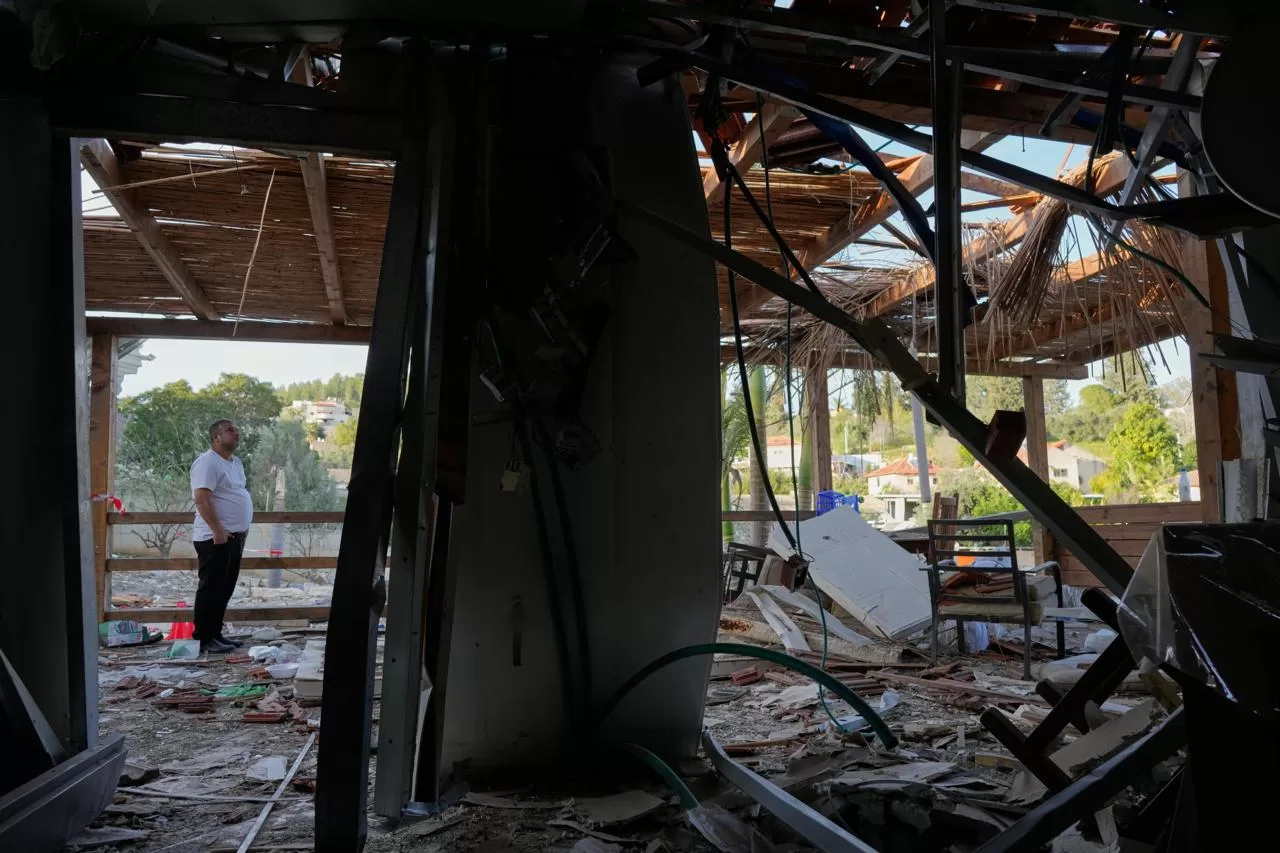
Israel announced waves of incoming strikes from Iran on Sunday and explosions could be heard throughout Tehran.
Egypt’s Badr Abdelatty, Turkey’s Hakan Fidan and Saudi Arabia’s Prince Faisal Bin Farhan were in Islamabad as part of talks scheduled days after the US offered Iran a 15-point “action list,” delivered through Pakistan as a framework for a possible peace deal. Abdelatty said the meetings were aimed at opening a “direct dialogue” between the US and Iran, which have largely communicated through mediators during the war.
Iranian officials have publicly rejected the US framework and dismissed the idea of negotiating under pressure. Still, Press TV, the English-language arm of Iran’s state broadcaster, reported that Tehran had drafted its own five-point proposal, citing an anonymous official. The plan reportedly calls for a halt to the killing of Iranian officials, guarantees against future attacks, reparations for the war, an end to hostilities and Iran’s “exercise of sovereignty over the Strait of Hormuz.”
Iran on Sunday warned of additional escalation after airstrikes hit several universities, including ones that Israel claimed were used for nuclear research and development.
The paramilitary Revolutionary Guard warned in a statement that Iran would consider Israeli universities and branches of American universities in the region “legitimate targets” without safety assurances for Iranian universities, state media reported.
American universities including Georgetown, New York University and Northwestern have campuses in Qatar and the United Arab Emirates.
“If the US government wants its universities in the region spared, it should condemn the bombardment of (Iranian) universities by 12 o’clock Monday, March 30, in an official statement,” the Guard said.
It also demanded the US stop Israel from striking Iranian universities and research centers. Iranian Foreign Ministry spokesperson Esmaeil Baqaei said last week that dozens of universities and research centers have been hit, among them the Iran University of Science and Technology and Isfahan University of Technology.

