











By Mohamed Attia
Egyptian airports, led by Cairo International Airport under the leadership of Accountant Magdy Ishaq, have successfully managed the wave of severe weather that affected several governorates in recent days.
Cairo Airport Company had raised the maximum level of preparedness across all its operational and service sectors to face weather fluctuations and rainfall, ensuring the regular flow of operations and the safety of passengers and aircraft at Cairo International Airport.

Magdy Ishaq, Chairman of Cairo Airport Company, directed the activation of the emergency plan to deal with weather changes and severe conditions. This included canceling leaves and raising readiness levels, in coordination between the operations sector, engineering sector, and various executive bodies at the airport.
Work teams from different departments, including maintenance and civil protection, were deployed to monitor the situation around the clock and respond quickly to any developments.
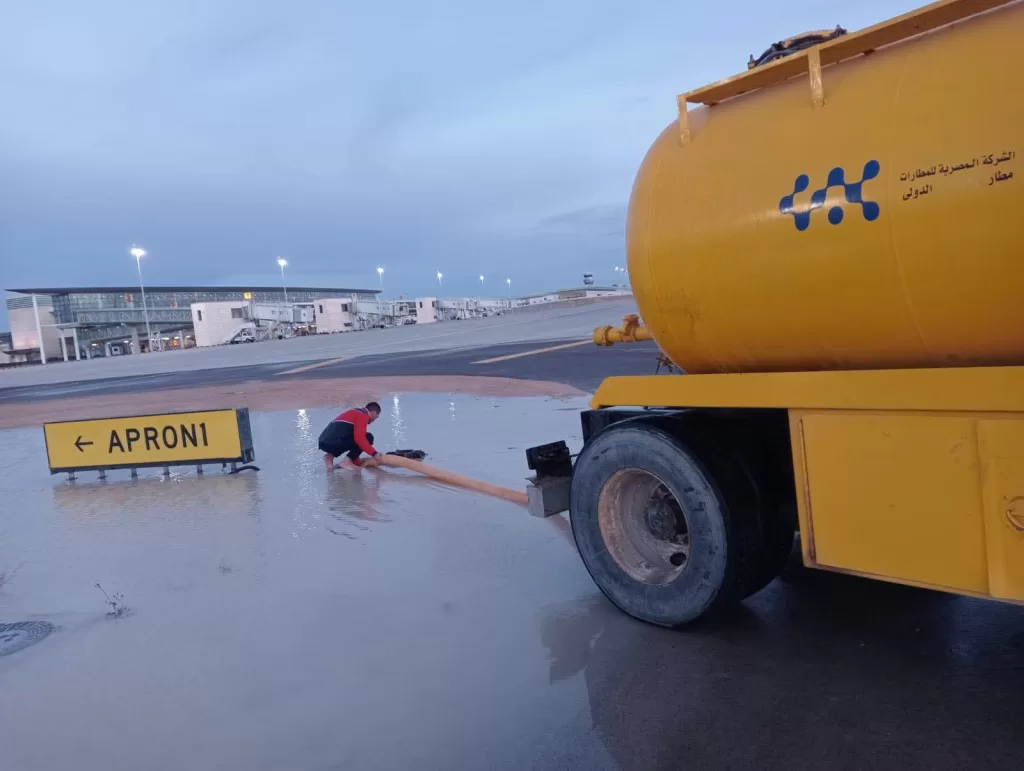
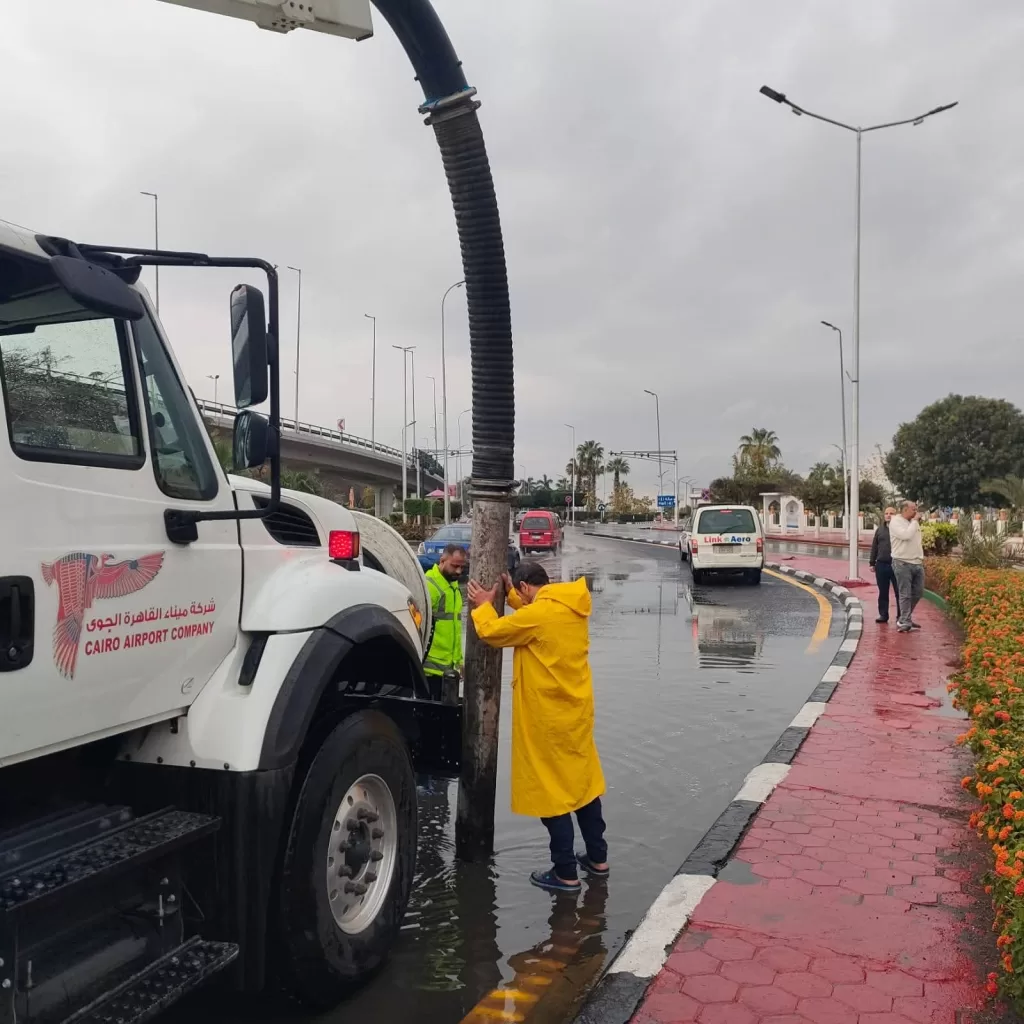
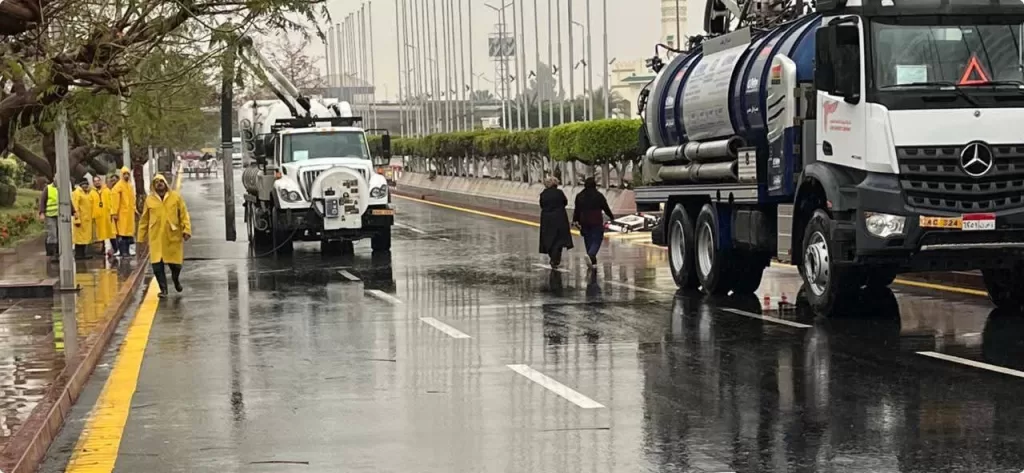
Measures included deploying water suction vehicles and equipment across airport areas and runways to prevent water accumulation, as well as ensuring the efficiency and readiness of pumping stations and rainwater drainage systems.
In addition, periodic monitoring of the runway was intensified to maintain the highest standards of aviation safety, and work teams inside departure and arrival halls were reinforced to ensure smooth passenger movement.
Captain Wael el-Nashar, Chairman of the company, closely monitored the situation from the operations room at the company’s headquarters. He emphasised the need for full readiness and immediate response to any developments to ensure passenger safety and continuity of operations.
El-Nashar also held direct meetings with airport directors, general managers, and various departments to discuss emergency plans, review the readiness of equipment and technical support teams, ensuring the efficiency of rainwater and flood drainage systems after necessary maintenance.
All precautionary measures were taken through crisis management, including forming a 24-hour monitoring committee to ensure rapid response and provide full operational support to all work sites.