



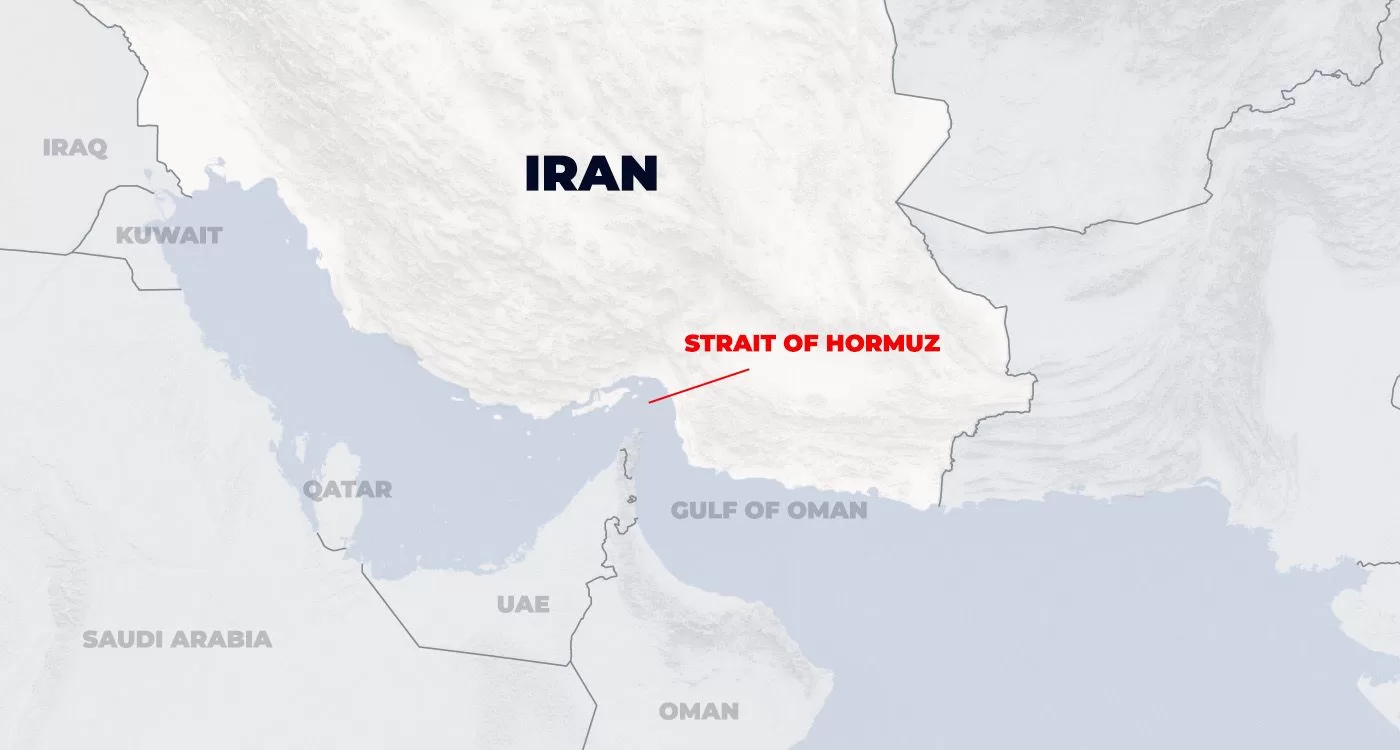
A month-long disruption in one of the world’s most important energy chokepoints would not stay confined to the Gulf. It would ripple through oil, gas, shipping, inflation, and political decision-making across Asia, Europe, the United States, and the Middle East.
The question around the Strait of Hormuz is no longer abstract. It sits at the centre of a live energy and shipping risk, with tanker flows, insurance costs, and state responses all moving in real time.
Why this waterway matters so much
Roughly a fifth of global seaborne oil moves through this narrow passage linking the Arabian Gulf to the Gulf of Oman. Qatar’s liquefied natural gas exports also depend heavily on it. Reuters’ reporting shows why traders treat any disruption there as a global event rather than a local maritime problem.
That dependence creates an awkward reality. Some producers have partial alternatives, such as Saudi Arabia’s East-West pipeline and UAE export routes that bypass part of the Gulf. But those routes cannot fully replace seaborne flows at normal volumes, especially if the disruption lasts several weeks rather than several days.
This is why the market reaction is usually immediate. Even before a full legal closure, insurers raise war-risk premiums, shipowners delay sailings, and refiners begin bidding up replacement barrels. That pattern has already appeared in reporting tied to The Iran war, where the threat itself became enough to stall traffic and push prices sharply higher.
What one month of closure would do to the world
A closure lasting a few days shocks prices. A closure lasting a month starts changing economic behaviour.
The first effect would be energy scarcity in tradeable markets. Oil buyers in Asia would feel it fastest because most Gulf crude moving through Hormuz goes east. Refiners in China, India, Japan, and South Korea would need to compete more aggressively for cargoes from other suppliers, including West Africa, the United States, and Latin America.
The second effect would be a surge in shipping and insurance costs. Cargoes that still move would cost more to protect. Cargoes rerouted from further away would take longer to arrive. That would raise prices not only for fuel, but also for petrochemicals, aviation, plastics, fertilizers, and manufactured goods.
The third effect would be inflation. If Brent crude moved well into triple digits for several weeks, governments would face renewed pressure on transport costs, food prices, and household energy bills.
How the shock would differ by region
Middle East and Gulf states
The Gulf would face the most direct commercial pain. Producers could still pump, but many would struggle to export at normal levels. Saudi Arabia and the UAE have more flexibility than others because they have some bypass capacity, yet even they would not be fully insulated. Kuwait, Iraq, Bahrain, Qatar, and much of regional tanker trade remain heavily exposed.
For Gulf economies, the contradiction would be severe: high headline oil prices would normally support revenue, but a blocked route would prevent part of that revenue from being realized. Port activity, logistics, insurance, tourism confidence, and regional aviation would also weaken.
Europe
Europe would be hit most clearly through gas, shipping costs, and broader inflation. Qatar remains an important LNG supplier for European buyers, especially when the continent is trying to avoid renewed supply stress. A month-long interruption would tighten gas balances and could send prices back toward levels last seen during earlier energy crises.
United States
The US is less dependent on Gulf crude than many Asian importers, but it would not be shielded. Oil is globally priced. If world benchmark prices surge, American gasoline and diesel prices rise as well. The US would also face heavier diplomatic and security burdens as pressure grows to secure shipping lanes and reassure allies.
What governments and companies would try next
Several moves would likely happen at once:
- Producers would maximize pipelines and storage drawdowns.
- Importers would release strategic reserves where politically possible.
- Naval escorts and state-backed insurance would expand.
- Buyers would scramble for substitute cargoes from non-Gulf suppliers.
- Central banks would watch inflation risks more closely.
None of those measures would fully solve a month-long shutdown. They would only limit the damage.
Conclusion
A one-month shutdown would not simply raise oil prices. It would test the resilience of the global trading system. Asia would take the first hit, the Gulf would absorb the deepest operational shock, Europe would face renewed gas stress, and the United States would feel the consequences through prices and security commitments. That is why every escalation around this passage is treated not as a regional shipping story, but as a global economic warning.

