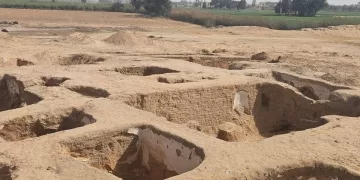




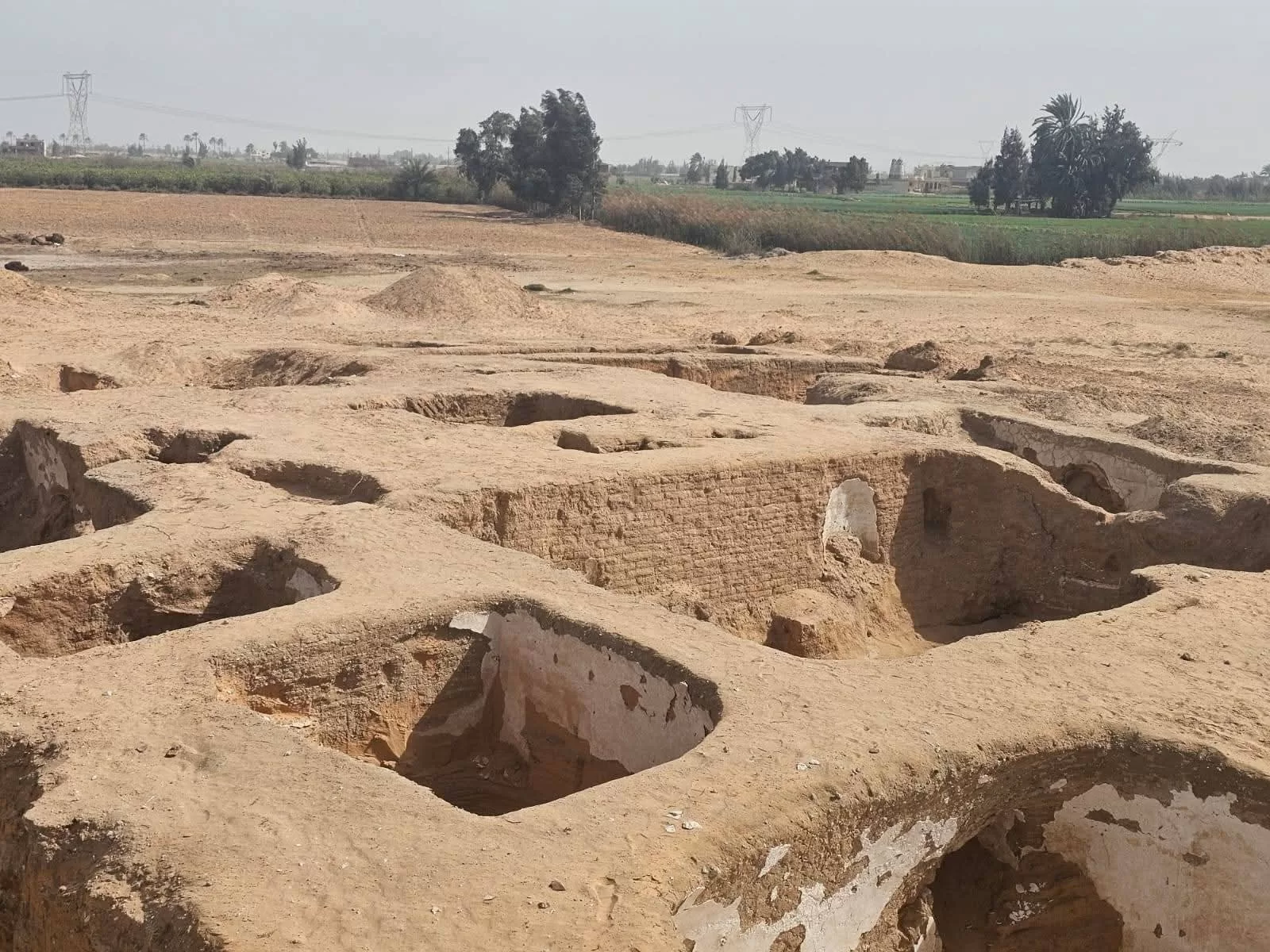
An Egyptian archaeological mission from the Supreme Council of Antiquities has uncovered a significant 5th-century AD structure in the Al-Qulayya area of Hosh Issa.
The building, identified during excavations that began in 2023, is believed to have served as a guesthouse in the early period of Coptic monasticism.
It features multiple architectural phases, reflecting adaptations across successive historical periods.
Secretary-General Hisham el-Leithy said the discovery offers valuable insight into the evolution of early monastic architecture.
Al-Qulayya represents the second-largest monastic community in the history of Christian monasticism, with features illustrating the earliest stages of organised monastic life, he added.
Decorative elements and wall paintings uncovered at the site are considered key sources for studying early Coptic art, shedding light on both artistic development and monastic practices.
The site also reflects a transition from individual monastic cells to semi-communal living arrangements, later incorporating dedicated hospitality spaces.
The structure comprises 13 multi-functional rooms, including living quarters, educational spaces, and service areas such as kitchens and storage facilities, Head of the Islamic and Coptic Antiquities Sector Diaa Zahran said.
A large hall in the northern section, with decorated stone platforms, was likely used to receive visitors, while the eastern section includes a prayer area with an apse and a limestone cross.
Mission Director Samir Rizk Abdel-Hafez highlighted the discovery of wall paintings depicting monastic figures, floral motifs, and symbolic imagery, including gazelles.
Additional finds include a two-metre marble column, pottery fragments—some bearing Coptic inscriptions—and animal remains that provide insight into daily life.
A limestone slab inscribed in Coptic referencing “Aba Kir ibn Shenouda” was also uncovered, confirming sustained monastic activity at the site.

