




This year’s Ramadan drama season marked a significant departure from the past, a transition that saw drama serving as a social awareness tool, rather than a method of entertainment.
This year’s drama works, especially those produced by United Media Services (UMS), tackled a wide range of important issues, from social struggles and problems, to cybercrime, domestic violence, family breakdown and childhood illness.
The same season featured a diverse line-up of over 20 series that blended suspense, family drama, and psychological storytelling, while addressing the real-life concerns that face the Egyptian society.
These works engaged viewers, not only by depicting crises, but also by offering guidance, resources, and solutions.
One of the clearest examples in this regard was Had Aqsa which is directed by Maya Zaki.
This series focused on online blackmail through thestory of a woman caught in a web of financial crimesand social pressures, evolving into a cautionary tale about digital vulnerability.
An important scene showed the main character,played by Basant Abu Basha, falling prey to online blackmail, which pushed her to the verge of suicide. The same scene captures the psychological toll of cyber extortion.
The series goes beyond merely presenting drama, taking the extra mile of breaking the fourth wall byshowing viewers concrete steps to report such crimes.
The inclusion of the hotline numbers of the “Speak Up” initiative and its list of legal procedures, transforms the series into a hybrid of fiction and public service as it urges viewers to recognize and respond to similar threats in real life.
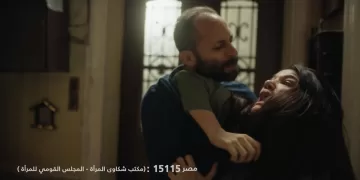
Similarly, Etnein Gherna, which is directed by Khaled El-Khalafawy, addresses domestic violence in a direct way.
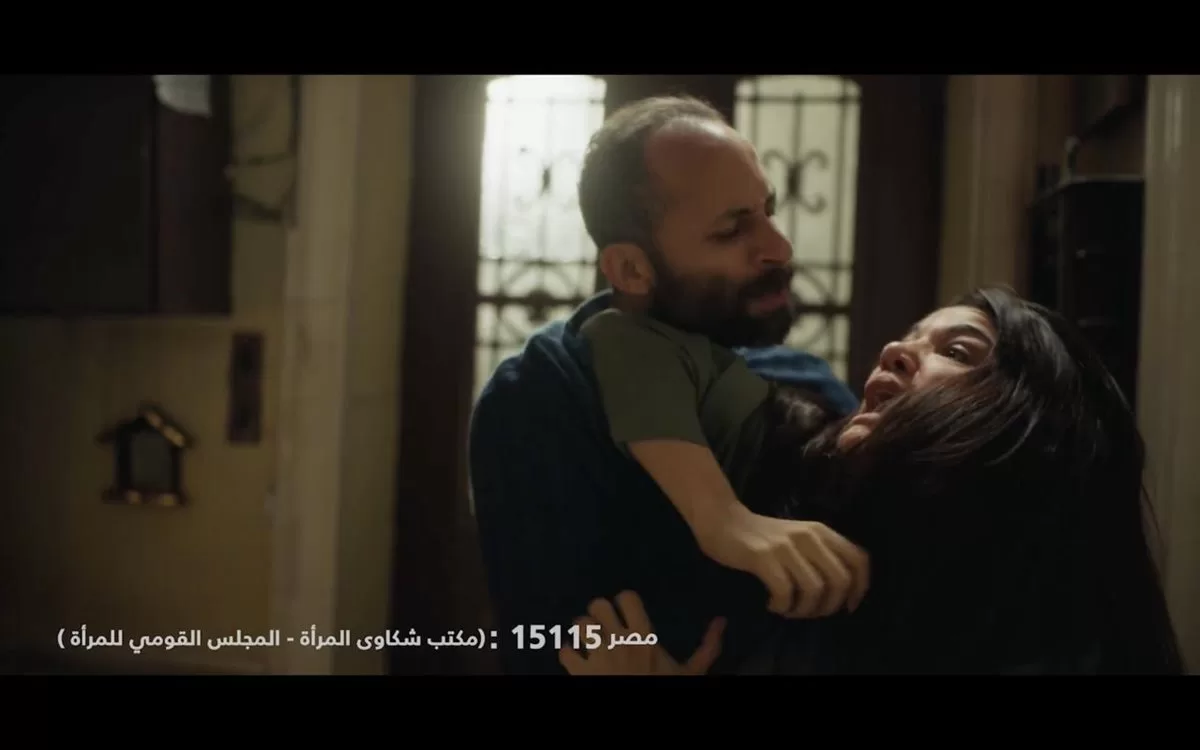
In one of the season’s most hyped scenes, Wafaa, themain character in the series, suffers physical abuse at the hands of her husband who beats her brutally.
The scene highlights the hotline of the National Council for Women (NCW), probably encouraging victims to seek help.
Such inclusion has drawn praise from NCW members.
“I believe this is a very important step in the development of Egyptian drama,” council member Rania Yehia said.
Speaking to The Egyptian Gazette, she added that the inclusion by UMS of awareness messages in its productions adds an important social dimension to this art form.
Yehia noted that drama works enjoy high viewership during Ramadan.
“When this influence is leveraged to raise public awareness of women’s rights or to inform the public about available support services, it transforms art into a tool for positive change, not just entertainment,” she added.
In Tawabe, directed by Yehia Ismail, the focus shifts to families dealing with children who suffer from serious illnesses, such as muscular dystrophy.
The show intertwines this struggle with the influence of social media, portraying both its potential to mobilize support and its darker capacity to exploit vulnerabilities.
A particularly moving storyline follows a family forced to raise funds online to pay for the treatment of a young member.
As hope builds through public sympathy, the narrative takes a tragic turn, highlighting the devastating consequences of delayed medical intervention.
Yehia described direct references within works like the series Etnein Gherna and Tawabe, as”paramount” for bridging the gap between drama and reality.
“Viewers seeing a character facing a problem and learning about support services or the NCW’s complaint hotline, reinforces the presence of institutions they can turn to at their times of need,” Yehia said.
“This communion between art and community service prods women to seek help and not remain silent in the face of violence and discrimination,” she added.
Family dynamics are further explored in Kan Ya Ma Kan, directed by Karim El-Adl. This series examines the legal and emotional fallout of marital disputes, putting at its centre a child who becomes the unintended victim of her parents’ conflict.
Through several courtroom scenes and domestic confrontations, the series underscores a critical message: children bear the heaviest burden of divorce and separation.
The series invites viewers to reconsider parental responsibility, emphasizing the need to protect children’s psychological well-being.
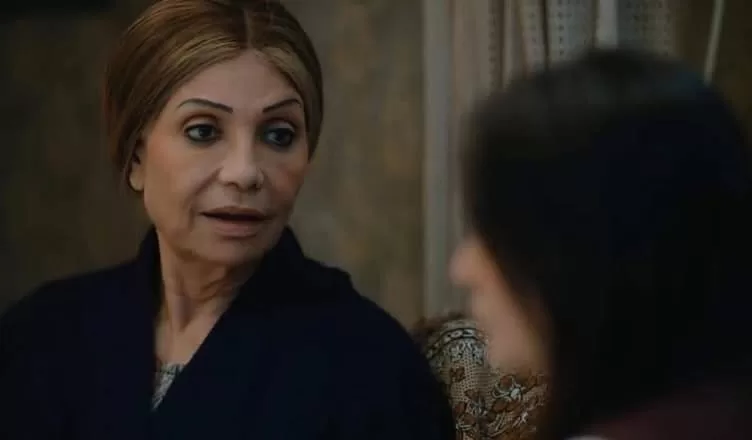
Also, El Set Mona Lisa delves into the complexities of marriage and the pressures faced by women behind closed doors.
The story follows Mona Lisa, whose seemingly ideal marriage quickly transpires into a structure of control and emotional strain.
The series stands out for its portrayal of marriage,not as a romantic ideal, but as a power dynamic shaped by societal expectations.
Scenes, depicting tension between the main character and her mother-in-law and conflicts within the household, highlight the psychological toll of such environments.
This year also, drama works richly diversified the portrayal of women. Some works presented strong and realistic female characters, while others fell into traditional stereotypes.
Yehia especially expressed admiration for the positive portrayal of women in el-Lon el-Azrakwhich highlights pressures placed on a woman who tries to balance her family life with the responsibility of caring for a child with a health condition.
“It reflects the real challenges faced by many women,” Yehia said.
She also admired Sawa Sawa series for addressing romantic relationships and the social pressures faced by young women and men in a realistic way.
In Sohab Al-Ard series, Yehia said, women appear as essential elements in defending the land and belonging to it.
“They are not secondary characters, but part of the daily struggle to maintain stability, family, and rights,” Yehia said.
“This portrayal shows that defending the land and social stability are not solely men’s responsibility, but rather a societal issue where women actively participate,” she added.