









• Advertise
  • Privacy & Policy
  • Contact
Wednesday, March 18, 2026
itida
Egyptian Gazette

Editor-in-Chief

Mohamed Fahmy

Board Chairman

Tarek Lotfy

  • HOME
  • EGYPT
    • Local
    • Features
  • World
    • National Day
  • Technology
  • BUSINESS
    • Real Estate
    • Automotive
  • SPORTS
  • ENTERTAINMENT
    • Arts
    • Health
    • Lifestyle
    • Travel
  • Skyward
    • Snippets from EgyptAir history
  • MORE
    • Multimedia
      • Video
      • Podcast
      • Gallery
    • OP-ED
No Result
View All Result
  • HOME
  • EGYPT
    • Local
    • Features
  • World
    • National Day
  • Technology
  • BUSINESS
    • Real Estate
    • Automotive
  • SPORTS
  • ENTERTAINMENT
    • Arts
    • Health
    • Lifestyle
    • Travel
  • Skyward
    • Snippets from EgyptAir history
  • MORE
    • Multimedia
      • Video
      • Podcast
      • Gallery
    • OP-ED
No Result
View All Result
Egyptian Gazette
Home World

90 ships cross Hormuz as Iran keeps oil flowing amid war

by News Wires
March 18, 2026
in World
Ships
Share on FacebookWhatsapp

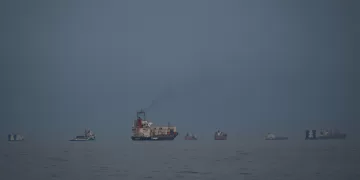
About 90 ships including oil tankers have crossed the Strait of Hormuz since the outset of the war with Iran and it is still exporting millions of barrels of oil at a time when the waterway has been effectively closed, according to maritime and trade data platforms.

Many of the vessels that passed through the strait were so-called “dark” transits evading Western government sanctions and oversight that likely have ties to Iran, maritime data firm Lloyd’s List Intelligence said. More recently, vessels with ties to India and Pakistan have also successfully crossed the strait as governments stepped up negotiations.

As crude prices spiked above $100 a barrel, US President Donald Trump pressured allies and trade partners to send warships and reopen the strait, hoping to bring oil prices lower.

Most shipping traffic through the Strait of Hormuz, a waterway for global oil and gas transport that supplies roughly one-fifth of the world’s crude oil, has been halted since early March, after the war started. About 20 vessels have been attacked in the area.

However, Iran has still managed to export well above 16 million barrels of oil since the beginning of March, trade data and analytics platform Kpler estimated. Due to Western sanctions and associated risks, China has been the biggest buyer of Iranian oil.

There has been ”continued resilience” in Iran’s oil export volumes, said Kpler trade risk analyst Ana Subasic.

Iran has managed to profit from oil sales and also “preserve its own export artery” by using control over the chokepoint, said Kun Cao, client director at consulting firm Reddal.

Iran’s oil export data estimates are largely aligned with maritime traffic data.

At least 89 ships crossed the Strait of Hormuz between March 1 and 15 – including 16 oil tankers, according to Lloyd’s List Intelligence, down from roughly 100 to 135 vessel passages per day before the war. More than one-fifth of the 89 vessels were believed to be Iran-affiliated, while Chinese and Greece affiliated ships are among the rest, it said.

Other vessels also have been getting through.

Tags: HormuzIranOilshipsWar
ADVERTISEMENT
egyptian-gazette-logo

The Egyptian Gazette is the oldest English-language daily newspaper in the Middle East.
It was first published on January 26, 1880 and it is part of El Tahrir Printing and Publishing House.

Follow Us

Gazette Notifications

Would you like to receive notifications on our latest news ?

  • Advertise
  • Privacy & Policy
  • Contact

Copyrights for © Egyptian Gazette - Administered by Digital Transformation Management.

No Result
View All Result
  • HOME
  • EGYPT
    • Local
    • Features
  • World
    • National Day
  • Technology
  • BUSINESS
    • Real Estate
    • Automotive
  • SPORTS
  • ENTERTAINMENT
    • Arts
    • Health
    • Lifestyle
    • Travel
  • Skyward
    • Snippets from EgyptAir history
  • MORE
    • Multimedia
      • Video
      • Podcast
      • Gallery
    • OP-ED

Copyrights for © Egyptian Gazette - Administered by Digital Transformation Management.

This website uses cookies. By continuing to use this website you are giving consent to cookies being used. Visit our Privacy and Cookie Policy.
