


The landscape of Ramadan drama has long been a battlefield of stories.
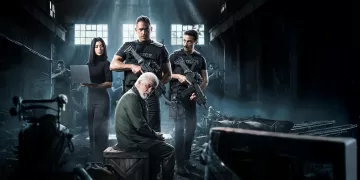
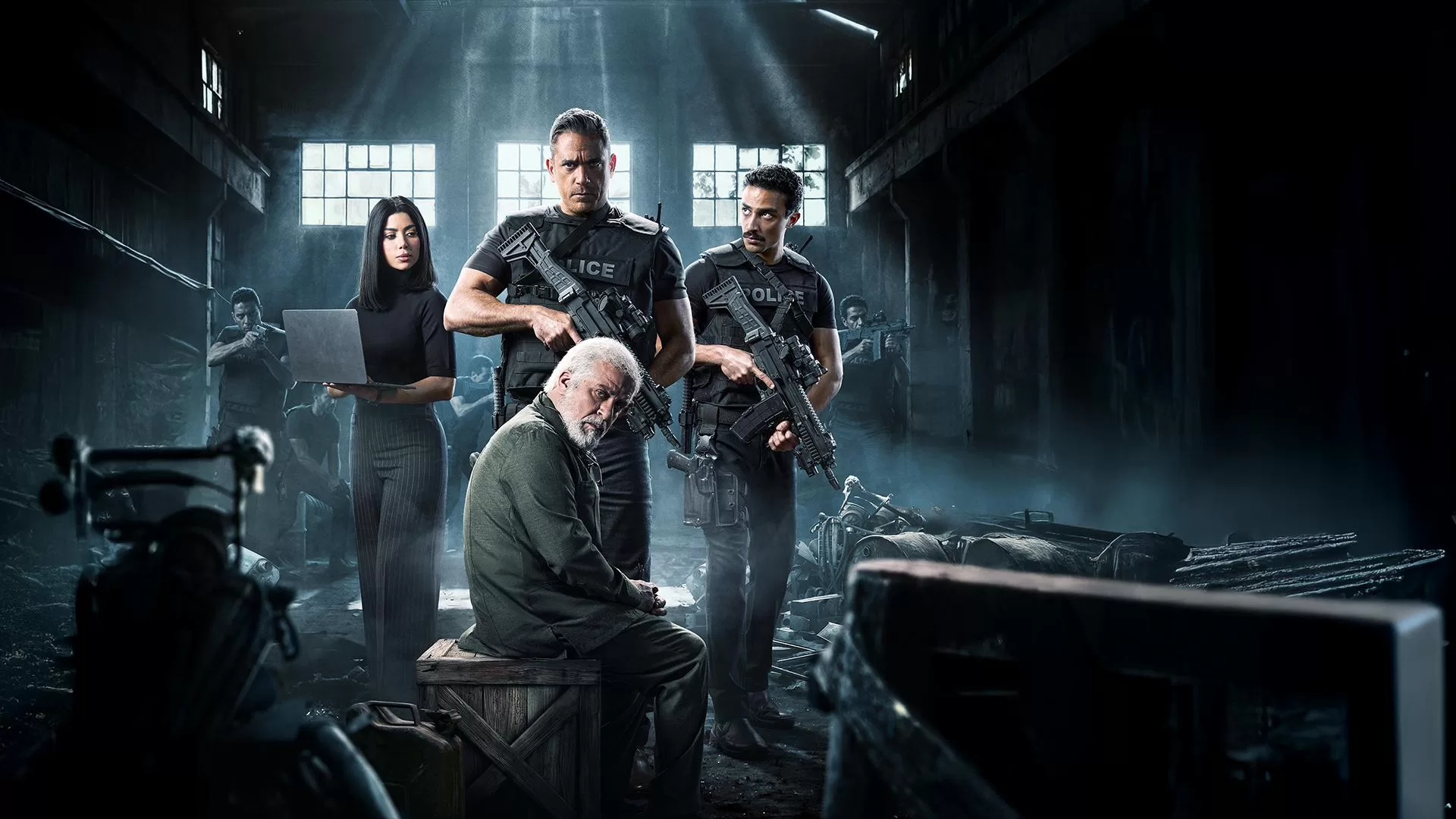
Rarely does, however, a production arrive with the precision and weight of Ras el-Afaa (Snake’s Head)series which is directed by Mohamed Bakir.
More than a typical television drama, the series signals a shift in how the state and the arts can intersect to document history.
Instead of relying on familiar tales of heroism only, the series attempts a deeper, more investigative portrayal of the Muslim Brotherhood and its internal dynamics.
At the centre of the narrative is Mahmoud Ezzat, long described as the group’s “iron man” and one of its most secret figures.
Through his story, the series pulls back the curtain on decades of underground activity, decisions, and turning points that shaped the organization’s path.
The series combines action, intrigue and references to events to tell a story that is both exciting and thought-provoking. The series stars Amir Karara and Sherif Mounir.
At its core, Raas el-Afaa is about political and security issues. It reveals how extremist organizations work and how they manipulate youngsters to get what they want.
Ezzat (played by Sherif Mounir) is a driving force behind the violence and unrest Egypt witnessed after the downfall of the Muslim Brotherhood regime in 2013, something that makes the theme of the series
both important and timely, according to critics.
“The Brotherhood is not just a dogmatic organization, but it has a military arm,” leading film critic, Tarek el-Shennawi told The Egyptian Gazette.
He noted that the Brotherhood has used arms ever since its inception in 1928.
“The group did this to enforce its agenda and ideas,” he added.
For him, the series presents a deep vision of theBrotherhood’s ideology since the 1950s.
Sayyid Qutb, the group’s theoretician, el-Shennawiadded, reinforces the use of arms against those who ideologically oppose him.
“Unfortunately, this ideology still exists among Brotherhood members and Mahmoud Ezzat was its exact incarnation,” he said.
The series focuses on how this extremist groupworks and attracts supporters. It also looks at how its members are steered to commit acts of violence.
Ezzat is portrayed as a very clever man who uses many different methods to get what he wants.
One significant scene shows Brotherhood leaders discussing a currency crisis in a bone-chillingdialogue.
They, however, show no empathy for citizens suffering. Instead, they see citizens’ pains as a tool to incite the public against the government.
So, Raas el-Afaa does not only offer good storytelling, but also spreads awareness about how this extreme ideology can have consequences for the security of the state and the safety of ordinary people.
The series, el-Shennawi said, breaks into these dark ideas and analyses them to raise awareness among young Egyptians.
The plot of Raas el-Afaa is inspired by events, following a group of officers from the National Security agency as they try to arrest a senior extremist figure.
The story is full of twists and turns, keeping viewersguessing until the end.
For el-Shennawi, the quality of artistic performancefalls at the centre of the success of the series.
Performances by actors Sherif Mounir and Amir Karara, he said, stand out.
He added that musician Yasser Abdel Rahman has succeeded in giving the work a strong national and emotional aspect.
What really sets Raas el-Afaa apart from other works is that it goes into the world of intelligence and clandestine political activity, critics said.
This is a sensitive and complex topic and the series handles it well, they added.
El-Shennawi said dramatic works that expose the terrorist Brotherhood are necessary, even after thegovernment succeeded in crushing it.
“This group keeps trying to reach new generations of Egyptians,” el-Shennawi said.
He added Raas el-Afaa shows that the extremist ideology remains capable of exploding at any time, making the production of such artistic worksnecessary.
The series is based on real events, its makers say, noting that they used these events to make the story credible.
The show also demonstrates how drama can revisit history and present it to a mass audience, turning complex events into narratives that resonate with millions of viewers across the region.
This is a deal that shows how television drama can continue to evolve and explore the forces that shape contemporary society, el-Shennawi said.
“I believe this is the best way to face the Brotherhood,” he added. “Confronting the group via security means is over, but the fight against its ideology is far from over.”

