




Islam Made Simple
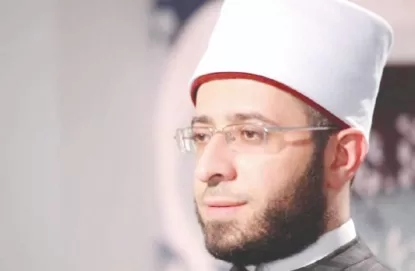
Dr Osama Al-Azhari
Minister of Waqf (Charitable Endowments)
Dear readers, honourable Egyptian people, and daughters and sons of the Arab and Muslim
nations, welcome to a new journey with the Ever-Glorious Qur’an, as we dive into the depths of its thirteenth part, drawing pearls from its treasures, guidance from its light, and the noble values and principles that Allah Almighty has bestowed within its eloquent verses.
Today, I have selected for you from this magnificent part wonders from the verses of the Wise Reminder [Qur’an], by which we seek light amid the darkness of life and guidance on the paths of goodness.
What an abundance of delicate subtleties and profound wisdom it enshrines! And how many precise divine allusions, sublime meanings, and treasures of ethics and exhortations it holds!
We are still dwelling in the expansive realms of Surah Yusuf, the Surah in which Allah said:
“We, Ever We, narrate to you the best of stories.” [Qur’an12:3]
It is truly the best ofnarratives, for what it contains of lessons and wonders, and for what it encompasses of scenes from the human soul and its fluctuations, the strangeness of natures and situations, and the sublimity of prophetic ethics.
We reflect on the Almighty’s saying: “And soon as they entered to Yusuf, (Joseph) he gave an abode to his brother (saying), “Surely I, even I, am your brother; so, do not feel chagrined by whateverwere doing.” [Qur’an 12:69)]
Let us reflect on this phrase: “Indeed, I am your brother.” The pronoun “I” here carries meanings that go far beyond its letters. It is not just one type of “I”; rather, it falls into two distinct categories:
• A fiery “I” is uttered by the arrogant and haughty. It is filled with pride and driven by the desire for dominance and exclusivity, producing only fear, conflict, and division among people.
• A luminous “I” is spoken only by prophets and the righteous, brimming with honour, chivalry, and valor.
It instills reassurance, sows tranquility, and dispels all fear. It is the “I” of light – the “I” that the Prophet (PBUH) will say on the Day of Judgment as he intercedes for humanity: “I am for it, I am for it.” [narrated by al-Bukhari]
As for the Iblis-like “I”, it is the one Iblis uttered when he said: “He said, I am more charitable (i.e., better) than he.” [Qur’an 38:76]
It is also spoken by every extremist who believes they alone possess the truth, while
others are on falsehood.
As for the luminous “I”, it overflows with chivalry, generosity, and self-sacrifice. It points to the heart of the martyr who redeems his homeland with his life and aids people with his blood, unlike the
tongue of the fanatic who sees truth only in himself.
Furthermore, we pause to reflect on al-Ihsan (benevolence), as the Almighty says on the tongue of Joseph’s brothers: “They said, O you mighty (Governor), (Literally: the ever-Mighty Al-‘aziz) surely he has a father, aged and great with years; so, take one of us in his place; surely we see that you are one of the fair-doers.” [Qur’an 12: 78]
Joseph (PBUH) was a man of Ihsan (benevolence) in times of hardship and distress, just as he was in times of ease and prosperity. He practiced Ihsan in prison and remained to do so when he sat upon the throne.
The days did not change him, nor did circumstances alter him, for he was raised on goodness and adopted good manners in his dealings. So be benevolent always, in every state, and make benevolence
a constant character trait.
Emulate the noble among the righteous, for Imam al-izz ibn Abd al-Salam (may Allah have mercy on him) said: “If we were to summarise the objectives of the Divine Law (Sharia) in a single word, it would be: al-Ihsan.” The Prophet (PBUH) said: “Indeed, Allah has prescribed Ihsan in all things.” (narrated by Muslim).
Here, Egypt shines as a symbol of security, in the words of the Almighty on the tongue of
Joseph (PBUH): “So, soon as they entered to Yusuf, he gave an abode to his two parents
with him and said, “Enter into Misr, (Egypt) in case Allah (so) decides, secure.” [Qur’an12:99]
This verse is a crown of honour for every Egyptian and a badge of security upon the chest of this blessed nation, which is linked in the Ever-Glorious Qur’an to security.
Allah Almighty mentioned in His Ever-Glorious Book only three places described with safety:
1. Paradise, as He Almighty says: “Surely the pious will be amidst Gardens and Springs. Enter them, in peace, secure!” [Qur’an 15:45-46]
2. The Sacred House, as He Almighty says: “Indeed you will definitely enter the Inviolable
Mosque, in case Allah (so) decides, secure.”
[Qur’an 48: 27)]
3. Egypt, as He Almighty says: “Enter into Misr, (Egypt) in case Allah (so) decides, secure.” [Qur’an 12: 99]
What grace could be greater than for Egypt to be the third place associated with security in the Book of Allah, spoken by one of His Prophets, and eternally recorded as a Revelation to be recited until the Day of Judgment?
At the end of the story, Joseph (PBUH) said to his father: “And he raised his two parents (Or:
two fathers) upon the throne, and they (The pronoun is plural, not dual; i.e., three or more) collapsed prostrating to him.
And he said, “O my father, this is the
interpretation of my vision earlier; my Lord has already made it true; and He has already dealt me fairly as He brought me out of the prison.” [Qur’an 12:100]
Why did Joseph (PBUH) say,” He brought me out of the prison” rather than, and He has already dealt me fairly as He brought me out of the pit?
Wasn’t his release from the pit a greater blessing? Isn’t being thrown into the pit harsher and more severe than prison?!
Some exegetes said: it is because he chose prison of his own will, in obedience to Allah,
whereas the pit was a trial imposed upon him, not of his choosing.
However, the most precise and beautiful interpretation is that Joseph (PBUH) avoided
mentioning the pit because it would recall his brothers’ wrongdoing towards him.
So, he overlooked it, out of consideration for their feelings, gentleness
towards them, and noble forbearance at a moment of reconciliation. Here the
ethics of the prophets shine forth; in moments of purity, they mention only
what preserves purity. It has been said: “Recalling estrangement at a time of harmony is itself a form of estrangement.”
Thus, Joseph (PBUH) was a merciful prophet. He rose above the agony of the pit and expressed gratitude to Allah for his deliverance from prison, for he didn’t wish to cloud the serenity of the reunion with memories of harm.
O Allah, make us among those who embody these prophetic ethics, and grace us with the lights of the Qur’an.
Make us among the people of the luminous “I” and among the fair-doers in every state. Grant us the success to be mindful of the feelings of creation, just as Joseph (PBUH )did, and make the Qur’an for us a light, guidance, and mercy.
Until we meet again, stay noble; stay safe.

