



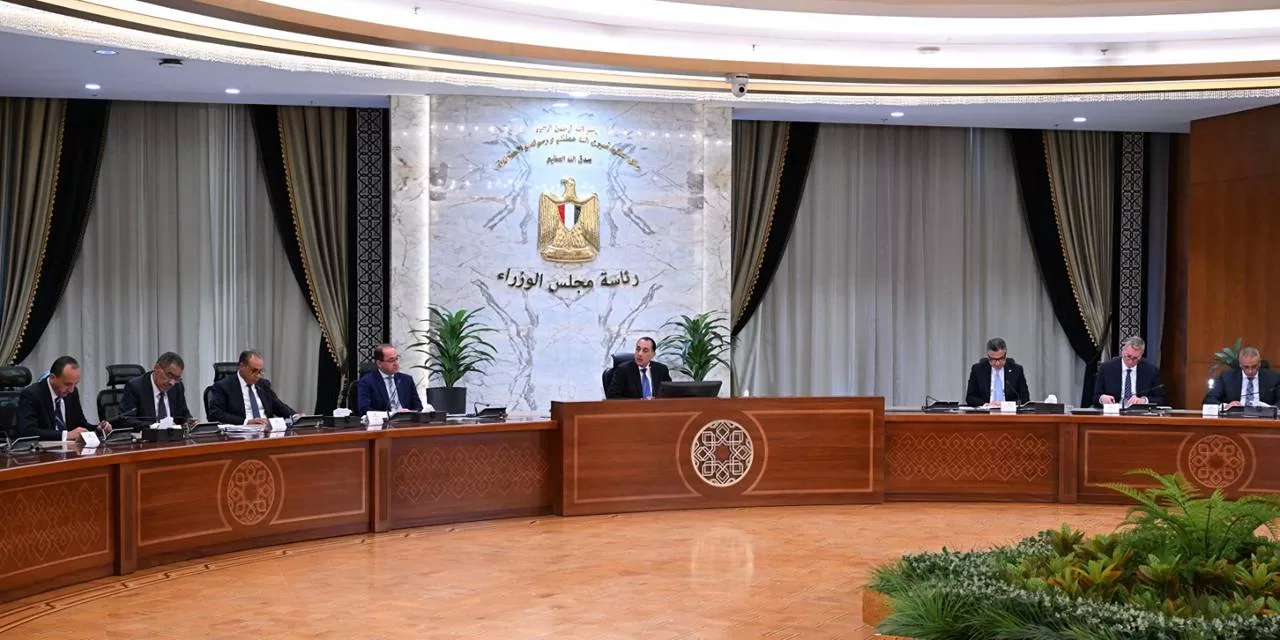
Prime Minister Moustafa Madbouli outlined Egypt’s proactive response to the ongoing regional escalation and rising global energy prices during a press conference on Tuesday at the government headquarters in the New Administrative Capital. The briefing, attended by Finance Minister Ahmed Kouchouk, Minister of Supply and Internal Trade Sherif Farouk, Foreign Minister Badr Abdel-Aati, and Petroleum and Mineral Resources Minister Karim Badawi, detailed the government’s extraordinary and temporary measures to safeguard the national economy.
Madbouli emphasised Egypt’s early efforts to prevent the conflict from escalating, highlighting close coordination with international partners to preserve regional stability. “We remain committed to supporting affected Arab nations and strongly condemn unprovoked attacks on neighbouring countries,” he said.
Addressing both the political and economic dimensions of the crisis, the prime minister underscored the government’s continuous monitoring of regional developments and the activation of contingency plans before the conflict intensified. He explained that the global crisis has severely disrupted energy supply chains, affecting fuel and essential goods, and posed a critical challenge for Egypt’s economy.
Faced with rising global oil prices, the government had two options: maintain domestic fuel prices and absorb the full cost, which would have placed heavy strain on the state budget, or take proactive measures to adjust prices while limiting the impact on citizens and businesses, the prime minister explained. Egypt chose the latter. Temporary fuel price adjustments were implemented, with the state absorbing a substantial portion of the increase to protect households and maintain industrial production, Madbouli added.
“Continuity in electricity, industry, and domestic consumption is our priority,” Madbouli stressed. “Any disruption in energy supplies would have serious repercussions for economic recovery.”
To further support citizens, especially low-income families, the government has expanded social support programmes. Around 15 million families will receive an additional LE400, extending benefits initially allocated for Ramadan and Eid al-Fitr through Eid al-Adha. These initiatives aim to mitigate the short-term impact of fuel price changes while protecting household budgets.
Madbouli also outlined fiscal and energy efficiency measures, including prioritising strategic expenditures, freezing non-essential spending, and optimising energy usage across government institutions. He noted ongoing coordination with the Central Bank of Egypt to maintain exchange rate stability and manage inflation.
Concluding the briefing, Madbouli reassured citizens: “We are confronting these exceptional circumstances with foresight and resilience. Our objective is to maintain economic stability, continue reforms, protect our people, and ensure Egypt emerges stronger from this global challenge.” He called on Egyptians to remain confident in the government’s approach and to support the country’s continued development and growth.

