



BEIRUT (Reuters) – Israeli airstrikes pounded the southern suburbs of Beirut on Friday, smashing up city streets in an escalating conflict with Iran-backed Hezbollah that has sent many tens of thousands of Lebanese from their homes.
Israel pounded Beirut’s southern suburbs, forcing hundreds of thousands of Lebanese from their homes and killing more than 200, according to a health ministry toll.
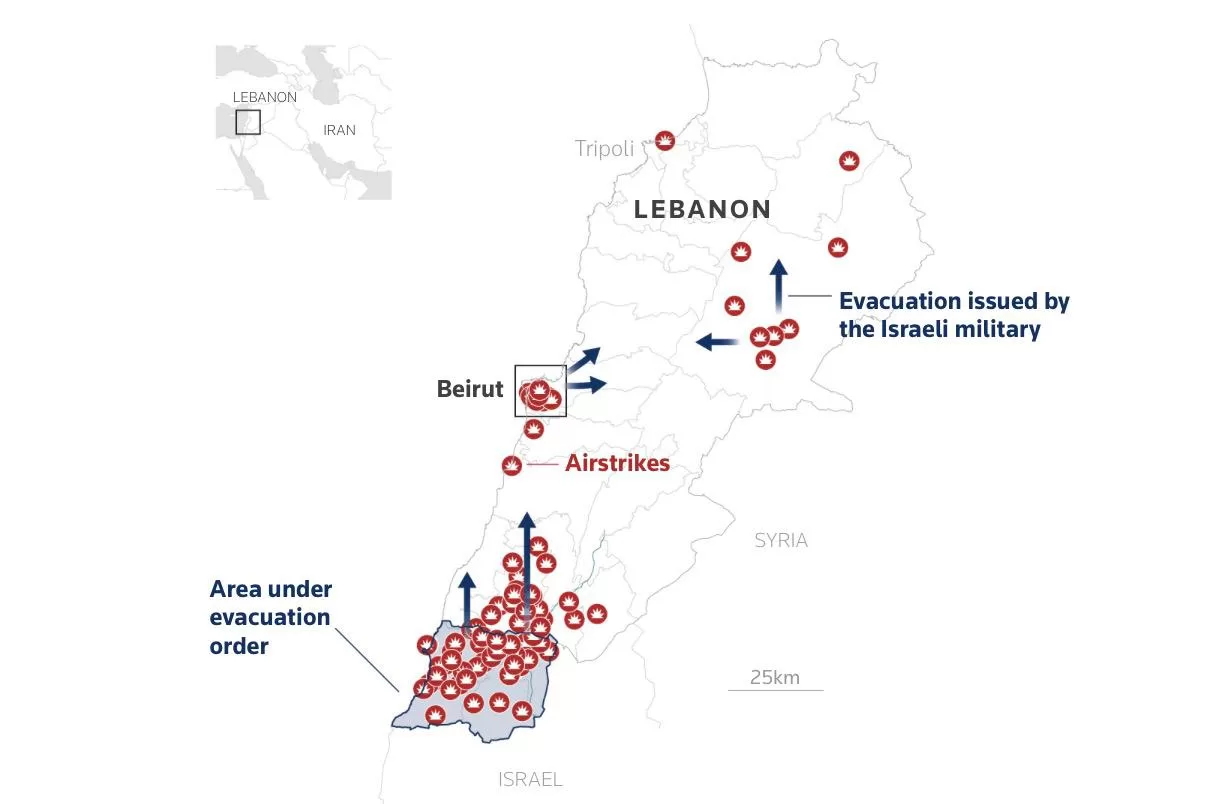
They were the widest evacuation orders ever given by Israel against Lebanon and prompted a huge exodus of people before bombardments that turned buildings into rubble and took the facades off apartment blocks.
On Friday, the U.N. human rights chief, Volker Turk, said Israel’s evacuation orders raise serious concerns under international law.
“These blanket, massive displacement orders we are talking here about hundreds and thousands of people,” he said. “This raises serious concern under international humanitarian law, and in particular when it comes to issues around forced transfer.”
U.S. President Donald Trump told reporters that the U.S. military had struck numerous Iranian naval and air targets, saying that “just about everything has been knocked out.”
Israel’s military spokesperson posts evacuation orders on social media platform X. On Wednesday, the spokesperson ordered residents to leave a swathe of southern Lebanon amounting to nearly 8% of Lebanese territory.
On Thursday, the spokesperson issued evacuation orders for Beirut’s southern suburbs with a roughly drawn map that included multiple suburbs and other towns, as well as written instructions that only mentioned some of those areas. Asked to clarify which areas in particular should evacuate, an IDF spokesperson told Reuters the map was “amorphic” and that the text was “what matters.”
An Israeli military official said several waves of strikes were launched against Hezbollah in the southern Beirut suburbs, striking about 115 targets including in residential buildings that the official said the group used as headquarters.
Israeli airstrikes have also targeted Tripoli in the north of Lebanon, Tyre, Sidon and Nabatieh in the south, and Baalbek in the east, the official said. Israeli military video showed what it said were strikes on command centres and weapons facilities in Lebanon. Reuters could not independently confirm that the buildings Israel hit did contain command centres or weapons facilities.
Meanwhile, many Lebanese evacuees were left without shelter after fleeing their homes.
“We’re sleeping here in the streets – some in cars, some on the street, some on the beach,” said Jamal Seifeddin, 43, who spent the night outside in the capital’s downtown district.
“I’ve never slept on the ground like this. I’ve been forced to. No one even brought a blanket,” he said.

