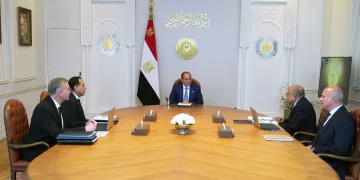






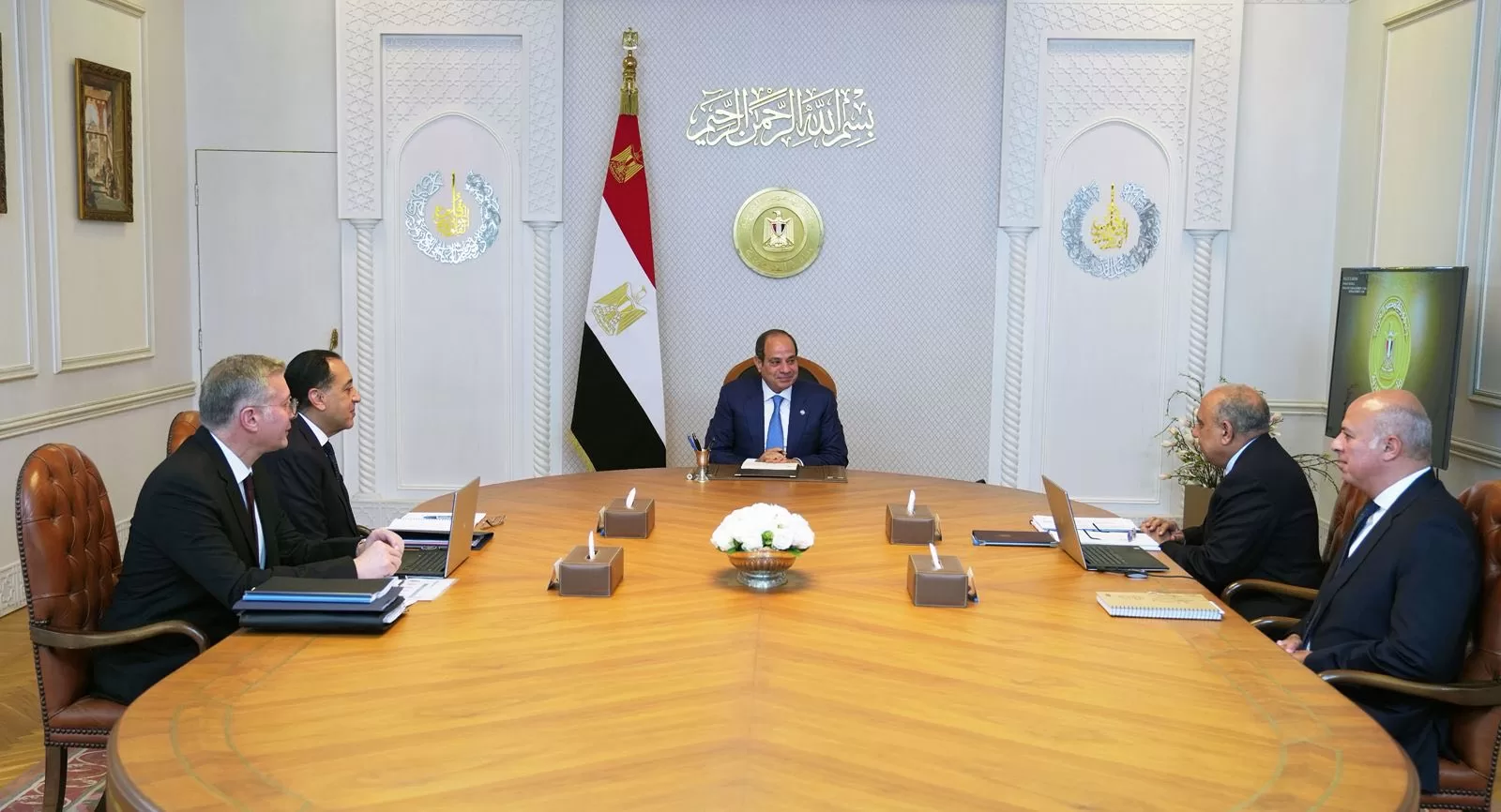
President Abdel Fattah El Sisi met today with Prime Minister Mostafa Madbouly, Minister of Electricity and Renewable Energy Mahmoud Esmat, and Minister of Petroleum and Mineral Resources Karim Badawi, to review the latest developments in the energy sector and ensure stable electricity supply nationwide.
According to the Presidency Spokesperson, the meeting addressed recent developments related to surpluses and savings in renewable energy and petroleum products, as well as work plans and various scenarios within the electricity and petroleum sectors.
Discussions focused on securing equivalent fuel supplies, guaranteeing the continuity of electricity generation, and maintaining close coordination among all relevant state entities to ensure stable and sustainable power supply across the country.
Officials confirmed that 2,500 megawatts of new renewable energy capacity will be added to the national grid before next summer, reinforcing Egypt’s efforts to diversify energy sources and expand clean energy generation.
The President also reviewed measures aimed at strengthening preparedness to secure the natural gas supplies required for the electricity sector, particularly in light of the ongoing regional conflict and its negative economic repercussions, including volatility in petroleum product prices.
In this context, President Sisi was briefed on the government’s action plan to meet the electricity sector’s fuel needs and ensure the regular pumping of gas into the national grid, with the dual objective of sustaining reliable electricity supply and reducing technical losses.
President Sisi stressed the utmost importance of maintaining safe strategic reserves of petroleum products for various uses, ensuring that gas supplies remain available in the quantities required to meet both citizens’ needs and the demands of productive sectors.
He also emphasised the necessity of securing the financial allocations needed to complete ongoing energy projects, describing energy security as a fundamental pillar of national security.
The meeting further reviewed domestic production of gas, oil, and condensates, the status of payments owed to foreign companies, recent exploration achievements, drilling activities, and strategies to attract additional investments.
Petroleum Minister Karim Badawi outlined plans to upgrade the efficiency of existing refineries to increase output, enhance added value, and reduce the fuel import bill.
The meeting also discussed a recently signed memorandum of understanding between Egypt and Libya to expand cooperation in oil, natural gas, refining, petrochemicals, and mining, supporting Egypt’s role as a regional hub for energy trade and exchange.

