










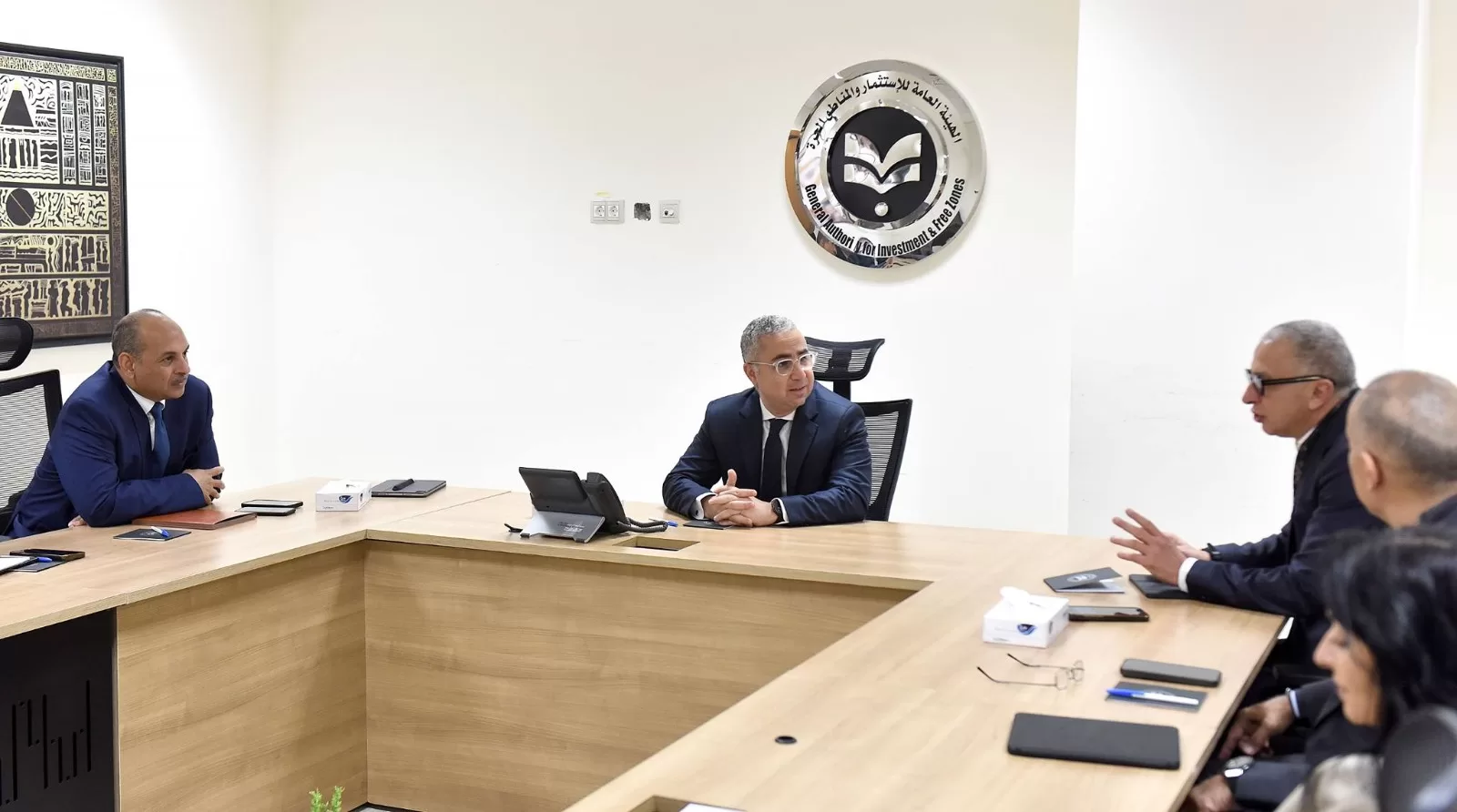
Establishing the first private investment zone in Egypt was at the core of discussions held between CEO of the General Authority for Investment and Free Zones (GAFI), Mohamed El-Gossaki, and CEO of Elsewedy Electric Ahmed Elsewedy, and, CEO of Elsewedy Industrial Development Mohamed El Kammah.
El-Gossaki affirmed, During the meeting, that the Egyptian government aims to ensure the private sector’s continued role in investment activity, noting that private sector investments accounted for 66 per cent of total investments in the first quarter of fiscal year 2025/2026.
He pointed to Elsewedy’s positive contribution to promoting Egyptian investment opportunities abroad, noting that the private sector is best positioned to engage with private institutions in other countries.
In addition, El-Gossaki highlighted the government’s efforts to reduce establishment and operating costs for investors. One such effort is the creation of private investment zones, where all procedures are completed within the zone itself.
Establishing a dedicated customs office will help reduce shipping and unloading times and costs for companies operating within these zones, he explained.
The private investment zone system also ensures shorter timelines between incorporation requests and the launch of final products to the market, while guaranteeing project efficiency and sustainability with minimal time and effort, the GAFI chief noted.
He explained that the private investment zone framework aligns with the integrated business model of Elsewedy Electric, which has achieved significant success in the Egyptian market.
For his part, Elsewedy Electric’s Chief Ahmed El Sewedy affirmed that the stability of the Egyptian economy, along with continuous improvements in investment legislation and procedures, helped maintain Egypt as an ideal destination for the group’s investments and expansions.
Elsewedy Group has effectively become a gateway for promoting investment in Egypt, whether through joint investments with global institutions in the Egyptian market or through promotional campaigns abroad, which have successfully attracted several European and Asian companies to the Egyptian market, he added.
The private investment zone system, recently approved by the Ministry of Investment and Foreign Trade, offers due services required by investors in one location, including a dedicated customs office, which facilitates import and export operations for activities linked to global value chains, whether the final product is destined for export or to meet domestic demand.
Egypt currently has 12 public investment zones across six governorates, comprising 1,273 projects and providing 77,500 job opportunities.

