








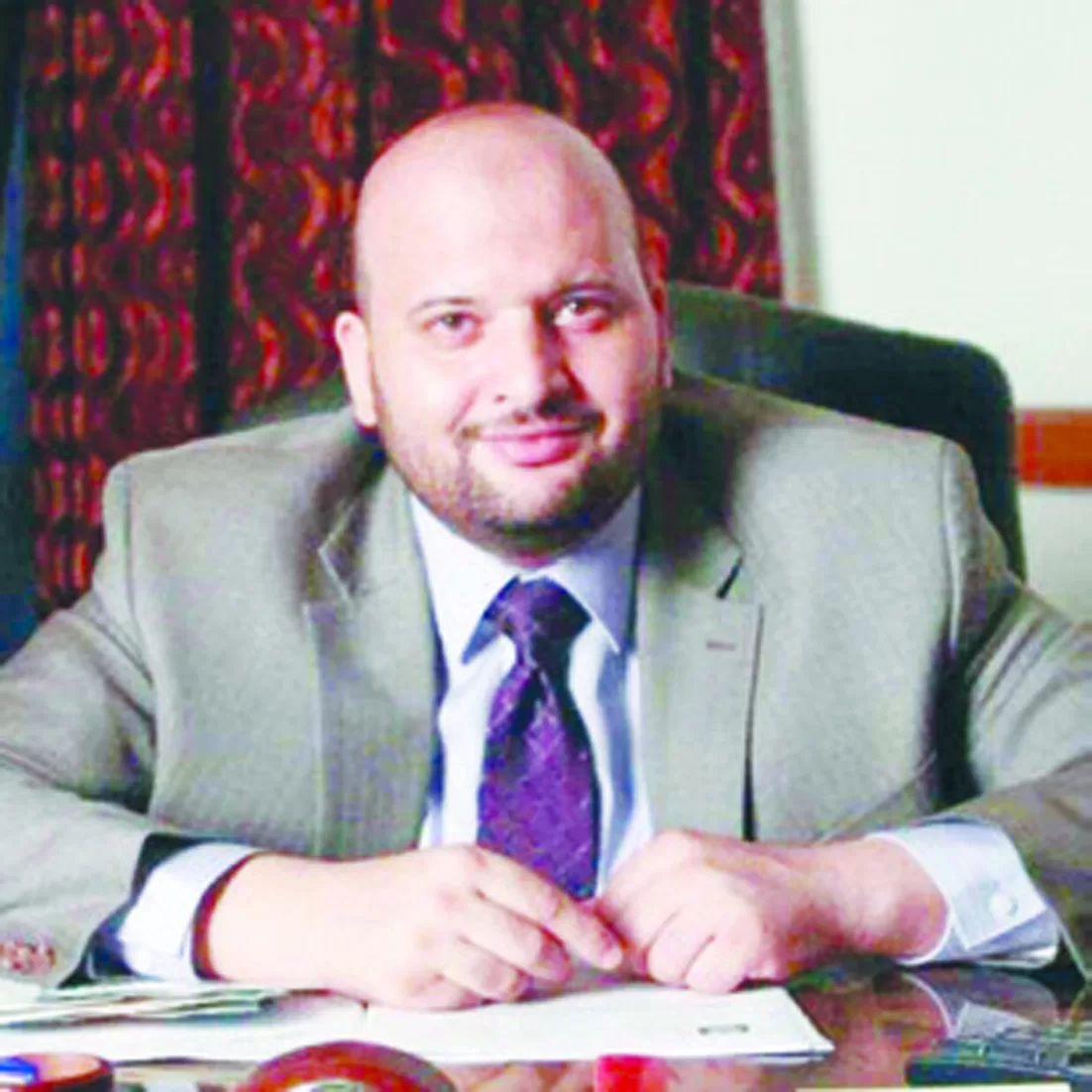
By Ibrahim Negm
Every year, the blessed month of Ramadan arrives carrying its timeless promise of mercy and renewal. Yet in recent years, it has also arrived upon a new digital reality — one in which screens race ahead of hearts, and people compete over the “scene” before they compete over substance. Social media has created an obsession our forebears never knew: the obsession with the “image” — the perfectly arranged iftar spread, the Quran open on its elegant stand, the prayer rug bathed in soft lighting, the decorative lantern glowing just right. It is as though Ramadan has become a visual exhibition whose success is measured in likes rather than in the quiet, sincere stirrings of the soul.
Let me be clear: sharing beautiful moments of Ramadan on social media is not inherently wrong. There can be genuine benefit in it — reminders of faith, encouragement toward goodness, an atmosphere of shared devotion. But the real danger lies in the moment the image shifts from being a means to becoming an end in itself, when the question that precedes every act of worship is no longer “Will God accept this?” but rather “How will this look on screen?” At that point, the balance tips, and a subtle form of ostentation — riyaa’ — creeps in through doors that did not exist in any previous era. Our grandparents feared the ostentation of the mosque and the social gathering. We now face something far more pervasive and far more insidious: the ostentation of the screen, where the audience numbers in the millions and the temptation to manufacture an idealised version of the self is relentless.
The great Imam al-Ghazali warned in his Revival of the Religious Sciences that the most dangerous form of ostentation is the kind its owner does not even recognise, because it has blended so seamlessly with his worship that he mistakes it for sincerity. How much more urgent is that warning in an age when the tools of display are in every hand, and the “audience” is present at every moment through the phone in our pockets? What once required deliberate affectation in public gatherings can now be accomplished with a single tap.
Indeed, the very philosophy of fasting is built upon the principle of secrecy between the servant and his Lord. The fasting person carries no visible mark that distinguishes him from one who is not fasting; God alone knows the truth of his fast. It is for this reason that God singled out fasting in the Sacred Hadith: “Every deed of the son of Adam is for him, except fasting — it is for Me, and I shall reward it.” This divine distinction means that fasting is a form of worship built on concealment, not display; on solitude with God, not performance before people. How, then, do we reconcile an act of worship that God intended to be secret with a digital culture that pushes us to convert every moment into publishable, consumable content?
The true Ramadan is what unfolds in the unseen — in that space no camera can reach and no “story” can document: a prostration in the dead of night witnessed by no one but God; a tear that rolls down your cheek as you read a verse that touches an old wound in your soul; a charity you slip into the hand of someone in need without your left hand knowing what your right hand has given; a sincere repentance you whisper to your Lord in a moment of brokenness. It is there — in that hidden depth — that the human being is truly shaped and rebuilt, not in the tally of likes, nor in the metrics of shares, nor in the heat of comments.
It is remarkable that when the Prophet ﷺ described the seven whom God will shade on the Day when there is no shade but His, he included “a man who gave charity so secretly that his left hand did not know what his right hand spent” and “a man who remembered God in solitude and his eyes overflowed with tears.” Notice how concealment and solitude were made the hallmarks of authentic worship and elevated rank. This prophetic standard should serve as our compass in an age where everything around us beckons toward display and spectacle.
None of this means that a Muslim should withdraw from the digital world or abandon social media during Ramadan — that is neither realistic nor required. What is required is that each of us preserves an inner space that no one enters but God, a space in which we are honest with our weakness, our shortcomings, and our need for Him — without filters, without embellishment, without performance. What is required is that we ask ourselves from time to time: Am I worshipping God, or am I worshipping my “image” before people? Is my Ramadan building a new person within me, or merely crafting a new mask? And will I emerge from this month with something genuinely changed inside me, or will the only thing that has changed be the photo archive on my phone?
The digital age has given us tools no previous generation could have imagined, but it simultaneously tests our intentions in ways no previous generation was tested. Ramadan, by its very nature, is a month of tests: a test of patience, a test of willpower, a test of sincerity. Let us add to our list of tests this year a new one: to guard the authenticity of our worship, and to refuse to sacrifice the reality of Ramadan for a mere image of it. For God does not look at our pictures or our appearances — He looks at our hearts and our deeds. And that is measure enough.
Ibrahim Negm is the senior advisor to the Grand Mufti of Egypt

