











By Mohamed Attia
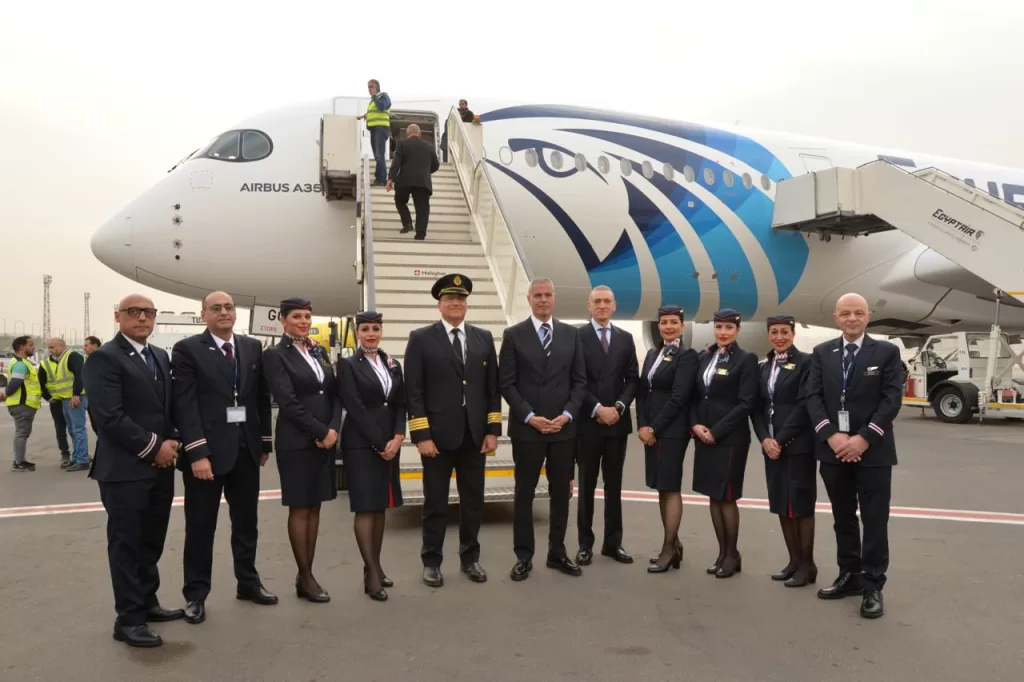
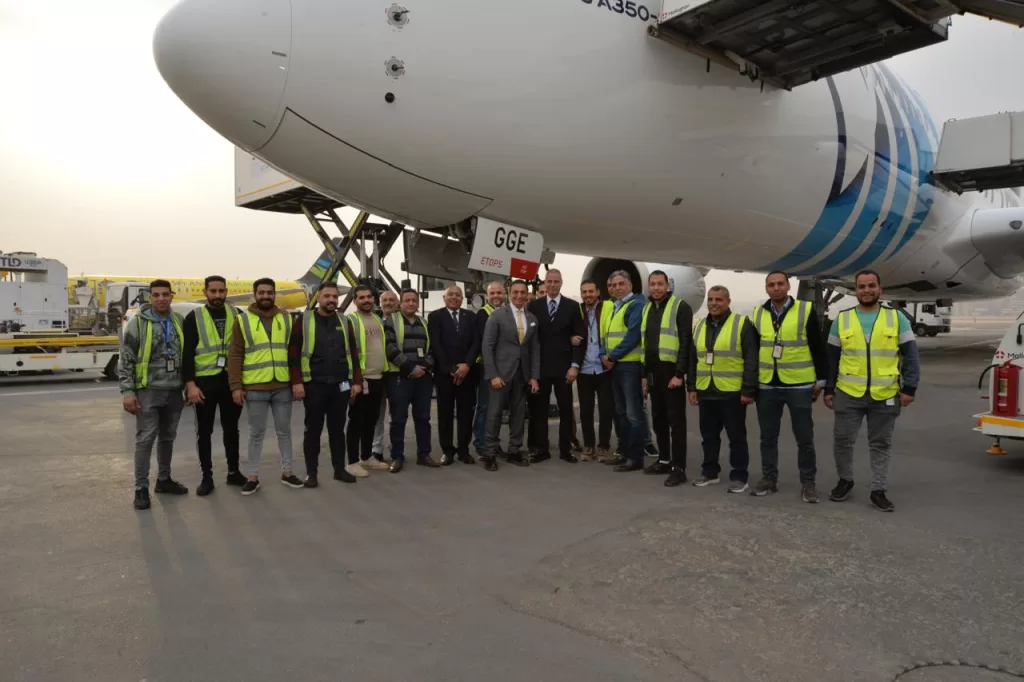
EgyptAir has received its first Airbus A350-900 aircraft at Cairo International Airport, marking a new step in its fleet modernization plan.
The aircraft was welcomed by Minister of Civil Aviation Sameh El-Hefny, along with senior ministry officials and representatives of EgyptAir Holding Company and its subsidiaries. The delivery comes as part of EgyptAir’s strategy to strengthen its fleet, which includes adding 34 new aircraft by 2030.
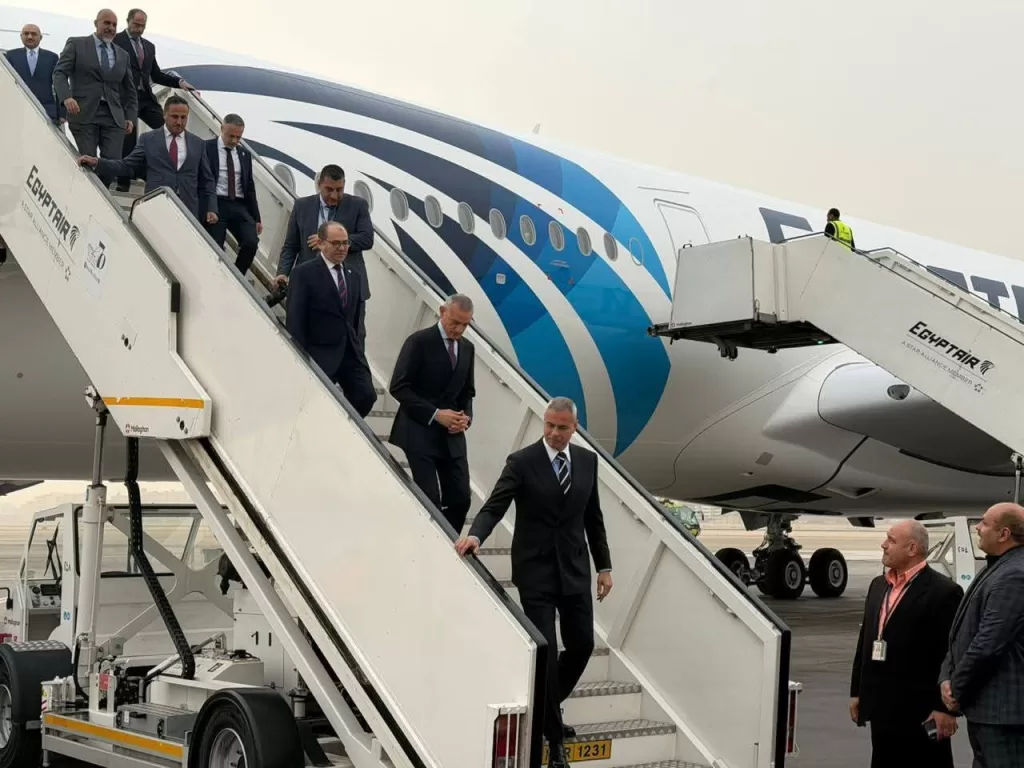
The A350-900 arrived on a flight powered by a blend of Sustainable Aviation Fuel (SAF), reflecting EgyptAir’s move toward more environmentally friendly operations.
EgyptAir is the first airline in North Africa to operate the Airbus A350-900. The aircraft is part of a deal with Airbus to acquire 16 aircraft of this model. The A350-900 will support the expansion of EgyptAir’s long-haul network, enabling direct, non-stop flights to destinations such as Los Angeles in the United States and several cities in East Asia.
The new aircraft is designed to reduce fuel consumption, carbon emissions, and noise levels, in line with global sustainability standards and the Egyptian government’s vision for greener air transport.
El-Hefny said the addition of the A350-900 represents a major upgrade to EgyptAir’s fleet and enhances the airline’s ability to offer high-quality services to passengers. He added that the move supports Egypt’s plan to develop the civil aviation sector and strengthen the country’s position as a regional air transport hub.
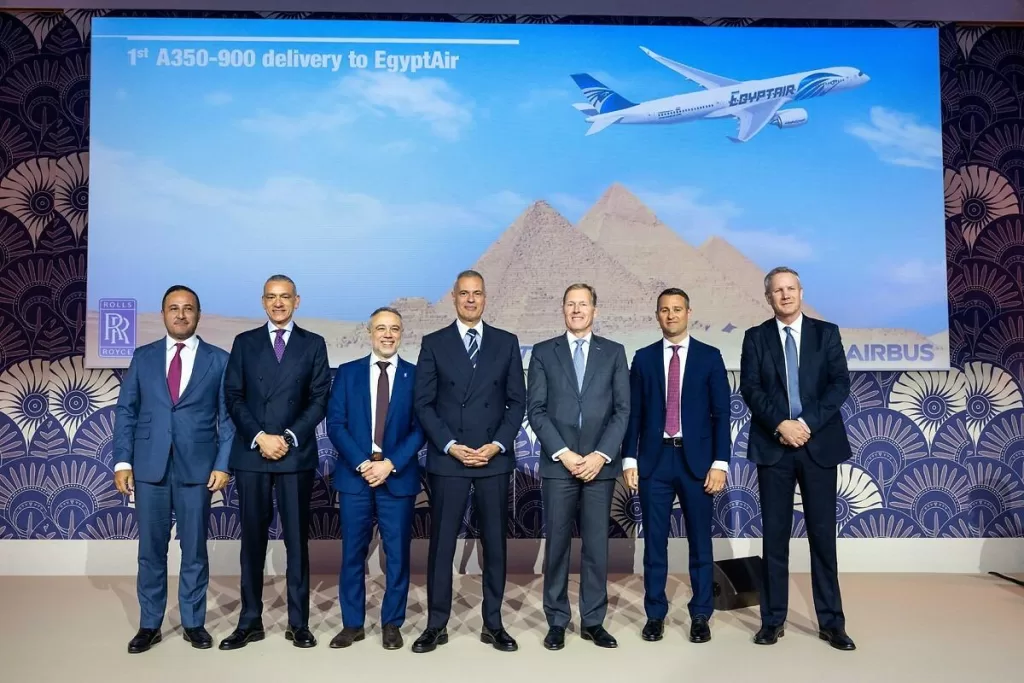
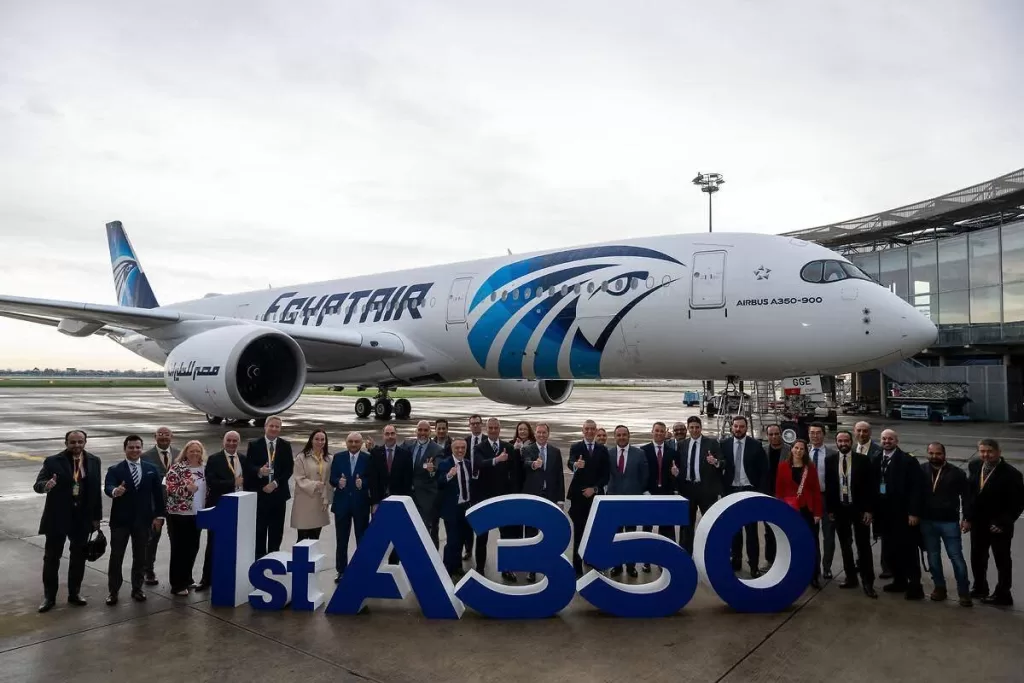
A delivery ceremony was also held at the Airbus factory in Toulouse, France, attended by EgyptAir Chairman Ahmed Adel, Airbus International executives, Wouter van Wersch, executive vice-president of Airbus International, and representatives from Rolls-Royce and Panasonic.
The Airbus A350 is among the world’s most efficient wide-body aircraft, offering up to 25 percent savings in fuel consumption and carbon emissions compared to previous-generation aircraft, powered by new Rolls-Royce engines.
Pilot Adel said the aircraft will help increase seat capacity on high-demand routes, open new markets, and improve operational flexibility, while supporting EgyptAir’s long-term sustainability goals.