






Deputy Prime Minister for Industrial Development and Minister of Industry and Transport Kamel Al Wazir stressed the importance of the high-speed electric rail network project and digital transformation in supporting the transport and industrial sectors in Egypt.
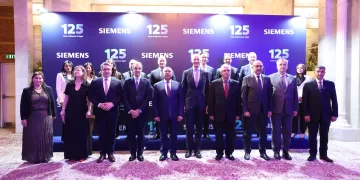
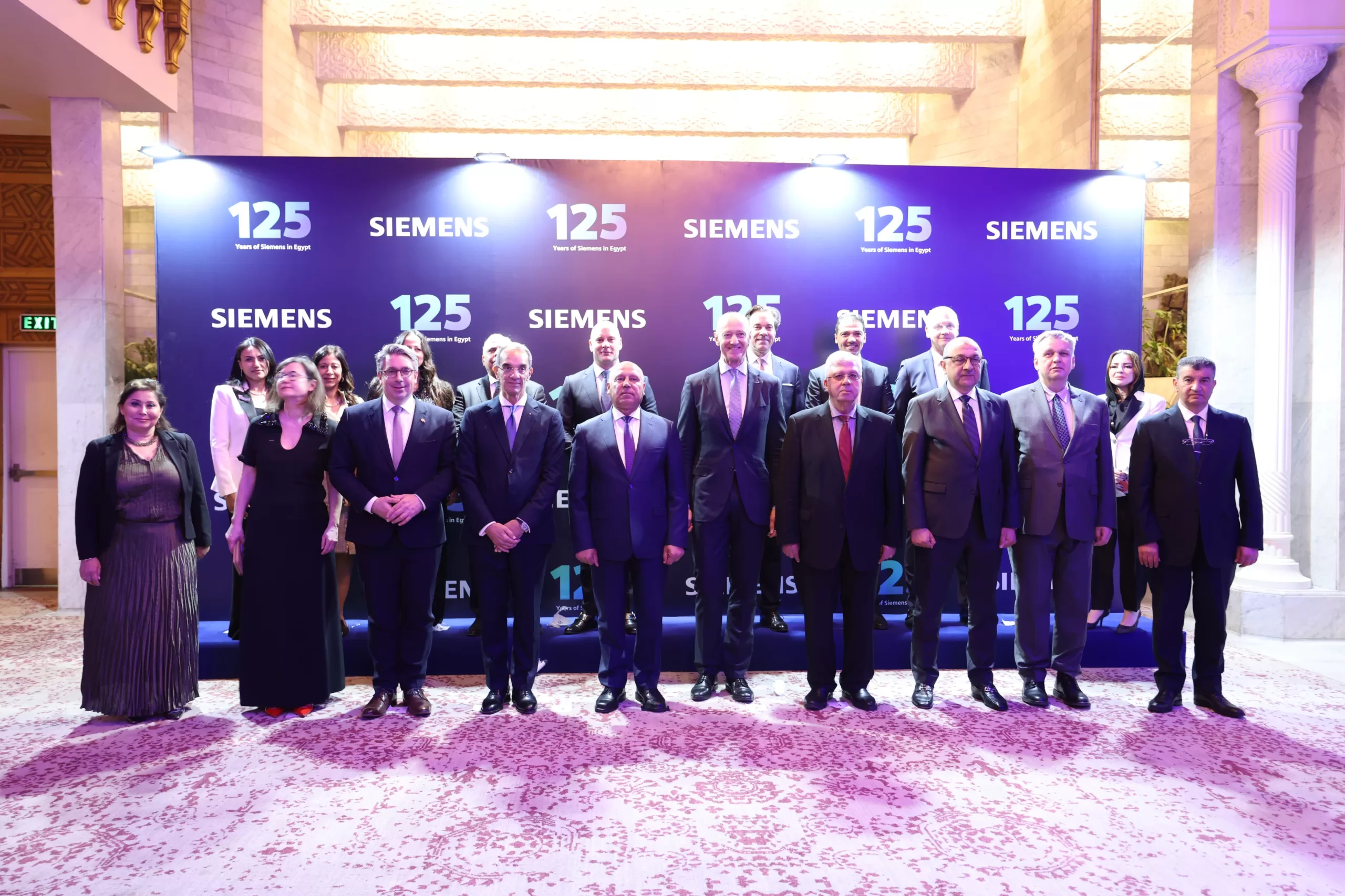
This came during his speech at a panel discussion titled “125 Years of Progress: Empowering Egypt’s Future through Digitalisation, Sustainability, and Enduring Partnerships,” held as part of the celebration marking 125 years of Siemens’ presence and continuous partnership in Egypt.
The minister pointed out that this occasion does not only embody the history of a leading global company, but also reflects a long journey of partnership, cooperation, and mutual trust between Egypt and Siemens, extending across successive generations and contributing to supporting the Egyptian state’s efforts in modernization, development, and building modern infrastructure.
He noted that the high-speed electric rail project will change the concept of transport in Egypt (passenger transport and freight transport), as it will link all ports together and connect industrial zones (production areas) with seaports (export centers), as well as modern agricultural development areas (New Delta – West Minya – Toshka – Future of Egypt – etc.) with consumption areas and export ports.
The high-speed electric rail project will, for the first time, connect the coastal cities on the Red Sea with the Delta, and will reach East Oweinat and Toshka for the first time. It will also connect all Nile crossings linking the east and west banks of the Nile, in addition to contributing to linking tourist areas (diving and beach tourism in Hurghada – cultural tourism in the Pyramids of Giza, Abydos in Sohag, Luxor, Aswan, and Abu Simbel – religious tourism at Deir Al-Muharraq in Assiut), thereby enabling greater diversity of tourism programs for tourists within a single trip, he added.
He also pointed out that the high-speed electric rail network will create a logistics corridor linking the Red Sea and the Mediterranean Sea, achieving integration with airports, seaports, and road networks to realize the concept of multimodal transport, and connecting seaports with dry ports and logistics centers. This will also serve the goals of sustainable urban development, population redistribution, and the creation of new development axes, he said.
The high-speed electric rail network project connects raw material production areas and quarries (Abu Tartur – Qena – Aswan) with export ports, and that the routes of the first and second lines of this network align with the “Development Corridor” plan proposed by Egyptian scientist Farouk El-Baz, he pointed out.
He added that the high-speed electric rail network, with a length of 2,000 km (to be increased to 2,250 km in the future with the construction of the fourth line from Port Said to Alexandria), will be able to transport two million passengers annually—double the capacity of the current conventional railway network, which is 10,000 km long and transports one million passengers annually. He also noted that the current railway network transports 4 to 5 million tons of freight annually, while the high-speed electric rail will transport 13 million tons of freight annually, in addition to its importance in achieving rail connectivity with neighboring countries (Sudan and Libya).
The event was attended by Dr. Amr Talaat, the Minister of Communications and Information Technology; Dr. Ayman Ashour, the Minister of Higher Education and Scientific Research; Dr. Mahmoud Esmat, the Minister of Electricity and Renewable Energy; Eng. Mohamed Shimi, the Minister of Public Business Sector; Stefan Rouenhoff, the German Parliamentary State Secretary and Deputy Minister for Economic Affairs and Energy; Dr. Roland Busch, the President and CEO of Siemens AG; senior officials from the Egyptian Ministry of Transport and Siemens Egypt; and a number of representatives of the German government.

