



Cairo renews call for nuclear-free Middle Eas
Egypt has declared its “full support” for the resumption of negotiations between the United States and Iran, which commenced on Friday in Muscat, Oman. The talks mark a critical attempt to de-escalate tensions that have brought the region to the brink of military conflict following a year of heightened hostilities.
In a statement released on Friday, the Egyptian Ministry of Foreign Affairs emphasised that the dialogue must be rooted in “good faith and mutual respect.” Cairo warned that a sustainable agreement is the only way to “spare the region the dangers of military escalation,” the consequences of which would be “catastrophic for all regional states.”
Cairo’s vision for a nuclear-free zone
Beyond the immediate bilateral dispute, Egypt has used this diplomatic window to reiterate its long-standing call for a Middle East Zone Free of Nuclear Weapons. Cairo urged the international community to adopt an integrated approach to non-proliferation, advocating for:
The universal adoption of the Non-Proliferation Treaty (NPT) by all regional states without exception.
The submission of all regional nuclear facilities to the International Atomic Energy Agency (IAEA) Comprehensive Safeguards Agreement.
Regional coordination
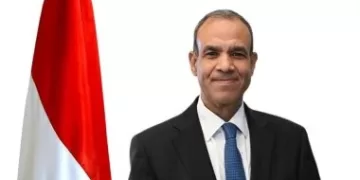
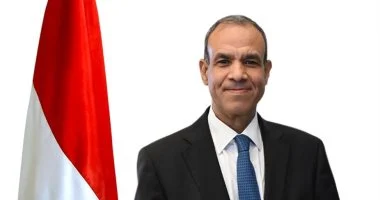
The Egyptian leadership praised the “constructive roles” played by Oman, Qatar, Turkey, Saudi Arabia, and Pakistan in facilitating this breakthrough. President Abdel Fattah el-Sisi’s administration has been intensely active in recent days, with Foreign Minister Badr Abdel Aati holding a series of phone calls with counterparts in the US, Iran, and the GCC to ensure the Muscat talks reached fruition.
As the delegations in Muscat engage in “shuttle diplomacy” through Omani intermediaries, the international community remains watchful. With the US having recently bolstered its military presence in the Arabian Sea, the success of these talks is viewed as the primary safeguard against a wider regional war.
High-stakes diplomacy in Oman
The negotiations, mediated by Oman’s officials, feature a significant US delegation led by Steve Witkoff, US Special Envoy for the Middle East, and Jared Kushner, a senior advisor to President Donald Trump. On the Iranian side, Foreign Minister Abbas Araghchi is leading the team, reportedly with the full backing of Supreme Leader Ayatollah Ali Khamenei.
Despite the optimistic start, the talks face immediate hurdles over the scope of the agenda, such as the US position. Washington, represented by Secretary of State Marco Rubio and Envoy Witkoff, is pushing for a “comprehensive” deal. This would include not only the nuclear file but also Iran’s ballistic missile programme and its support for regional armed groups.
Tehran insists that the Muscat meeting be limited strictly to the nuclear programme and the lifting of economic sanctions.
Strengthening Anglo-Egyptian ties
Minister Abdel-Aati said during a telephone call with UK Foreign Secretary Yvette Cooper that coordinated regional and international efforts are crucial at this critical juncture to preserve regional security.
He added that such efforts are needed to promote stability and development in the region.
The call was held within the framework of regular consultations between the two ministers aimed at strengthening bilateral relations and exchanging views on regional developments.
According to Foreign Ministry Spokesman Tamim Khallaf, Abdel-Aati stressed the importance of building on the positive momentum in Egyptian-British relations and expanding cooperation in the political, economic, and trade fields.
He also underlined the need to increase UK investments in Egypt in the coming years, particularly in light of improvements to the investment climate resulting from recent economic and structural reforms.
Khallaf said the discussions also addressed efforts to de-escalate regional tensions, with Abdelatty briefing his British counterpart on Egypt’s diplomatic engagements aimed at containing escalating tensions.
Grain hub and diplomatic solutions
In a separate conversation, Abdel-Aati spoke with Ukrainian Foreign Minister Andrii Sybiha. While the two discussed the ongoing conflict, the focus remained heavily on logistical and economic cooperation.
Central to the discussion was Egypt’s ambitious proposal to host a global hub for grain storage and trade. Leveraging its strategic location and advanced maritime infrastructure, Cairo aims to become a primary link in the global food supply chain—a move that would significantly bolster food security for the region and provide Ukraine with a vital logistical partner.

