




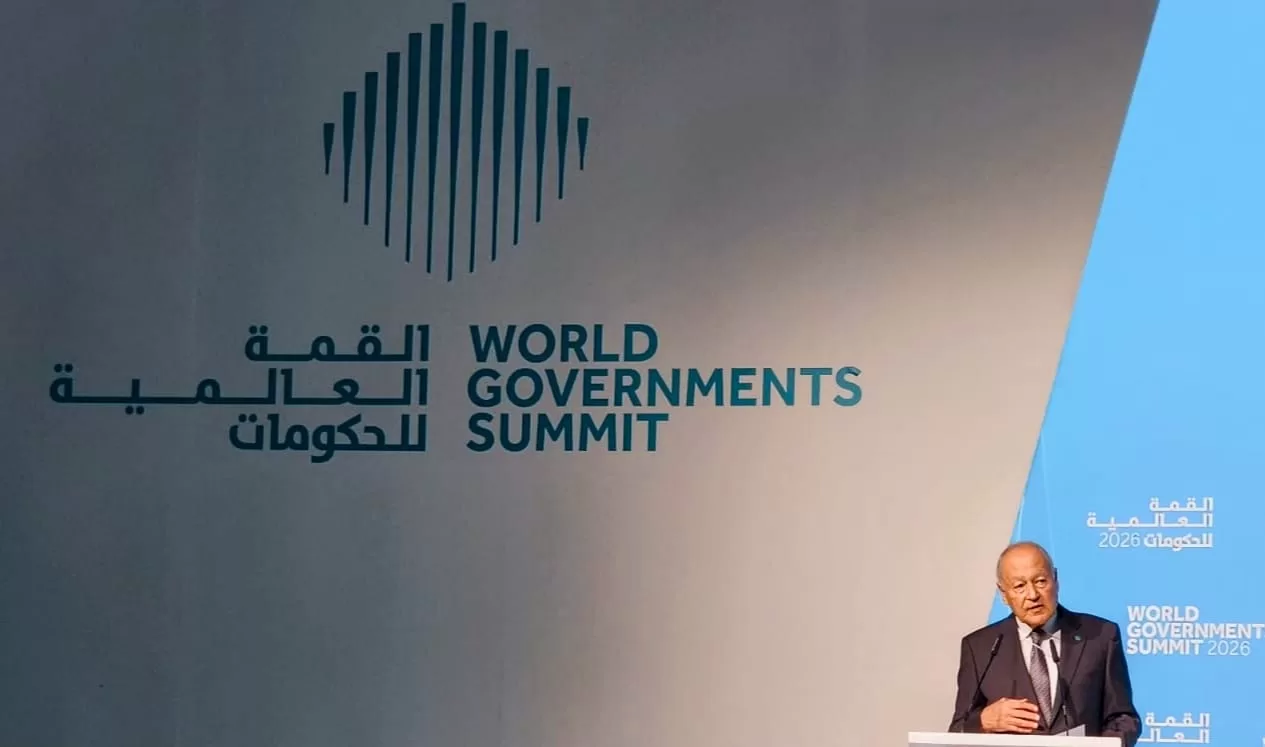
Arab League (AL) Secretary-General Ahmed Abul Gheit said Wednesday artificial intelligence (AI) has become a comprehensive driving force reshaping all aspects of contemporary life and directly affecting government operations and decision-making.
The AL chief warned that the frenzied global race to acquire AI models, resembling an arms race, risks sidelining serious concerns related to labor markets, societies, and ethical use.
Abul Gheit made the remarks in a speech at the opening of the fifth Arab Public Administration Forum, held in Dubai under the theme “Applications of Artificial Intelligence in Government Administration,” in cooperation with the Arab Administrative Development Organization (ARADO).
At the beginning of his address, he voiced appreciation to the UAE for its hospitality and efficient organization, as well as for selecting a forum theme reflecting awareness of the gravity of challenges and rapid developments associated with artificial intelligence, a field deeply intertwined with the economy, education, health, security, agriculture, transport, media and culture.
He said the world is witnessing fierce international competition to lead in advanced AI models, with hundreds of billions of dollars being invested by major powers and multinational corporations, pointing out that some of these models carry military applications that could have a direct bearing on the global balance of power.
Abul Gheit warned that such intense competition often marginalizes essential debates on social and economic impacts, particularly the implications of artificial intelligence for labor markets.
He also said these issues remain largely absent from serious and transparent discussion, despite their special importance to Arab countries whose societies are predominantly youthful, with a majority under the age of 30, and where employment is closely linked to social and political stability and underscored the need to address near-term future issues, including the impact of artificial intelligence on employment and the ethics governing its use.
The pan-Arab body’s chief also stressed the importance of integrating AI models into education and scientific research in a away that enhances innovation rather than replaces it, alongside developing practical plans to embed these technologies into institutional work, government administration, planning, and the provision of public services.
The AL chief praised several Arab countries for keeping pace with rapid advances in artificial intelligence through capacity building, transformative training programs, and international partnerships.
He noted that Saudi Arabia and the UAE now rank among the world’s top 20 countries on the Artificial Intelligence Index, with other Arab states included within the top 100.
The AL attaches special importance to artificial intelligence, expressing confidence in the Arab region’s ability to achieve a qualitative leap in the field, he said, adding that the League’s efforts have focused on shaping a unified Arab vision to maximize the benefits of AI and the digital economy, mitigate associated risks and enhance regional integration while respecting national.
Abul Gheit added that this vision has been translated into concrete steps. These include the adoption of the Arab Strategy for Artificial Intelligence as a guiding framework for policy development, innovation, technology localization and sound governance, he said.
He also noted the approval of the Arab Charter for the Ethics of Artificial Intelligence and its strategic action plan by the Council of Arab Ministers of Communications and Information in January, which serves as a shared reference balancing innovation with societal responsibility, referring to the adoption of the Arab Artificial Intelligence Initiative by the most recent Arab Development Summit in Baghdad.
The initiative aims to strengthen joint Arab action, facilitate the exchange of expertise, and engage constructively in international efforts on AI governance, ensuring an effective Arab role in shaping the future of this technology globally, he added.
Abul Gheit renewed his thanks to the forum’s organizers, voicing hope that it would open new horizons for sustained and in-depth partnerships, stressing that the future is taking shape now and that Arab governments must not remain detached from its trajectories or lag behind its rapidly accelerating pace.

