




Islam made simple
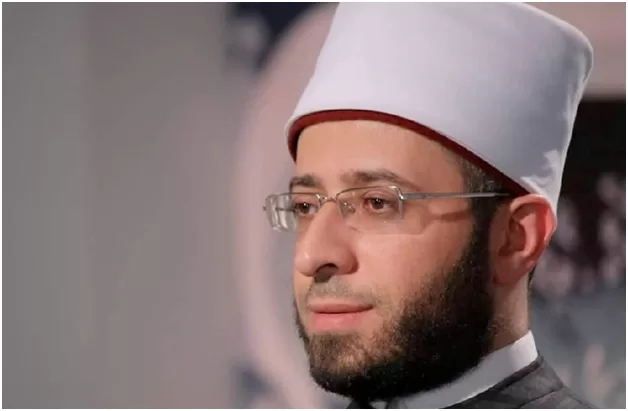
Dr Osama Al-Azhari, Minister of Awqaf (Charitable Endowments)
Ladies and gentlemen, the great people of Egypt, and daughters and sons of the Arab and Muslim nations – welcome to a new journey with the Ever-Glorious Qur’an. Today, we set out with juz’ (Part) Eight, diving into the pearls, treasures, and gems Allah Almighty has placed within it – carrying knowledge, light, values, and wisdom.
Let us begin by pointing out that we have now reached the eighth Part. In our tradition, the number eight is regarded as a number associated with blessing and goodness, and Allah has made the gates of Paradise eight in number.
In this part, we continue sailing through the radiant meanings of Surah al-An‘am (Cattle). The first value we encounter comes from pausing at a verse whose significance many people may not reflect upon – despite the honour of reciting it as an act of worship – because recognising its intended meaning calls for thoughtful contemplation.
Allah Almighty says: “And leave behind the outward vice and the inward; surely the ones who earn vice will soon be recompensed for what they were scoring.” [Qur’an 6:120]. The ‘inward vice’ includes arrogance, stubbornness, and persistently rejecting the truth. So the value here is: Beware of arrogance!
Arrogance is what caused Satan to be cast out from the mercy of Allah Almighty. Arrogance is what veils a person from Allah, Glorified be He. Arrogance is what can drive a person to become self-important, fanatical, or even a killer. For this reason, Allah Almighty praised humility and commanded us to adopt it. As the poet said:
Be humble – like a star whose gentle light appears
Upon the face of water, though it dwells on high;
And do not be like smoke that vaunts itself aloft
To layers of the sky — while, in its truth, it’s vile.
The second value appears in Allah’s words: “And is he who was deceased, then We gave him life and made for him a light to walk by among mankind,” [Qur’an 6:122]. If we follow the verses, we find that this one comes immediately after: “And leave behind the outward vice and the inward.”[Qur’an 6:120]. It is as though Allah Almighty is telling us that a person afflicted with arrogance is like one who is dead – until Allah, in His mercy, reaches him; then he awakens, steps out of the grip of arrogance, his heart is lit, and he is guided.
Thus, there are two levels of life: biological life – by which a person speaks, hears, and perceives – and spiritual life, which keeps a person connected to Allah and able to understand His guidance. So always strive to move among people carrying light, goodness, and generous giving.
As for the third value, it appears in Allah Almighty’s saying, “O children of Adam! Take your adornment at every mosque, and eat and drink, and do not be extravagant; surely He does not love the extravagant.” [Qur’an 7: 31]. Allah Almighty commands us to venerate the houses of worship and to present ourselves in our finest state when entering them.
The Prophet (PBUH) said: “Whoever eats from this foul-smelling plant—garlic (and at times he mentioned: onion, garlic, and leek) – let him not come near our mosque, for the angels are harmed by the same things that harm the children of Adam.”
So, do not enter the mosque with an unpleasant odor, or without ablution, or in unclean clothing. Outward beauty often finds its way into the inner self. So, enter the mosque humble and self-effacing before Allah.
This visible, tangible beauty has a real effect on inner psychological beauty; it also supports lasting health, a good appearance, and prevents you from repelling people – while helping you follow the Sunnah of our beloved Chosen Prophet (PBUH) and comply with Allah’s command, Glorified and Exalted is He. How beautiful it is when a well-kept appearance becomes evidence of a beautiful essence.
As for the fourth value drawn from this part of the Ever-Glorious Qur’an, we find it in our master Noah’s words (PBUH) to his people. Allah Almighty says: “Said he, ‘O my people! There is no misguidance in me; but I am a Messenger from The Lord of the worlds. I constantly proclaim to you the Messages of my Lord, and I advise you (sincerely), and I know from Allah what you do not know.’” [Qur’an 7: 61-62].
Here, the value of sincere advice becomes clear; it is the character of all Prophets. Prophet Muhammad (PBUH) said: “The religion is sincere counsel (naṣīḥah).” We said, “To whom? O Allah’s Messenger!” He (PBUH) said: “To Allah, to His Book, to His Messenger, and to the leaders of the Muslims and their common folk.”
Sincere advice, therefore, is expected from everyone who is able to offer it; and the one who receives it must not consider himself above accepting counsel—even if it comes from someone beneath him in rank, knowledge, social standing, or any other measure by which people imagine superiority.
The duty is shared: to give trustworthy, faithful advice—and to welcome it with grace and reflect on it.
But beware: advice can easily slip into public shaming. Imam al-Shāfiʿī—may Allah have mercy on him – captured this meaning in eloquent lines, saying:
Cover me with your advice when we are alone,
And spare me advice before the crowd.
For advice given in public is, in truth,
A kind of censure – I will not have it heard.
And if you cross me and defy my word,
Do not be grieved if you are not obeyed.
So be a trustworthy adviser – but with gentleness. Be gentle, and you will be granted success.
Until we meet again, stay noble; stay safe.

