By Mohamed Attia
Minister of Civil Aviation Sameh el-Hefny reaffirmed that aviation safety and security remain the Egyptian state’s top priority following the successful execution of “Horus 2.”
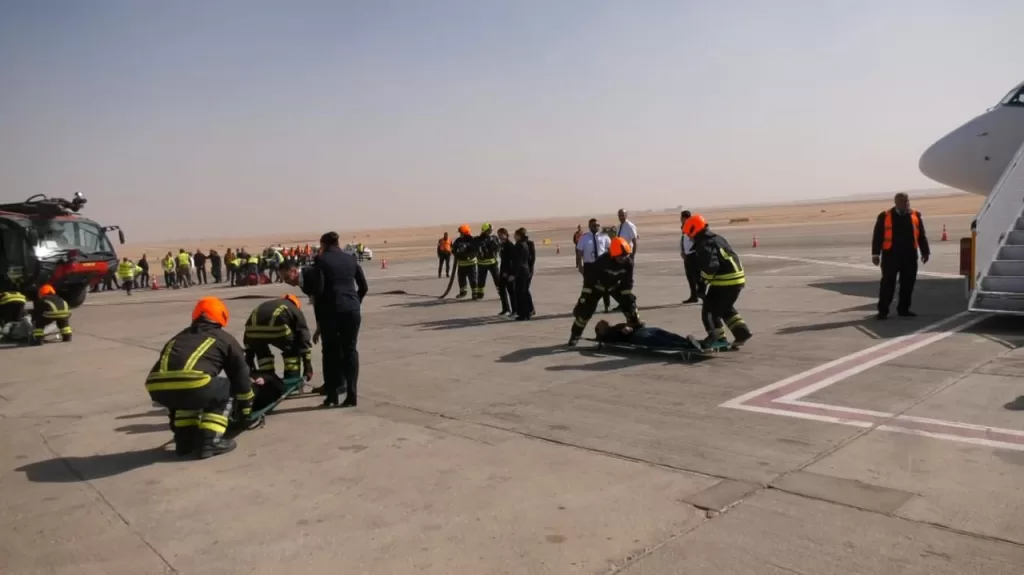
This comprehensive, full-scale emergency drill, conducted at Cairo International Airport’s Terminal 2 and the EgyptAir Training Academy, served as a critical test of the sector’s proactive crisis management capabilities.
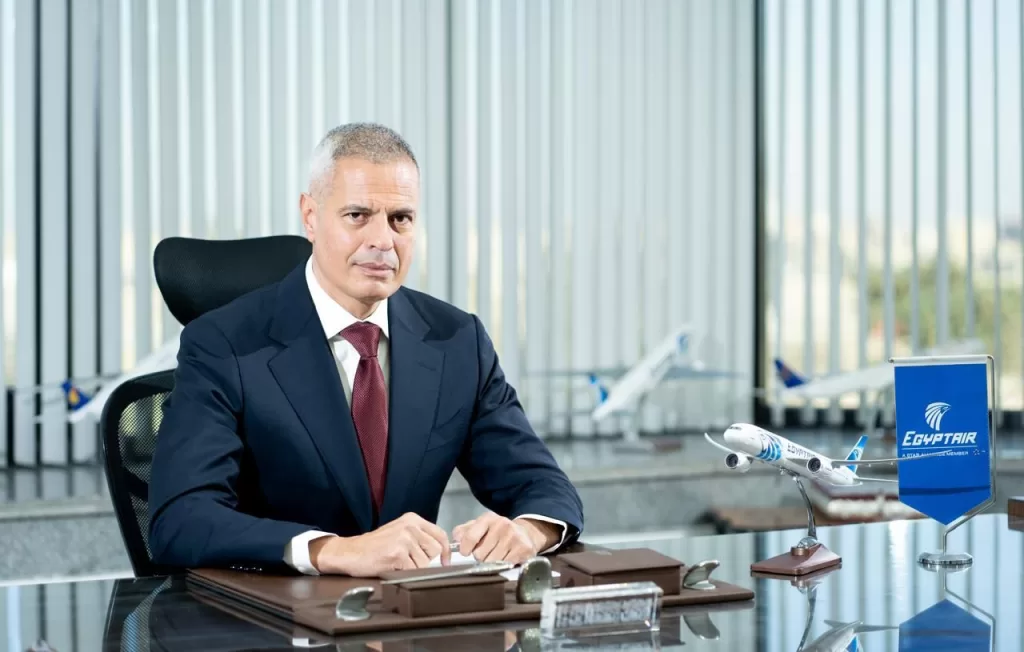
El-Hefny emphasised that the Ministry adopts a rigorous institutional approach centered on the continuous evaluation and field-testing of operational plans.
By updating these protocols in line with international developments, the sector ensures peak personnel readiness and swift decision-making, ultimately bolstering passenger confidence in Egypt’s civil aviation infrastructure.
The exercise simulated a high-pressure scenario involving an EgyptAir aircraft arriving from Frankfurt that experienced a technical malfunction in its nose landing gear during a landing complicated by low visibility.
This simulation triggered an immediate activation of general emergency plans, testing the seamless coordination between command centers and field teams.
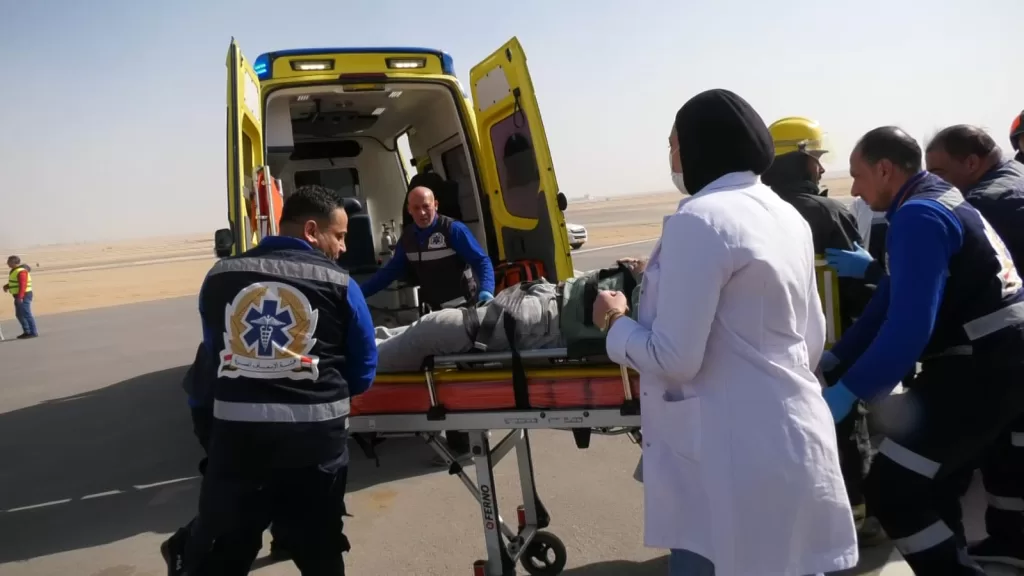
Rescue, firefighting, and medical units were deployed to the site, where they established a field command centre, secured a cordon, and evacuated passengers. Parallel to the field response, EgyptAir activated its crisis room to execute its specialised survivor and family assistance plan—a protocol managed by the Survivor and Family Assistance Team (SAT) to ensure the well-being of passengers and their families according to global standards.

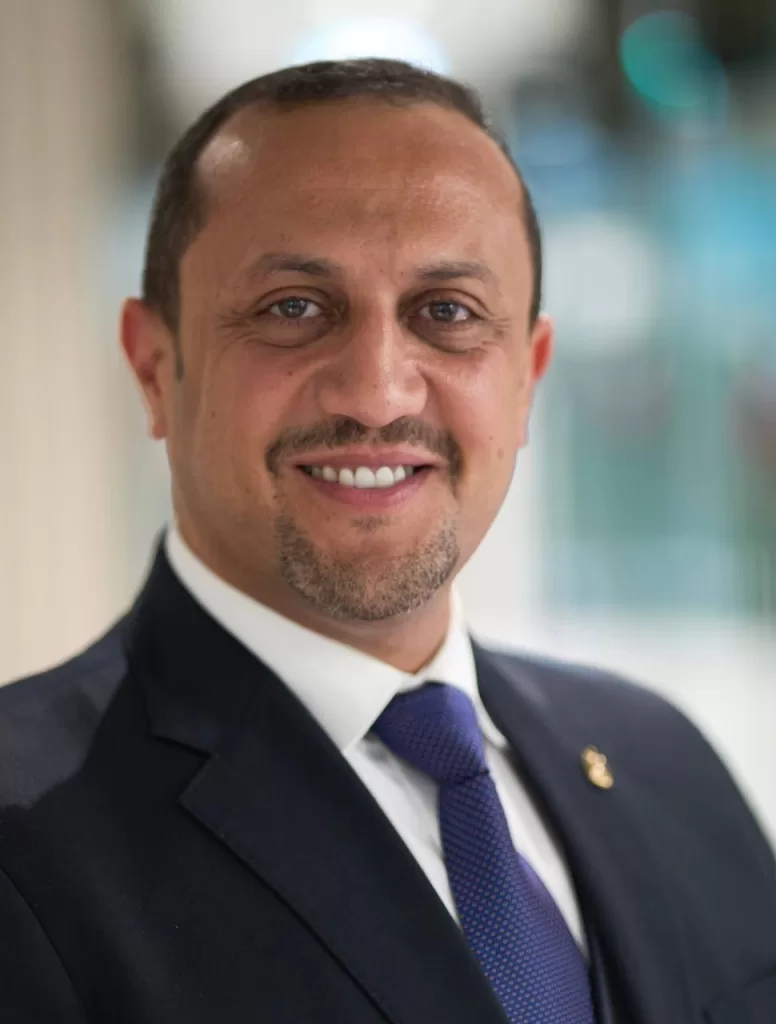
Chairman of EgyptAir Holding Company Pilot Ahmed Adel noted that the airline’s participation reflects a deep-rooted commitment to international best practices in safety and security.
He highlighted the professionalism displayed by various sectors during the simulation, noting that the Air Operations Center’s ability to manage information flow and coordinate with airport authorities was exceptional. The data and observations gathered from this exercise will be utilised to further refine and update emergency response strategies, ensuring that the airline remains prepared for any operational contingency.
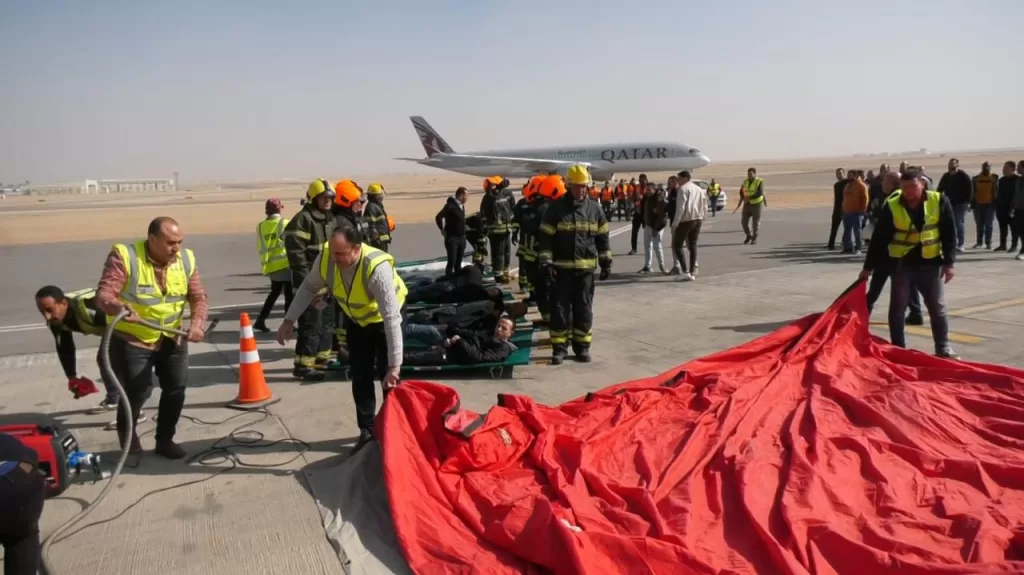
Supporting this vision Chairman of the Egyptian Holding Company for Airports and Air Navigation Ayman Fawzy Arab and Chairman of Cairo Airport Company Magdy Ishaq, underscored the importance of these drills in honing human resource skills.
They affirmed that periodic, extensive exercises across all Egyptian airports are vital for measuring response times and testing the integration of communication systems. By prioritising strategic training and the continuous development of personnel, Cairo International Airport maintains its status as a premier global facility, operating with the highest levels of safety, quality, and operational efficiency.