




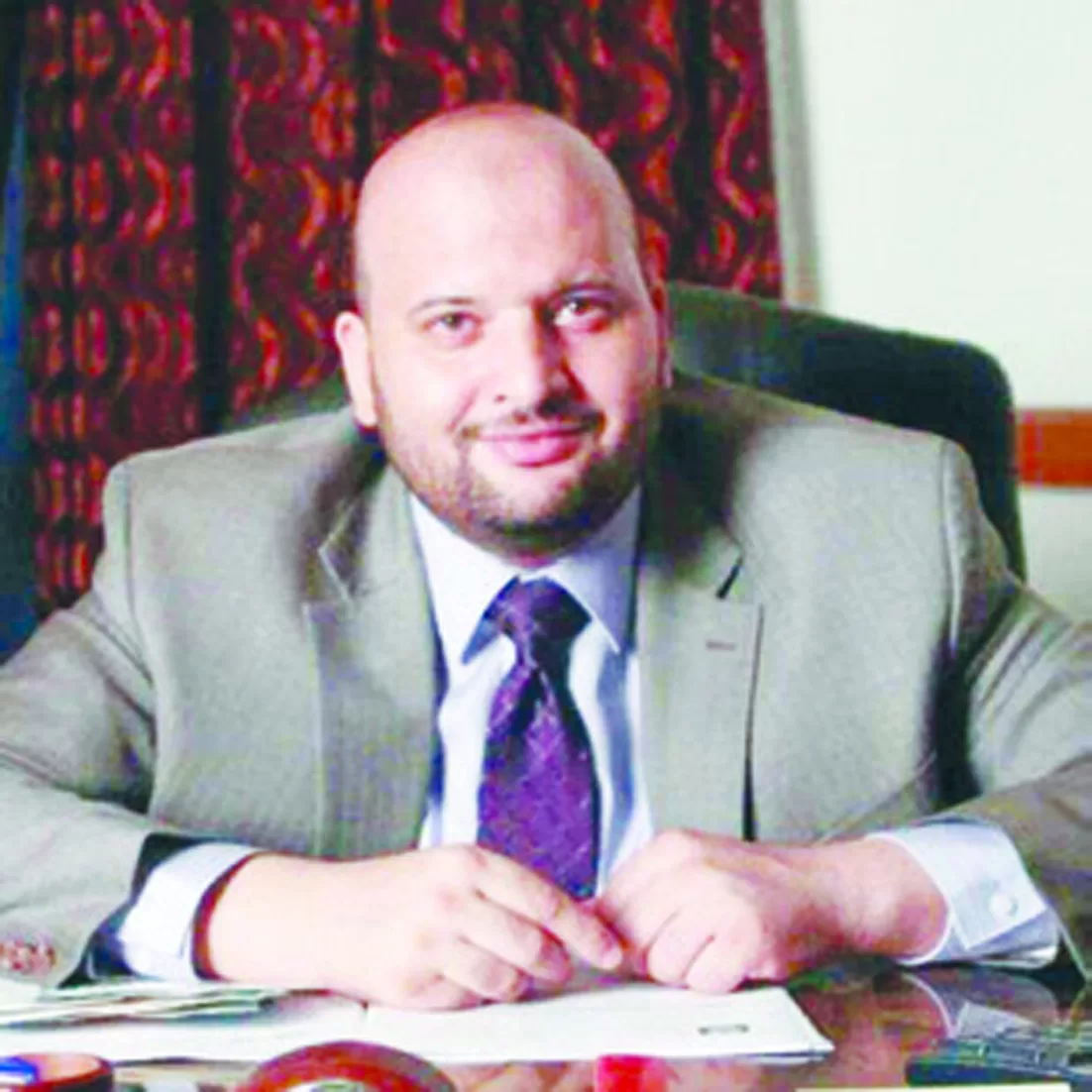
Ibrahim Negm
Senior Advisor to the Grand Mufti of Egypt
The 2026 World Economic Forum has revealed what many preferred to ignore: the Western-led international order has collapsed, and the so-called civilisational unity of “the West” is finished. For the Arab/Muslim world, this moment demands not lamentation but strategic action.
The spectacle at Davos this past week was nothing short of absurd – a theatre of madness masquerading as international diplomacy. When the President of the United States openly threatens to seize Greenland from a NATO ally, dismisses European concerns as weakness, and links territorial ambitions to alliance commitments, the mask has finally fallen. When Canada’s Prime Minister Mark Carney responds by diagnosing a fundamental “rupture” in the global order and calls for coalitions of middle powers to resist American unilateralism, the message is unmistakable: the post-1945 liberal order, already fraying, has now torn apart.
For decades, I have argued that the international system constructed after World War II – premised on American hegemony, European partnership, and rules-based multilateralism – was unsustainable. The Davos confrontation between Trump and Carney merely confirms what has been evident to careful observers: great powers have returned to naked self-interest, alliances have become transactional, and international law is observed only when convenient.
French President Emmanuel Macron captured the prevailing mood when he warned of “a world without rules, where international law is trampled underfoot and where the only law that seems to matter is that of the strongest.”
What makes this moment particularly significant for Arabs/Muslims is that Trump has not merely challenged the liberal order – he has shattered the ideological fiction of a unified “West” as a coherent civilisational bloc. When American threats are directed not at distant adversaries but at Denmark, Canada, and Norway – historic allies bound by NATO, shared democratic values, and decades of co-operation – the conclusion is inescapable: Western solidarity was always contingent, always conditional, and ultimately illusory.
For Arab/Muslim-majority nations, this revelation should be clarifying. The West preached human rights, tolerance, and the rule of law only when those principles served Western interests. Faced with inconvenience or competition, those same principles evaporate. Identity, as always, asserts itself. People return to their roots. And the Arab/Muslim world must finally recognise that its interests will never be protected by appeals to universal values that are applied selectively.
The disintegration of the Western consensus creates both danger and opportunity. History teaches that periods of global disorder are moments when new configurations of power emerge – and when the weak must either unite or be consumed. The Arab/Islamic world has experienced this pattern repeatedly. Indeed, much of our shared history can be understood as the story of fragmented communities forming defensive alliances to survive external predation and internal division.
Today, we stand at precisely such a juncture. And encouragingly, there are signs that Arab/Muslim-majority states are beginning to recognise this reality. The advanced negotiations to expand the Saudi-Pakistan Strategic Mutual Defence Agreement to include Turkey and Egypt represent a potentially transformative development.
If finalised, this pact would unite four major regional powers – Saudi financial resources, Pakistan’s nuclear-armed military, Egyptian geopolitical strength and Turkey’s advanced defence industry and operational experience – under a collective defence framework comparable to NATO’s Article 5.
This is more than a multilateral arms deal. It is the embryonic structure of strategic autonomy for a significant portion of the Arab/Muslim world. Each member brings complementary strengths. Together, they could form a security architecture capable of deterring aggression, managing regional crises, and asserting their interests independently of external patrons.
Critics will dismiss this as unrealistic, pointing to historical rivalries, divergent national interests, and past failures of pan-Arab/Islamic co-operation. These objections are not trivial. But they miss the essential point: alliances are forged not by sentiment but by necessity. Our world today commands immense latent power – 1.9 billion people, 23 per cent of global population, 75 per cent of the world’s oil reserves, vast mineral wealth, and a predominantly youthful demographic profile.
What we lack is not resources but political will, institutional architecture, and visionary leadership.
The Davos summit has made one thing abundantly clear: the old order is dead, and no one is coming to save us. The great powers care only for their own interests. International institutions are paralysed. Appeals to universal human rights and the rule of law ring hollow when applied selectively.
For the Arab/Muslim world, this is not cause for despair – it is a call to action. We possess vast natural resources, a youthful and growing population, strategic geographic position, and a civilisational heritage of scholarship, governance, and ethical leadership. What we need is unity, vision, and institutions capable of translating potential into power.
The window of opportunity is open, but it will not remain so indefinitely. The world is being reshaped. New alliances are forming. If we do not act now – if we do not establish the Council of Muslim Sages, deepen the Saudi-Pakistan-Turkey partnership into a broader security architecture, reform the OIC, and build genuine economic integration – we will look back a generation hence and wonder how we let the moment pass.
The change must begin now. And it must begin with us.

